
Retiring legendary captain gets a surprise with catching one of his tagged billfish
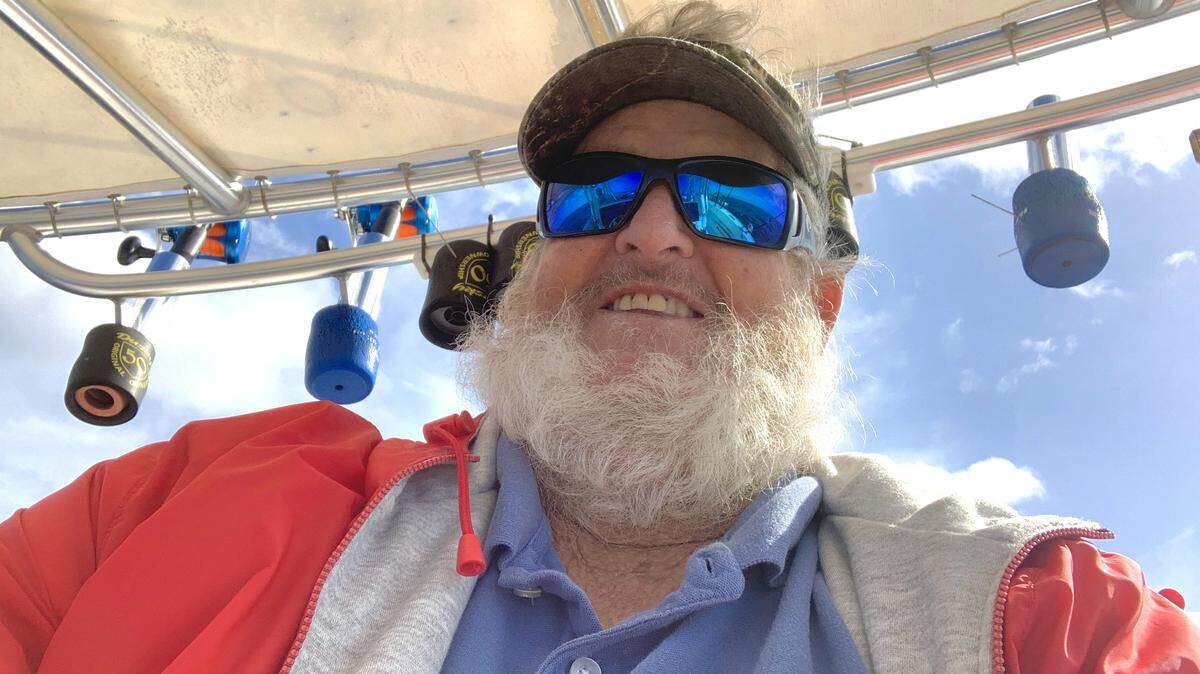
During his 54-year career as a charter captain, Bouncer Smith has tagged and released some 2,000 sailfish, but none as meaningful as the one his angler caught a couple of weeks ago.
The billfish had been tagged by Smith and his mate Abie Raymond three years earlier.
“That was the only sailfish that we tagged and recaptured,” said Smith, of Miami Beach, who retired as skipper of his 33-foot center console, Bouncer’s Dusky 33, on June 1. “I’m going out with a bang.”
Fishing local offshore and inshore waters, as well as throughout the Caribbean, for 250-plus days a year for more than half a century in all types of weather and sea conditions has taken a physical toll on Smith, 72.
“My brain refuses to quit, and my body demands that I quit,” said Smith, one of South Florida’s most respected and beloved captains. “Who knows, maybe with some down time and some recuperation time, and maybe some time to concentrate on my health, maybe I can get back into a little bit better shape, and I’ll be standing on the jetty hitch-hiking to go fishing.”
He can always catch a boat ride with Raymond, a licensed captain who has worked as Smith’s full-time mate for 10 years. He is taking over Smith’s business and offering offshore trips, inshore trips in Biscayne Bay and freshwater trips for peacock bass and snakeheads (www.gohardfishing.com).
Smith was an early advocate of tagging sailfish, as well as fish species such as dolphin, amberjack, grouper and barracuda. The practice involves inserting a streamer tag, which is also known as a spaghetti tag because it resembles a cooked strand of pasta — it consists of dart attached to a piece of monofilament attached to the plastic streamer — with a long-handled tag stick adjacent to a fish’s dorsal fin.
Every tag has a tracking number, and the tagger records that information as well as details about the fish’s size and where it was caught and submits it to The Billfish Foundation. When a tagged fish is caught again, ideally that angler removes the tag and inserts a new one, or at least records the information on the tag and reports the recapture to TBF, whose phone number, mailing address and email address are also on the tag.
Smith has had other people recapture sailfish that he tagged and he has recaptured fish tagged by others. Recapturing a sailfish that he tagged was a major deal.
“We were actually on our way out of Government Cut,” Smith said. “I had this gentleman named Ben Eskenazi and he had booked the boat to take a couple of his buddies. He’s a left-handed angler. So we were running out and we spotted five or six frigate birds inside the reef on the sand.
“Abie threw out a pilchard and he put the rod in the rod-holder to go do something and I looked over and saw the reel was set up for a right-handed angler. So I said, ‘Benny, hand me that rod.’ I took the handle off the reel and the fish started pulling on it. So I hurried up and switched the handle [to a left-handed retrieve] and handed the rod to Benny before the line ever got completely tight and we were on with the fish.”
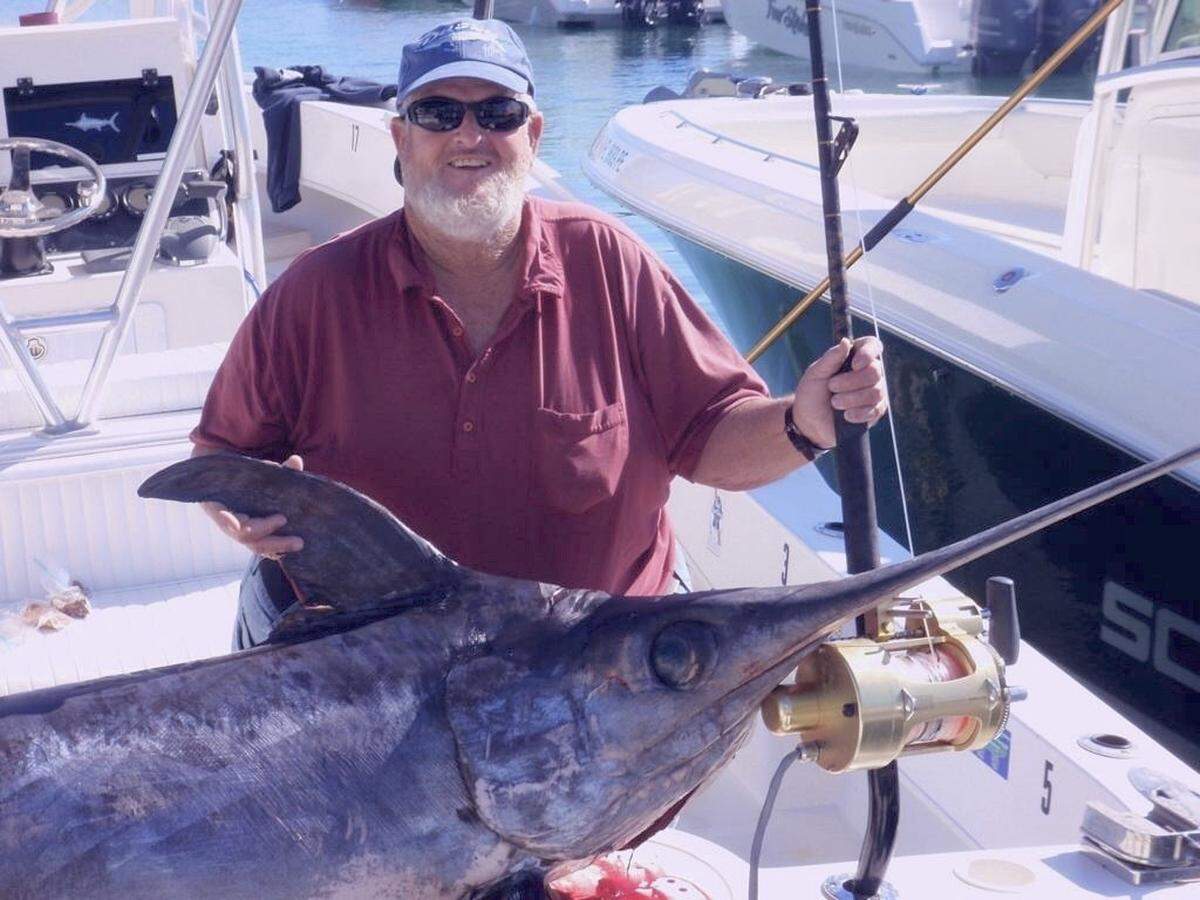
The sailfish was approximately 70 to 80 pounds and Eskenazi needed more than an hour to land it. During that time, Smith’s boat traveled from 60 feet of water where the fish ate the pilchard to 750 feet.
When Raymond grabbed the leader attached to the fishing line, he looked at the sailfish and saw a tag. So instead of breaking the leader so the fish could swim away, he let go and Eskenazi fought the sail for 10 more minutes before getting it alongside the boat.
As Raymond gently held the sailfish’s bill and looked at the tag, which had been inserted in the hydrodynamic fashion and location that he and Smith favor, he also noticed the first three identifying numbers on it were 591. Raymond said they had a series of probably 100 tags starting with 591 — not unlike a fistful of raffle tickets — and had typed that number on their computers so many times in reporting tagged fish to TBF that he instantly suspected this sailfish was their long sought after grand prize.
“I said to Bouncer, ‘Doesn’t that sound familiar, 591?’ He said, ‘Yeah, it sure does.’ And sure enough, that was our tag,” said Raymond, who added that the monofilament attaching the tag to the sailfish broke when he got the streamer in his hand. (He inserted a new tag in the fish before releasing it.)
“That was pretty awesome. That was definitely something he’s always wanted to do.”
Within 10 minutes after calling TBF, the Fort Lauderdale-based conservation organization confirmed that Smith and Raymond had originally tagged the sailfish three years and 16 days earlier off Government Cut when it weighed an estimated 40 pounds.
“I was absolutely thrilled,” said Smith, who shares many of his adventures, as well as an abundance of fishing tips, in his books “The Bouncer Smith Chronicles: A Lifetime of Fishing” and “Fish On: The Further Chronicles of Bouncer Smith,” which he wrote with Patrick Mansell and which are available through Amazon via www.bouncersmithchronicles.com.
“I consider it my second-best-ever event in tagging sailfish. On my birthday one year we caught six sailfish, we tagged five of them and two of the five that we tagged had been tagged in the past. One of those had come from Trinidad and one of them had come from Islamorada. To recapture two tags in one day was really breathtaking and to have them come from as far away as the far eastern Caribbean was really shocking.”
This story was originally published June 1, 2020 at 6:00 AM.