
Turkey hunting expert gives valuable tips to bag a gobbler during Florida season
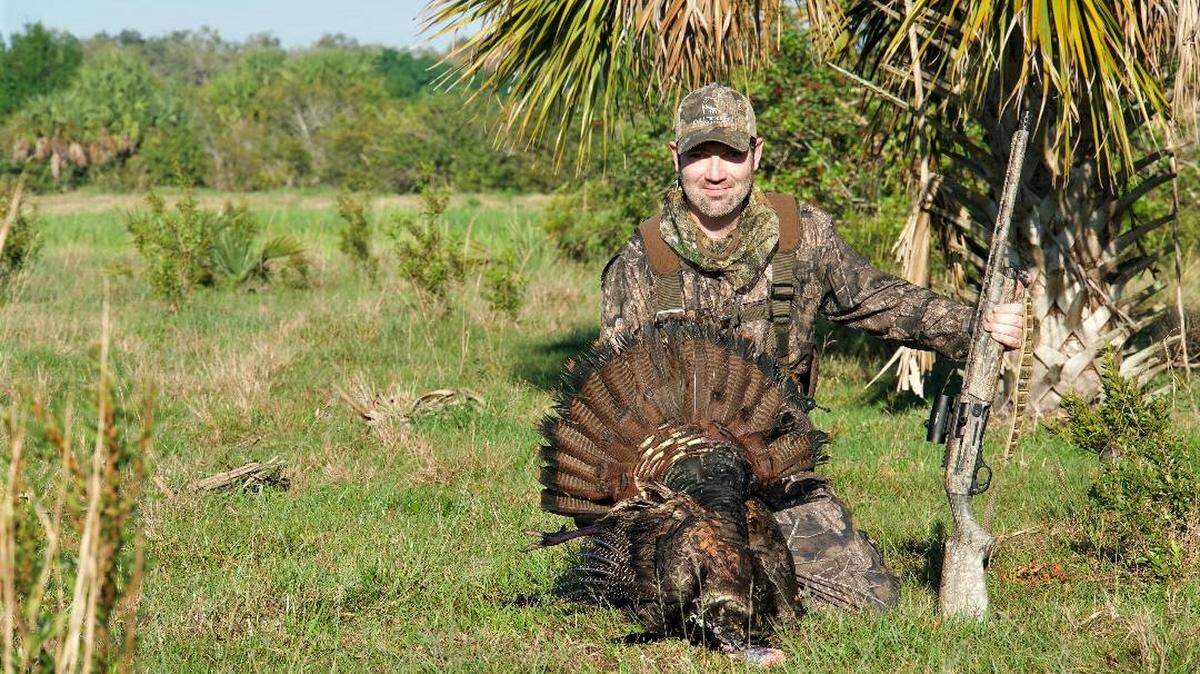
Phillip Culpepper knows better than most wild turkey hunters how quickly and how dramatically things change when it comes to pursuing the wary, often frustrating birds.
The host of the entertaining and educational “Spring Thunder” videos on the Realtree 365 app and YouTube, Culpepper, along with cameraman Drake Lamb, hunt turkeys for about three straight months.
They start in South Florida, where the season opens March 7 and runs through April 12. Then they head to Georgia and Alabama, where Culpepper, 34, grew up chasing turkeys with his father, Roger, who instilled the passion for turkey hunting in his son when he was only 5 years old. (Culpepper shot his first gobbler three years later.) They also hunt other southern states before ending up in northern destinations such as Montana and Wyoming in May.
What Culpepper’s experiences have taught him, and what he shares with his viewers, is that there are always new tricks to help you bag a wily, mature gobbler, such as calling aggressively or using the terrain to get closer to a bird.
“It’s evolved so much from when I got into it as a kid,” said Culpepper, who lives in Fortson, Ga., and started working for Realtree, which is known for its innovative camouflage, when he was in high school. “I don’t even hunt the same as I did five years ago. You learn so much of what you can and can’t get away with.”
Something that I learned from watching Culpepper’s turkey videos is using only a Hunters Specialties jake decoy, which impersonates an immature, year-old male turkey, to bring in older gobblers.
Spring is mating season for turkeys, and tom turkeys gobble and strut, puffing out their feathers to impress hen turkeys. Turkey hunters try to reverse nature by imitating hen yelps, clucks and purrs so seductively that lovesick gobblers go to them.
Gobblers have a pecking order, and the hens usually hook up with the dominant birds. When an older gobbler hears what he thinks is a hen calling and then sees a less-dominant gobbler, or even worse, a teen-aged jake, in the vicinity of those calls, it infuriates the big bird.
That was something Culpepper discovered on a hunt where he had put out his jake decoy, but waved a strutting turkey decoy to get the attention of some gobblers that were loitering on the other side of a rise. Seeing another gobbler got the birds’ interest and they started heading over.
“They were rubber-necking, but they weren’t coming to fight,” Culpepper said. “They came over the hill and they see that little jake decoy and those son-of-a-guns, their heads colored up and they came wanting to beat the fire out of him. So I’ve used it since then. It works like a charm. I just think it’s that white skullcap and the way his neck and body are postured, he’s almost like a subordinate turkey trying to act like a bad boy and they come to put him in his place every time.”
On a Tennessee hunt last year, Lamb shot amazing footage of a big gobbler charging the jake decoy -- which was named Bocephus by the winning viewer in a social media contest -- knocking it over and then stomping on it before a young lady that Culpepper was guiding pulled the trigger on her first wild turkey.
Setting a jake decoy close to the blind can benefit new or inexperienced turkey hunters. Culpepper, who is an expert at reading a gobbler’s body language, can tell the novice that the bird is coming to the decoy and to have his or her shotgun pointed at Bocephus to minimize movement, as well as nerves, when the gobbler arrives.
A jake decoy also makes for amazing video footage, which is what Culpepper and Lamb strive for.
“Most of the turkeys on ‘Spring Thunder’ last year, we could’ve had them killed at 40 yards. That’s what I love about that decoy, it really helps finish them off,” Culpepper said. “Most turkeys, if they don’t like a decoy, they’re going to hang up about 40 or 50 yards and start getting nervous. Little Bocephus was the opposite. At 40 or 50 yards, most of those turkeys got really comfortable and that’s when they were sure enough locked hook, line and sinker coming in.”
One issue with having a gobbler come in so close is that your shotgun pattern might be so tight that you completely miss the bird. Culpepper uses Federal’s Heavyweight TSS (Tungsten Super Shot) in No. 9 pellets, which have more penetration at 60 yards than bigger lead pellets, as well as many more pellets, which provide a lethal spread at close range, which for Culpepper last season was often 10 steps.
The combination of TSS and Bocephus produced great content last year, and Culpepper is excited about a new twist for 2020.
“We take it seriously as far as trying to put good stuff out there but at the same time we show it like it is and like to have fun,” Culpepper said. “This year we’re going to try to do a little more. Last year we kind of had more of a polished, finished product of a show. This year we’re going to try to do more day-to-day stuff.
“Whatever we’re doing today is going to go up that night. I just feel like that would resonate a little more. It won’t be quite as polished, and it’ll be kind of a rough cut of what we did. If we get a turkey roosted and go to bed and we’re going to come out the next morning, well that video’s going to be getting that turkey roosted and you’re going to have to watch the next day to see what we did.”
With Lamb behind the camera, Culpepper or his guest behind the gun and Bocephus a few yards in front of them, it should be must-watch video.
FLORIDA TURKEY SEASON
South of State Road 70: March 7-April 12.
North of S.R. 70: March 21-April 26.
Daily bag limit: Two gobblers or bearded turkeys.
Season limit: Two for all spring seasons.
Public lands: South Florida wildlife management areas that allow turkey hunting without a permit are Big Cypress in Miami-Dade and Collier counties and J.W. Corbett in Palm Beach County, where hunting is limited to Saturdays, Sundays and Wednesdays. The limit at both WMAs is one gobbler or bearded turkey per day.
Information: Visit www.myfwc.com/hunting.