
West Palm Beach’s AVAX One Technology Taps Alberta’s Explosive AI Data Center Boom with Natural Gas Micro-Grid Project
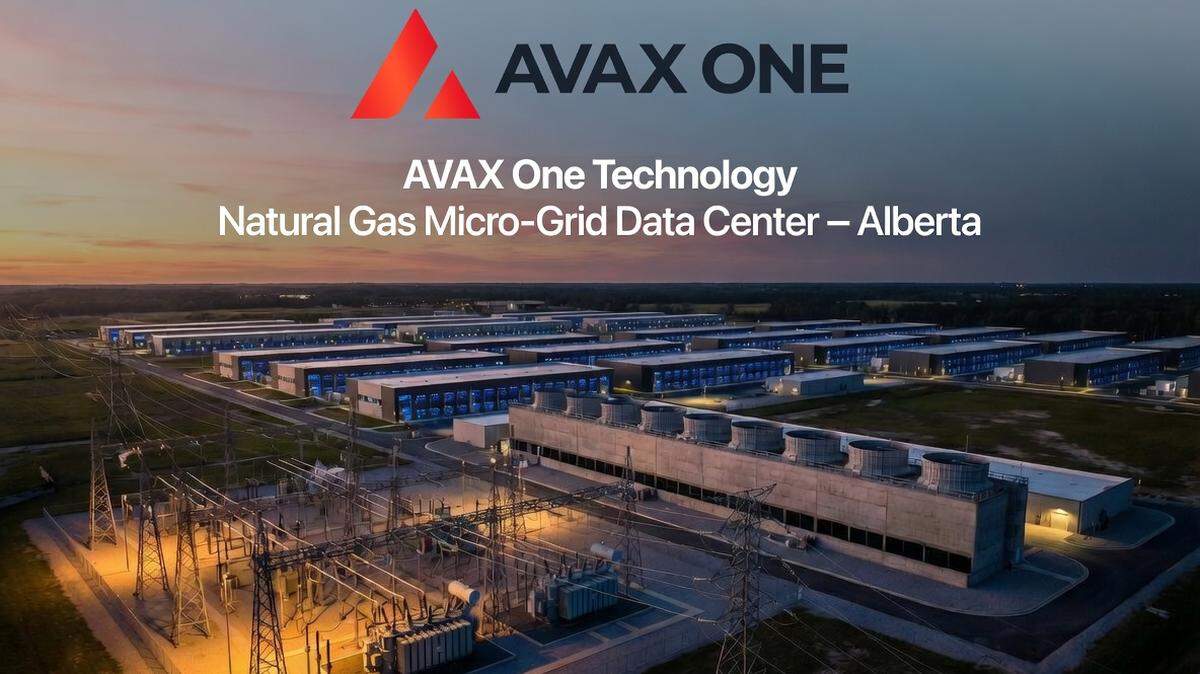
A Nasdaq-listed company headquartered in West Palm Beach is jumping headfirst into one of the hottest artificial intelligence infrastructure plays in North America: Alberta’s booming “gas-to-compute” data center market.
AVAX One Technology Ltd. (Nasdaq: AVX) has formally advanced its partnership with Calgary-based BlueFlare Energy Solutions Inc. to develop a 10-megawatt Tier 3-ready powered land site in Alberta, Canada. The project, announced in late April 2026, is on track for completion in Q1 2027 and will deliver reliable, behind-the-meter power specifically built for AI and high-performance computing (HPC) workloads.
For South Floridians unfamiliar with the company, AVAX One began as a Bitcoin mining operation in Alberta and Ohio, and last November became the first publicly traded “Avalanche Treasury” firm — giving everyday investors direct exposure to the fast-growing Avalanche blockchain through AVAX holdings and staking. Now, the company is evolving into a diversified digital infrastructure leader by owning the physical power and sites that tomorrow’s AI economy desperately needs.
Why Alberta Is Suddenly the Place to Be for AI Power
Alberta has become a North American hotspot for AI data centers thanks to a perfect storm of cheap natural gas, pro-business policies, cold climate advantages for server cooling, and a deregulated electricity market. The province is seeing a true “gold rush” in electricity allotments, with the Alberta Electric System Operator (AESO) facing more than 20 gigawatts of pending data-center power requests — far exceeding the province’s current peak demand of about 12 GW and leaving only about 1.2 GW of grid capacity available by 2028.
In response, developers are racing toward behind-the-meter (BTM) and self-generation solutions that bypass years-long utility interconnection queues. Alberta’s government is helping with Bill 8 (the Utilities Statutes Amendment Act 2025), which fast-tracks approvals for projects that “bring their own generation.” A new 2% levy on large grid-connected data centers (starting December 2026) largely exempts BTM/self-gen facilities like AVAX One’s.
Huge multi-billion-dollar proposals are already in the works, including Kevin O’Leary-linked Wonder Valley (up to 7.5 GW), the $10 billion Olds campus area projects, Beacon AI’s 4.5 GW plans, Gryphon, and others. The sector generated more than $1.6 billion in economic activity for Alberta in 2025, and analysts see potential for $100 billion in total investment.
AVAX One’s model sits right in the sweet spot of this boom. Instead of waiting on the grid, the company is building its own modular micro-grid powered primarily by low-cost (often nearly free) flared or stranded natural gas from Alberta’s oil fields. The setup includes battery energy storage, grid backup where available, and diesel redundancy to achieve strict Uptime Institute Tier 3 standards — 99.982% availability with concurrent maintainability — exactly what hyperscalers, AI labs and enterprise clients’ demand.
The approach is also environmentally smart: capturing flared natural gas that would otherwise be burned off, which reduces methane and CO₂ emissions, generating valuable carbon credits under Alberta’s programs.
Strong Economics and Recurring Revenue
According to an internal memo from Chief Financial Officer Chris Polimeni, the $30 million to 35 million project is expected to generate $7 million to $12-plus million in annual gross revenue once leased at 80% to 90% utilization, with payback in three to four years and high margins thanks to near-zero fuel costs.
“Partnering with BlueFlare is what converts this from a land story into an infrastructure delivery story,” said Jolie Kahn, AVAX One’s CEO. “They bring the natural gas expertise, the field relationships and the operational discipline to commission behind-the-meter power at the pace this market demands.”
BlueFlare is in the process of selecting an Owner’s Engineer, and the company is evaluating additional Western Canada sites ranging from 5 MW to 50-plus MW.
With approximately $27 million in cash as of March 31, 2026, AVAX One has the runway to execute without immediate pressure to sell digital assets or dilute shareholders. The project supports the company’s broader vision: blending physical infrastructure revenue with its ongoing Bitcoin mining (currently ~300 PH per second) and Avalanche treasury strategy.
For South Florida investors and tech watchers, the news is exciting. While the heavy infrastructure work happens in energy-rich Alberta, all the strategic decisions — and the long-term shareholder value — are being driven from AVAX One’s headquarters in West Palm Beach. In a world where AI power shortages are the biggest bottleneck, a locally based Nasdaq company is turning Alberta’s flared natural gas into high-margin, recurring revenue from AI infrastructure.
The timing couldn’t be better: Alberta’s policy tailwinds, natural gas abundance and exploding demand are creating exactly the kind of opportunity AVAX One is built to seize.