From Solo Screen Time to Center Stage: World Solitaire Championship Crowns First Global Winner
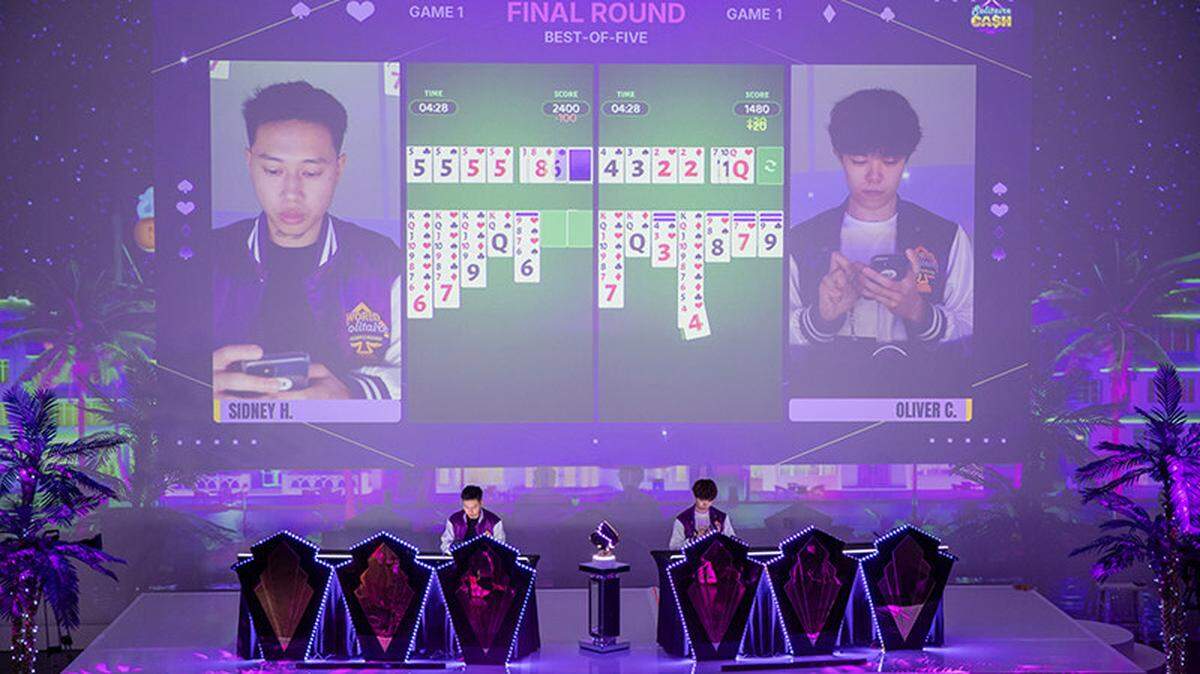
For a game long associated with quiet concentration and solo play, solitaire isn’t known for drawing a crowd, but it did exactly that in Miami as hundreds of players met for a high-pressure World Solitaire Championship final that transformed a familiar pastime into something closer to a sporting event.
Sidney Ha, a 25-year-old pharmacy student from Elk Grove, Calif., emerged as the first-ever World Solitaire Champion at a tournament hosted by PAPAYA, marking a new chapter for a game that has traditionally been played alone. Ha secured the title with a final round completed in just 31 seconds, capping off a competition defined by speed, precision, and sustained focus.
The championship followed months of virtual qualifiers, with more than 500,000 players worldwide competing through PAPAYA’s Solitaire Cash app. From that pool, 400 finalists traveled to Miami, representing four continents. Organizers said the group reflected a broad cross-section of players, with 82% of participants women and ages ranging from 19 to over 65.
In the live rounds, competitors played under identical conditions, each receiving the same deck configuration to promote skill over chance. The format mirrors PAPAYA’s digital platform, which standardizes gameplay to allow players to compare performance and progress more directly.
The event is part of a broader effort by PAPAYA to reposition traditionally single-player games as competitive, skill-based experiences. The company, founded in 2019, has focused on adding tournament-style structures to familiar formats, allowing players to move from individual practice into shared competition.
“We know that adults are seeking challenge, mastery, and experiences that improve them,” a PAPAYA spokesperson said. “Sidney’s victory, and the community that formed in that arena, embodies exactly what PAPAYA is building..”
The approach aligns with changing patterns in how adults engage with games. Research conducted by PAPAYA and the National Institute for Play found that 75% of adult players prioritize meaningful practice over passive entertainment, reflecting a shift toward what some researchers describe as “serious leisure” — activities that emphasize skill development and sustained engagement.
At the same time, the rise of digital competition has intersected with broader social trends. As traditional gathering spaces, often referred to as “third places,” have declined, structured online communities have increasingly taken on a social role. PAPAYA’s model seeks to extend those connections beyond the screen, creating opportunities for in-person interaction built around shared interests.
The Miami championship offered a glimpse of that transition. Many participants had spent months competing against one another online before meeting face-to-face for the first time. What had begun as a solitary routine evolved into a collective experience centered on performance, strategy, and community.
For organizers, it was a proof-of-concept, but for Ha, it was a personal milestone. “I never imagined a game I’ve played quietly for years would bring me here,” Ha said. “Competing in Miami felt electric, with every round demanding total focus. More than anything, it was a joy to share the experience in real life with 400 other Solitaire Cash players who share my love for competitive community.”