‘We’re curing more people every day.’ UM’s Sylvester announces new cancer research center
Two weeks after Florida lawmakers announced that they would approve $100 million in state spending for cancer research and treatment, Sylvester Comprehensive Cancer Center at the University of Miami Health System broke ground Thursday on a new building designed to move the latest advancements in care from the laboratory to the patient.
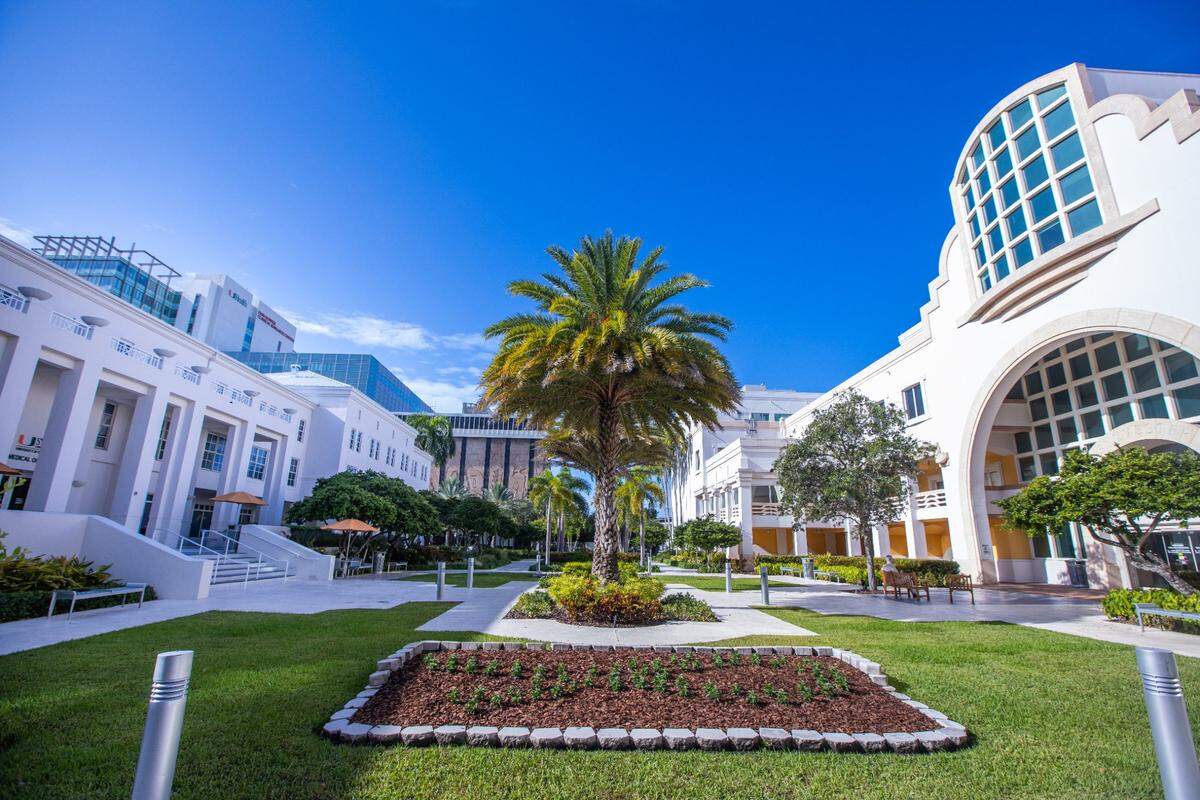
Scheduled to open in 2024, Sylvester’s Transformational Cancer Research Building will more than double the institution’s existing space — housing researchers, doctors and others under a single roof on the campus of UM’s Miller School of Medicine in Miami’s Health District neighborhood.
When completed, the sleek 12-story building will symbolize Sylvester’s commitment to cancer treatment and research, and to address longtime disparities in cancer outcomes and access to care, said Dr. Stephen D. Nimer, Sylvester’s director and the Miller School’s executive dean for research.
“We’re curing more people every day, and that’s what this building is all about,” Nimer said.
It’s also about growth and the future for Sylvester, South Florida’s only National Cancer Institute-designated facility, a distinction the institution earned in 2019 and that brings additional resources from the federal government.
Running out of space
In the decade since Nimer joined Sylvester as director, the Miami institution has hired dozens of new surgeons, researchers, radiation therapists and other cancer care professionals.
“We’ve recruited 210 faculty members, including 75 in the last three years despite COVID,” said Nimer, who came to Sylvester from Memorial Sloan Kettering Cancer Center in New York. Because each new faculty member has a team of five or six, there are actually many more people dedicated to cancer research and care.
“There’s probably 1,400 more people now studying cancer than there were 10 years ago,” he said.
There’s not enough space for them all, and Nimer envisions the new building as a collaborative space with open labs and plenty of conference rooms where researchers in biochemistry, neurosurgery, pediatrics and cell biology can work together to make new discoveries in cancer care.
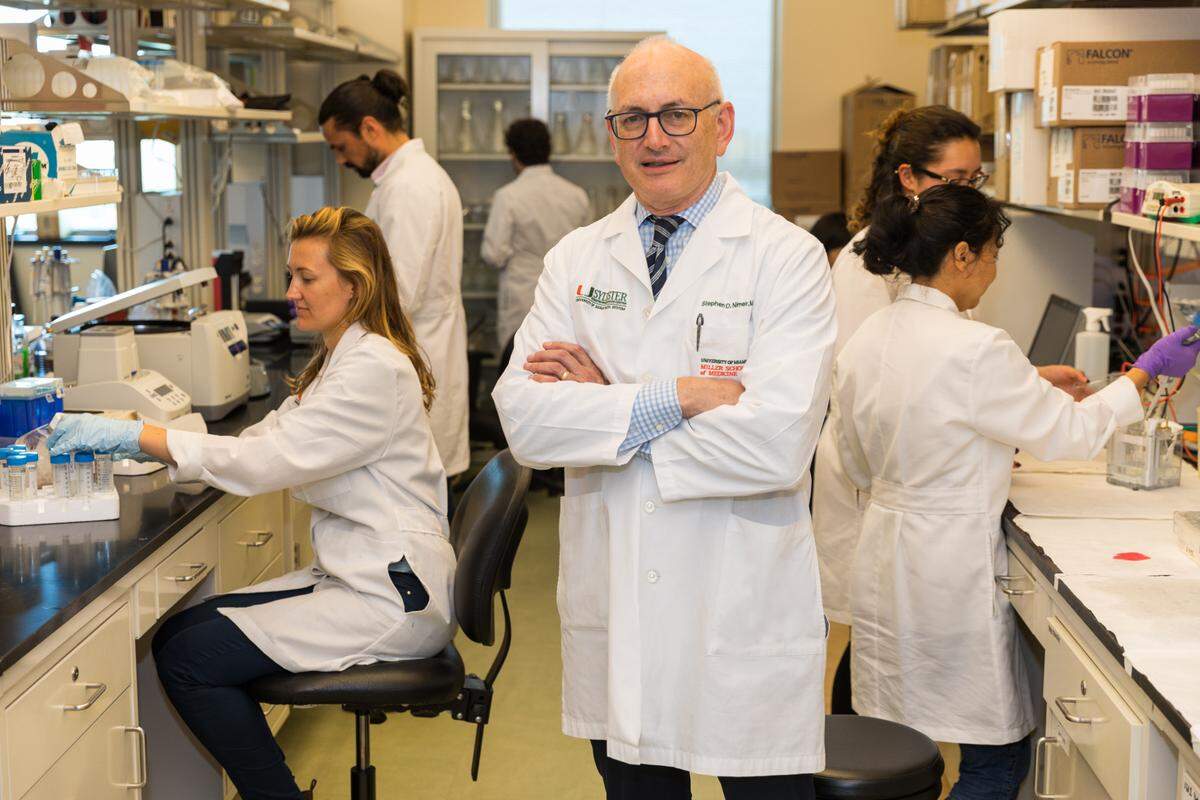
The facility, projected to cost about $250 million to complete, will not have operating rooms or patient beds, though. There will be outpatient care, but the big benefit to South Florida will be the innovations and advancements that come from a collaborative approach — improving cancer treatment and promoting access and equity in clinical trials and other research.
Cancer incidence and deaths overall are declining in all population groups in the United States, according to NCI data. But certain groups of people continue to have a higher risk of developing or dying from particular cancers.
The NCI reports that despite having similar rates of breast cancer, Black women are more likely than white women to die of the disease. And people with more education are less likely to die from colorectal cancer before the age of 65 than those with less education, regardless of race or ethnicity.
Working with firefighters, Haitian and Hispanic communities
Nimer said doctors and researchers at Sylvester have wrestled with questions about disparities, such as why two people with the same type of cancer would have different outcomes, or why people who live in the same neighborhood have different incidences of cancers.
For instance, Nimer said, firefighters have a higher incidence of cancer than the general population. By studying this disparity, Sylvester researchers were able to discover that it’s not just smoke inhalation that raises a firefighter’s risk of cancer.
“It’s probably things that come in through the skin because it’s so hot and humid here and your pores are open,” Nimer said. Based in part on that finding, Sylvester launched a program for firefighters called “Shower Within an Hour” to keep carcinogens off their skin.
Sylvester also has programs to address cervical cancer among Haitian-American residents of Miami, and obesity in Hispanic households. But in a multicultural melting pot like Miami, something as seemingly simple as identifying a patient’s race can get very complicated when it comes to understanding, addressing and solving health disparities.
About 45% of all people in clinical trials at Sylvester are Hispanic and 15% are Black, Nimer said. But in South Florida, there is no monolith of race and ethnicity. Sylvester’s Black patients include both African American and Afro Caribbean.
“They have different cultures and they have different diets,” Nimer said. “And, of course, in Miami, Hispanic could be Cuban, but it can also mean Venezuelan or someone from Colombia. ... Everyone has different genetics.”
Doctors are working to better understand the significance of genetics, race and ethnicity on cancer incidence and outcomes, Nimer said. Their discoveries may lead to better treatments for cancer while also helping with strategies to address disparities in access.
“The answers to these questions are going to require a lot of sophisticated research,” Nimer said. “These are complicated issues, and it’s not just about poverty. It’s not about access, although in some places it is. Even when people are treated in the same place there are differences in outcomes and we have to understand those.”
Florida’s high cancer burden
Nimer said there are also important differences among patients’ response to cancer treatment by age group. The average age of a person diagnosed with cancer is older than 60, but doctors want to understand what they need to do differently to successfully treat a 75-year-old with the disease compared to a 45-year-old.
Cancer care has improved significantly in the past decade, Nimer said, with more drugs and tests available to help doctors determine which treatments work on some individuals but not on others — reducing the potential harm to patients.
He expects that Sylvester’s new research building will help facilitate more of these discoveries that can then benefit patients.
“As research moves along faster and we have more effective drugs, we’re giving more targeted therapy, things that are more specific to the patient, and the responses are much better so there’s many more survivors of cancer than ever before,” Nimer said.
Sylvester also wants to be prepared for what Nimer expects will be a continued increase in cancer diagnoses.
“We’re the third-largest state in the United States but we have the second-highest burden of cancer, second only to California,” he said.
The reason may be that about 1 in 5 Floridians, or about 4.4 million people, are age 65 and older, according to the U.S. Census.
“That’s why there’s so much cancer, and as people get older, you know we have to be prepared,” Nimer said. “There’s more people moving down here.”