
Before Offshore Oil Money Arrives, Suriname Reshapes Tourism, Taxes and Diplomacy
As Suriname approaches the start of oil production in 2028, the government is focused on ensuring that new revenues strengthen the broader economy.
Diversification is the cornerstone of President Dr. Jennifer Geerlings-Simons’s administration.
“Tourism plays a key role in accelerating other sectors as we work to diversify our mining-dependent economy,” the president explained. While oil and gold remain important, she sees strong potential in “agriculture, agribusiness and tourism, however these sectors are still underdeveloped.” In particular, she notes that: “Tourism is especially important because it creates jobs.”
Avoiding the resource curse is central to the strategy. “We are in a challenging period and while the expected oil boom offers opportunities, we must avoid Dutch disease. For this reason, we are pushing to accelerate the growth of other sectors, with tourism as a major pillar.” A presidential working group — led by the private sector and supported by the government — is identifying practical barriers to growth. Aviation upgrades, improved legislation and stronger marketing are all under review.
Diplomacy with a green heart
Sustainability is non-negotiable. Suriname is the most forested country in the world and intends to keep itself that way. “Our forests provide important services to the world and we need fair compensation — through carbon credits or the forest program.” Oil revenues, the president argues, should reduce pressure for unsustainable mining practices. “With oil income, we plan to improve living conditions, create a sovereign wealth fund and invest in key sectors and education so we can avoid destructive mining.”
Agricultural expansion will not come at the expense of forests. Only about one-fifth of Suriname is coastal, yet most of the population lives there. “When we talk about expanding agriculture, it is not about cutting forests. It is about revitalizing the coastal farmland we already have.” Strengthening agriculture before 2028 is essential to avoid inflationary pressures once oil capital arrives. “By developing our agricultural sector now, we aim to prevent that pressure and keep costs stable.”
Fiscal stability underpins the whole strategy. With international support, the government is modernizing and digitalizing the tax system. “Suriname’s tax-to-GDP ratio is too low, so by broadening the tax base — not increasing taxes on ordinary citizens — we can raise more revenue.” Formalizing artisanal gold mining is another priority to strengthen foreign-currency reserves and stabilize the economy.
Education is perhaps the most critical investment. “Suriname currently lacks enough highly trained professionals, as many have left the country. We must rebuild this capacity by improving education.” Low-interest financing from international partners will support universities, vocational training and technical skills development.
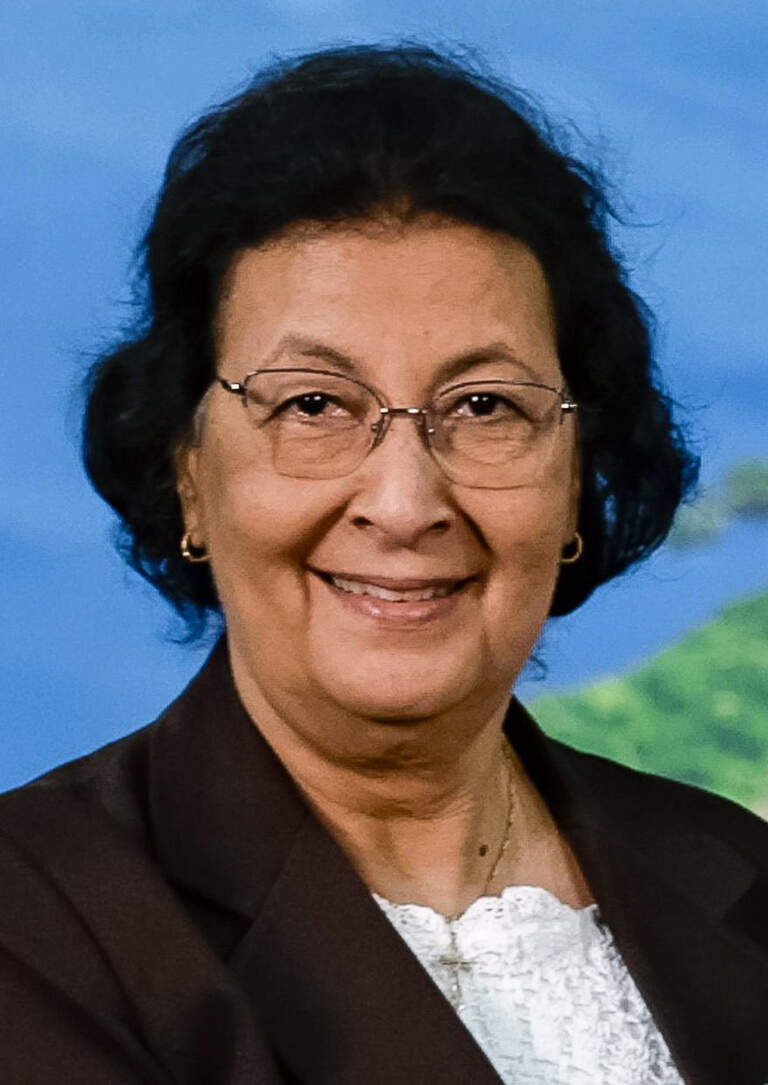
Internationally, the president’s message is clear. “Suriname has an open foreign policy.” With deep diaspora links to Indonesia, India, China, Ghana, Nigeria, the Netherlands and North America, the country seeks broad partnerships based on mutual benefit.
Melvin Bouva, Minister of Foreign Affairs, International Business and International Cooperation is aligning diplomacy with economic transformation. The ministry is modernizing investment legislation to attract foreign direct investment by having a working group reviewing the investment law, with the goal of submitting a revised bill to Parliament by mid-year.
“My first priority was to realign our agenda with Suriname’s long-term national interests by strengthening capacity and prioritizing economic diplomacy,” Bouva explains. While cognizant of political relations, “a focused economic diplomacy strategy is key to delivering results in international business and foreign direct investment.”
Suriname’s environmental credentials are central to its international pitch. At the United Nations General Assembly, the government presented Suriname as “a green country with strong potential for sustainable business and partnerships.” It has committed to protect at least 90 percent of forests, describing it as “a gift to the world,” strengthening the claim that compensation for such a gift is due.
Diaspora engagement forms another pillar of foreign policy. Through a planned Diaspora Engagement and Homecoming Program, expected to launch in 2026, Surinamese abroad will be invited to contribute expertise, networks and investment. The minister emphasizes that Suriname’s economic pillars — “food, forests, fuel and fossils” — require global partnerships and skilled human capital.
For Bouva, modern diplomacy is about tangible results: foreign direct investment, scholarships, development projects and capacity building that translate into visible national progress. The objective is simple — to “help our nation shine again.”
Raymond Landveld, Minister of Transport, Communication and Tourism, views Suriname as a “raw diamond.” The task, he says, is learning “how to polish it.” After decades of reliance on bauxite and mining, diversification toward tourism and agriculture is imperative.
Cultural authenticity is the foundation of his tourism strategy. “I always encourage Surinamese people to appreciate and enjoy our own culture — our food, music, nature and traditions — because when we do, others will want to participate in that joy.” Tourism growth, he argues, comes from “shared and genuine experiences.”
Suriname’s fusion of Indigenous, African, Indian, Javanese and European heritage creates a distinctive identity. Heritage Month 2026 will celebrate this diversity and reinforce national pride. High-end tourism, rather than mass tourism, is the chosen path to protect fragile ecosystems and traditions. “Our culture and the Amazon are unique — too many visitors would harm both.”
Air connectivity and digital modernization are equally important. Legislative reforms are under review to balance new technologies like satellite internet with existing providers, ensuring universal access. “Our vision is for every Surinamese citizen to have internet access.” Cruise tourism and strategic air service agreements are also being explored. Capturing even a small percentage of these tourist flows could significantly boost arrivals.
Together, the president, foreign minister and tourism minister present a cohesive strategy: diversify before the oil flows, safeguard forests, modernize institutions and elevate Suriname’s global profile to build a balanced and sustainable economy that endures well-beyond the oil boom.