
April 4, 1993: When hate shattered the promise of spring
:Twenty-five years ago North Vietnam launched the Tet offensive, and two American runners were suspended from the Olympics for accepting their medals with a black power salute. Twenty-five years ago Soviet tanks rolled into Prague, and the Democratic National Convention exploded in violence. Twenty-five years ago, Martin and Bobby were killed.
Even against a backdrop of such turmoil and unrest, that one stands out. Twenty-five springs ago, Martin Luther King Jr. and Robert Francis Kennedy died and in so doing took something out of us all: The notion that one person could seize destiny by the throat and -- if she had belief enough and strength enough and vision enough -- could remake and better the world.
Bill Clinton sought to tap that when he ran for the White House last year. “We can change,” he kept saying, as though change were its own reward. And who knows? Maybe it is.
Once we called that sort of thinking faith. Now we call it quaint. Now we call it innocence.
No, we didn’t lose it all at once. We lost it day by day, tragedy by tragedy, compromise by compromise.
Lost it because our government lied, and our children died in rice paddies on the other side of the world. We lost it because of Kent State and Watergate and because the solutions we thought we’d found turned to smoke. We lost it because John Kennedy was killed. And, yes, we lost it, too, because of those twin tragedies in April and June of 1968.
Didn’t that seem especially cruel — the timing of it all? Didn’t it seem, all in all, a betrayal of the spring?
***
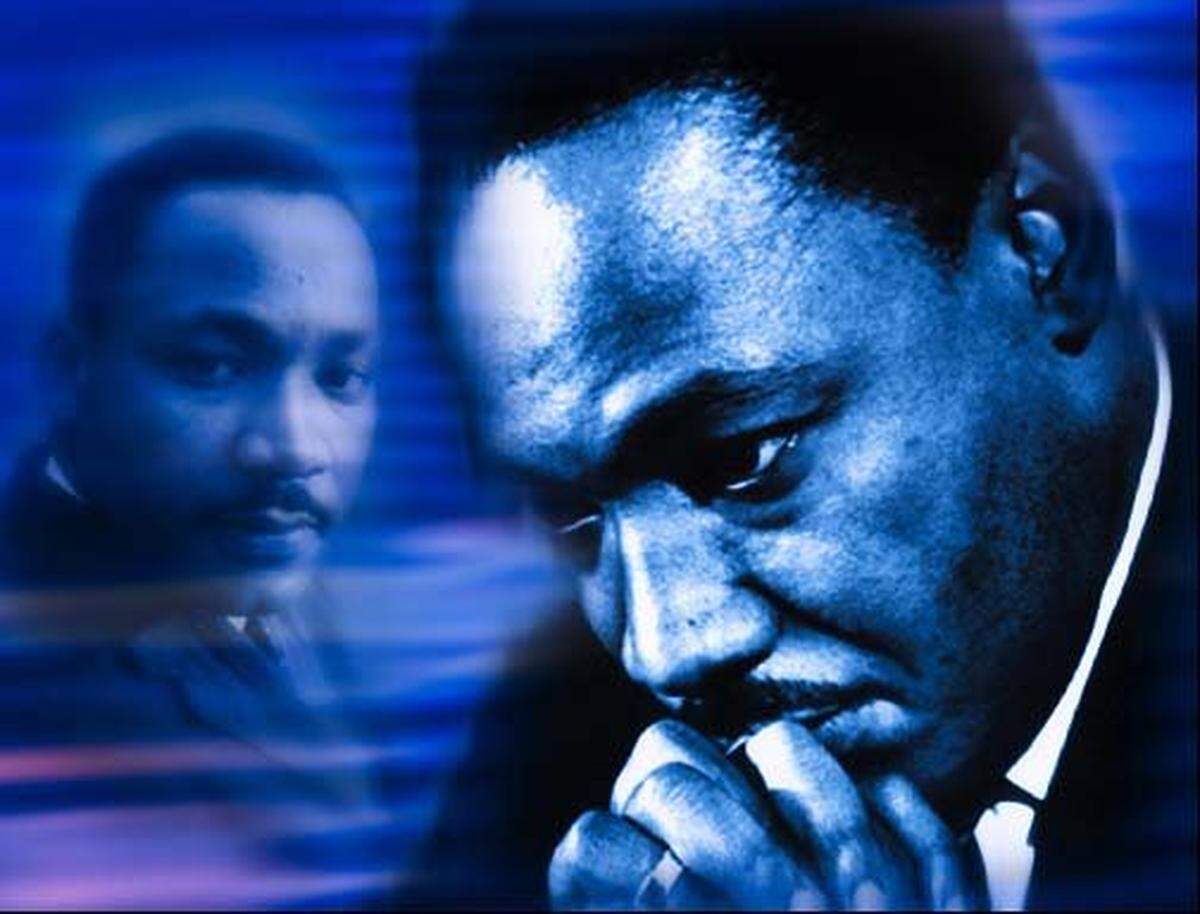
Twenty-five years ago today a bullet ripped into the right side of Martin Luther King’s face and drove him down to the motel balcony floor, where he lay in an expanding pool of blood. His friend and confidant, the late Ralph Abernathy, rushed out to the balcony and cradled his head.
Abernathy once remembered it: “The first person to get to me was Andrew Young. And he said ‘Oh, God, Ralph, it is over, it is over.’ And I became furious with him suggesting that. I said, ‘Andy, don’t say that. Don’t you say that.’ “
Abernathy rode in the ambulance to the hospital, followed King even into the emergency room.
“Once they cut the shirt and everything away, I could’ve put my fist in the chest. He was shot by a bullet that explodes when it reaches its target. . . . The spine had been severed. Finally the young man came over to me and said he would not make it and asked if I wanted to spend the last moments with him. I went over and took him in my arms, and he took his last breath.”
When the word got out, the nation convulsed in violence. Riots rocked more than 100 American cities. In Indianapolis, presidential contender Robert Kennedy broke the news to a rally of his black supporters and pleaded with them for peace. They could react with anger and hatred at all white people, he told them, and thus move America farther down an antagonistic path. Or, they could remember the message of their fallen leader and move America down a different road.
“My favorite poet,” he told them, “was Aeschylus. And he once wrote, ‘Even in our sleep, pain which cannot beget falls drop by drop upon the heart until, in our own despair against our will, comes wisdom through the awful grace of God.’ What we need in the United States is not division. What we need in the United States is not hatred. What we need in the United States is not violence and lawlessness but is love and wisdom and compassion toward one another and a feeling of justice toward those who still suffer in our country, whether they be white or whether they be black.”
The applause was hesitant at first. Two hands clapping. Then four. Then more. And a cheer lifting from the throng. Hope rising like a phoenix.
Two months later, Robert Kennedy was dead.
***
Twenty-five years ago “60 Minutes” debuted on CBS, and “Soul on Ice” arrived in bookstores.
Twenty-five years ago President Johnson announced he wouldn’t seek re-election, and North Korea seized a U.S. surveillance ship, the Pueblo.
Twenty-five years ago the impression was general that there was a grave sickness afoot in this land — a malady of the spirit that expressed itself in violence on the streets, polarization between races and a general disrespect for tradition and authority.
In that respect, those days were not much different from these except for this: The impression was also general — at least among the young — that the solutions to these problems were somehow bound up in the messages of Martin and Bobby.
The two men came by disparate paths to those messages. King, son and grandson of Baptist ministers, raised in segregated middle-class comfort in the Sweet Auburn district of Atlanta. Kennedy, the seventh child of a sprawling Irish Catholic clan with political designs, raised in upper-class privilege in England, Hyannis Port and Palm Beach.
King was a pacifist who often said he would stand for nonviolence even if he were the last man on Earth to do so. It was a position that drew fire from the firebrands of his day who mocked him as “de Lawd.” It is a position that still draws rebuke from angry young men and women.
Some, like rappers Sister Souljah and Chuck D., have even questioned King’s commitment to pacifism, both expressing certainty he would have risen to defend himself if the provocation were great enough. But that belief misreads the man, misjudges and dishonors the depth of his beliefs. Stoned in Chicago, stabbed in New York, bombed in Montgomery, kicked in the groin in Selma, King never raised a hand in response.
His men will tell you stories if you ask them — how he could wrap himself in an eerie calm and walk unafraid through crowds whose vehemence made their flesh tremble on their bones. It was about faith, blessed and pure. About righteousness of cause and strength of belief. About what King called “soul force” — that mystical power of a thousand hearts touching and agreeing and moving on a single purpose.
“Unearned suffering is redemptive,” he liked to say. And so he led his followers into suffering, led them into gunfire in St. Augustine, into billy clubs in Selma, into the snapping teeth of dogs and the furious force of high-pressure hoses in Birmingham. And in the process, he led them into change.
***
Robert Kennedy was a different sort of soul. Hit him, and you would surely be hit back two licks for every one, if possible. Some called him “Ruthless Bobby” for his brusquely efficient manner.
As Senate subcommittee counsel, he went after Teamster leader Jimmy Hoffa with dogged persistence. As attorney general, he tackled organized crime with the same tenacity. Most of all, though, he was his brother’s keeper — hunting down the convention delegates John Kennedy needed to snare the Democratic presidential nomination.
But Kennedy had the capacity for change and growth — especially where civil rights was concerned. One writer referred to it as Kennedy’s “on-the-job sensitivity training.” He moved from initial distrust and disinterest to the point where he became a passionate supporter of the struggle — and helped move the president in the same direction.
In the years after JFK’s death, a drifting, anguished Bobby changed further. He spoke out against what he saw as an unwinnable war in Vietnam and became a passionate voice for justice and for peace.
His daughter, Kerry Kennedy Cuomo, recently recalled her dad for Life magazine: “I remember all of us sitting around the dinner table one night. We were all screaming and shouting and saying, ‘Pass the milk’ and ‘Pass the butter,’ and all of a sudden the door opened, and my father was standing there, and it was dead silent. And he said, ‘I’ve just come from a part of the country where three families have to live in a room this size. You’ve got to do something to help those children. You’ve got to help those children. Please help those children.’ “
***
Twenty-five years ago the bullets slammed into Robert Kennedy’s forehead and temple, and he crumpled to the floor of a Los Angeles hotel kitchen. The room exploded in pandemonium. Someone screamed: “Oh God, it can’t happen to this family again!” But of course it had.
In the days that followed, questions of why it had and how it had tortured America’s soul. Could we really be this wicked, this hateful, we asked ourselves. Could we?
The voices rose in fear: “This is a drifting, angry America that needs to find its way again,” said New York Mayor John Lindsay. “How can our country survive the rising tide of violence we are experiencing?” asked Catholic Archbishop Terence Cooke. Historian Arthur Schlesinger asked and answered the hardest question: “What sort of people are we, we Americans?. . . . Today, we are the most frightening people on this planet.”
***
Twenty-five years ago John Steinbeck died, and Helen Keller passed away in her sleep. Twenty-five years ago Tallulah Bankhead and Upton Sinclair went to their respective rewards as well.
Twenty-five years ago, bells rang out and a mule-drawn farm cart bearing the coffin of Martin Luther King Jr. started off from Ebenezer Baptist Church in Sweet Auburn. Thousands of mourners, most of them black, lined the streets. It was hot and humid in Atlanta that day, and the clop, clop, clop of the mules made a lonely sound in the still, steamy air.
Two months later, a 22-car train left New York, bound for Washington. Robert Kennedy lay in a flag-draped coffin in the last car.
The sun blazed high overhead, but that didn’t stop the people from standing for hours by the side of the road, just to see the train. In the cities they were clustered together by the thousands. In the countryside, sometimes it was just one or two poor souls standing there.
Some threw roses on the track. Some saluted or stood at attention. Some cried. And some held up signs — painful scrawls that spoke the barren agony in their hearts. One said simply, “We Have Lost Our Last Hope.”
Twenty-five years ago a funeral train rolled south across the face of spring.