
Republicans don’t want you to vote, unless you vote for them. Here’s how to stop them | Opinion
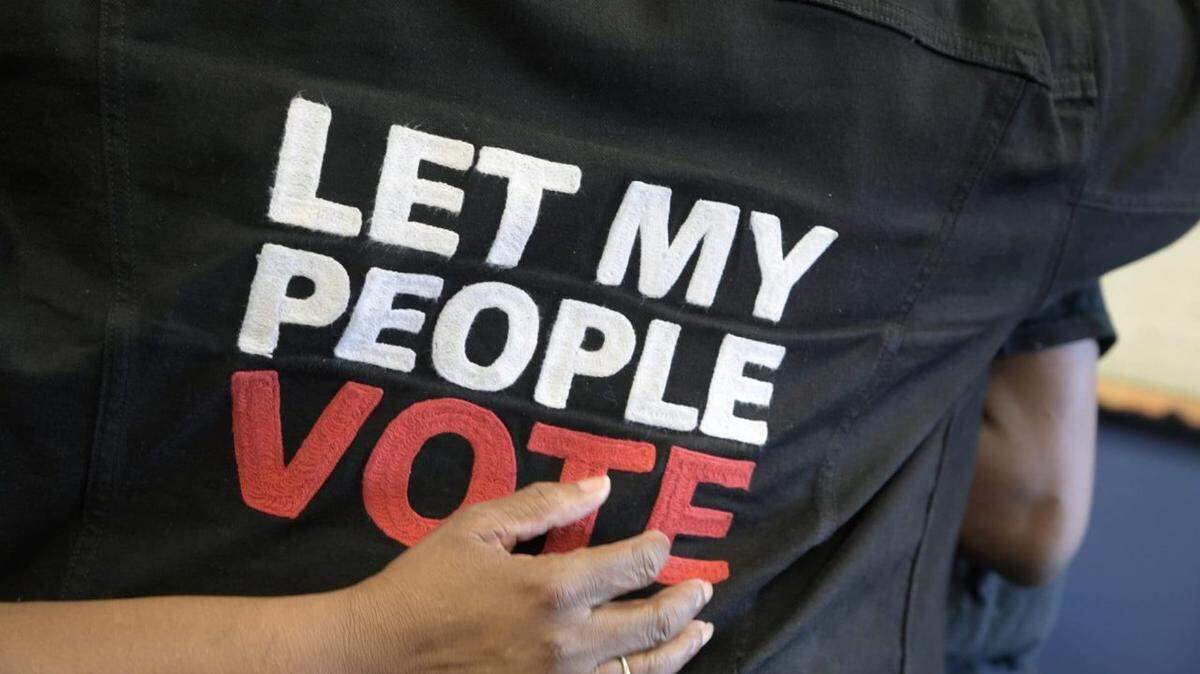
I’m here to offer you an action list.
With last week’s balloting behind us, we now have just less than a year before one of the most momentous elections in American history. As voters in 1860 had to decide between Union and secession, we face a stark choice of our own: America or Trump. There is no middle ground. This is democracy at its Armageddon.
The good news is, there are far more of us who believe in America than those who believe in Trump. It’s not incidental that he lost the popular vote three years ago or that his party has only won it once since 1992. Nor is it incidental that the nation sides against him and them on hot-button issues like guns, abortion and healthcare.
But here’s the bad news. Trump’s party knows all too well that the numbers are against them, that they cannot win nationally without cheating. So they do. Behind a fig leaf of concern over imaginary voter fraud, Republicans have imposed photo I.D. laws, voter purges and polling-place closures that disproportionately disenfranchise those who don’t vote GOP. Meaning, pretty much everyone who’s not a straight, white, angry, older male lacking a college diploma.
So the rest of us must take action — now — to protect our 2020 ballots. That’s why I asked Carol Anderson, a history professor at Emory University and author of “One Person, No Vote: How Voter Suppression Is Destroying Our Democracy,” to compile that action list. Here’s what she advised:
1. Check periodically with election officials in your state to make sure you’re properly registered and that your name has not been purged. “We know these lists are flawed. So it’s really important to double check and make sure that you haven’t been wiped off the list erroneously.”
2. If you’ve moved, “Alert election officials just to give them your new address.”
3. “Make sure that your polling place is where you think it is. Georgia, for instance, is continuing to shut down polling places. So whereas you may have always gone to Southside Church to vote, Southside Church may not be the place anymore. They may have moved it five miles away from you.”
4. “Be prepared for chicanery.” In other words, be on the lookout for fake sample ballots, misleading robo-calls and other dirty tricks.
5. “Be prepared to be in line.” Take water, snacks and power packs for your electrical devices. Anderson says the shutdown of polling places in black neighborhoods in Georgia led to an average three-hour wait in 2018. But as she points out, “If we’re not prepared to be in line in 2020, we may not have another election.”
6. “Research who’s running and what platforms they stand on. When you have a Facebook that says, ‘They can tell a lie and we won’t stop them’ … you have to have the capacity and the wherewithal to know how to discern truth from lies. And then, as they used to say in church, govern yourself accordingly.”
7. “Support civil-society organizations that are doing so much to help folks get registered to vote and get out the vote. I mean folks like Indivisible (indivisible.org), the NAACP Legal Defense Fund (naacpldf.org), the ACLU (aclu.org), VoteRiders (voteriders.org). Those are the folks doing some heavy lifting fighting for this democracy. And that requires resources, so if you can, help them. Help them fight for us.”
The alternative is to watch helplessly next year as hundreds of thousands of us see our votes stolen, our voices silenced — again. Our choices, then, are simple: act with foresight or regret with hindsight.
That shouldn’t be a hard call to make.