
I held my family as Caracas shook twice — and felt how thin survival really is | Opinion
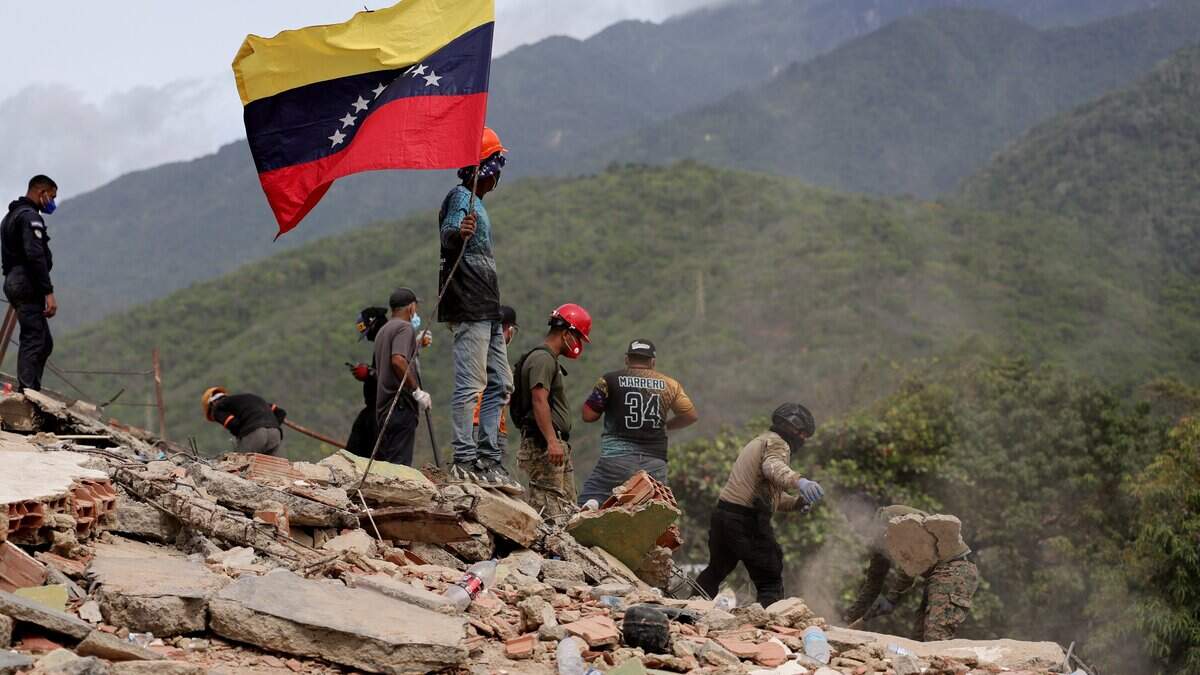
I was at home with my girlfriend, our dog and my family in Caracas on the evening of Wednesday, June 24, when the first earthquake hit our country.
We are used to navigating complex hardships in Venezuela, but nothing prepares you for the earth violently turning against you. The most striking thing wasn’t the initial impact, but how, with every passing second, the intensity continued to build. We were shocked, hugging each other and trying to stay on our feet while the building was being shaken side to side.
When we thought it had stopped, a second earthquake hit us.
The first earthquake had a magnitude of 7.2, followed just seconds later by a second earthquake of 7.5. When the shaking finally stopped and we stepped outside, a thick cloud of dust hung over the city. The true scale of this tragedy is only now becoming clear. The latest official figures confirm a massive toll: more than 1,400 people are dead, over 3,000 are severely injured and others remain missing under the debris.
Our Project HOPE team rapidly deployed that night to evaluate frontline health facilities. In Caracas, structural damage is significant, but just over the mountain in the coastal state of La Guaira, the devastation is absolute and heartbreaking. Once you drive past the Macuto area, you are met with more than 50 buildings — hotels, residential complexes and homes — that have partially or completely collapsed. You see neighbors out in the streets using their bare hands or basic tools to clear concrete, desperately searching for family members and pets who are still alive under the rubble.
When Project HOPE teams inspected the ambulatory centers we have historically supported, we found a precarious situation. Some clinics suffered only cosmetic damage, while others have severely compromised structural stability, making them too dangerous to enter. Power outages and severely damaged communications have been a major challenge, but healthcare staff have not stopped; they’re attending to people the best they can. They are operating in the dark, relying strictly on national technical sheets to standardize trauma care and ensure every patient is treated safely and efficiently.
We desperately need international search-and-rescue teams equipped with heavy-duty tools, K9 units and flashlights to reach those still trapped before time runs out. Our frontline healthcare workers are rapidly depleting their emergency supplies. We are urgently working to secure trauma care essentials: IV fluids, sutures, bandages, underpads and oral rehydration salts. There is also an immediate demand for non-perishable food and clean water.
Looking at the days ahead, my biggest fear is a secondary crisis. With thousands of displaced families sleeping in the streets in improvised conditions, the risk of transmissible diseases is high. To prevent a massive outbreak, Project HOPE teams are helping implement a rigorous system of continuous health monitoring across affected areas. Furthermore, the trauma of displacement leaves many incredibly vulnerable, making our integration of violence prevention and response programs into temporary shelters absolutely critical.
International aid and rescue teams from the United States, Switzerland, Mexico and El Salvador are already arriving, but we are looking at a very long haul. Rebuilding will take months of sustained effort. We are deeply bruised, but as we stand in the rubble helping one another, it is clear our spirit remains unbroken.
César Jiménez is a project and grants manager at Project HOPE, a global health and humanitarian organization. He lives in Caracas.