
Why Florida’s school-choice lawsuit is unlikely to succeed | Opinion
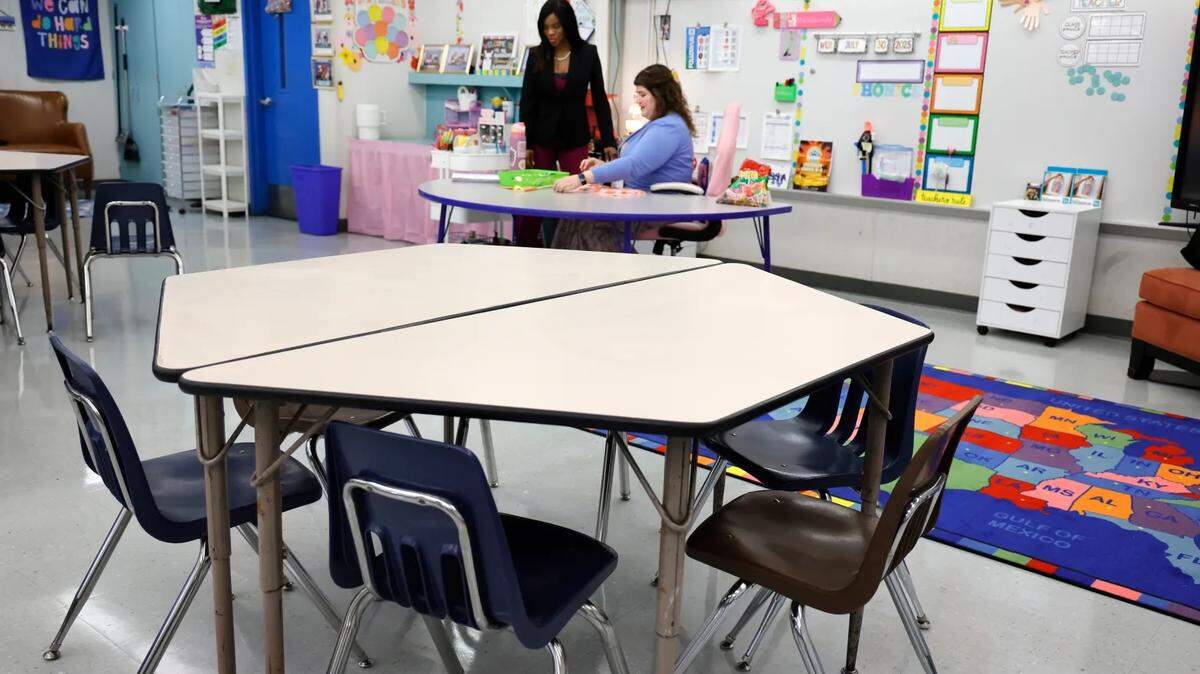
The Florida Education Association, joined by a group of parents, has filed suit challenging the constitutionality of the state’s school-choice programs, including Family Empowerment Scholarships and the charter-school system. The plaintiffs contend that these programs violate Article IX of the Florida Constitution, which guarantees a “uniform” system of free public schools, by creating a parallel structure and diverting funds from traditional districts.
These claims are familiar. They have been raised before, and they face the same fundamental obstacle now: The Constitution does not prohibit the Legislature from expanding educational options beyond the traditional public-school model.
Article IX establishes a minimum obligation for the state to provide a system of free public education. It does not foreclose alternatives. Florida lawmakers have long exercised broad authority to diversify educational delivery, and today’s programs are structured differently from those invalidated two decades ago in Bush v. Holmes. Scholarship funds are directed to parents rather than institutions, and charter schools operate as public schools under state authorization and oversight.
The policy debate underlying the lawsuit is straightforward: Who controls education decisions — the public education monopoly or parents?
This lawsuit represents the latest legal Hail Mary attempt by the teacher’s union to protect adult interests that the monopoly of governmental power has long protected. However, the success of universal choice that includes charter schools breaks the historical chains that tie students to assigned, and frequently failing, schools. Florida’s current framework places greater authority in the hands of families by increasing parental discretion in how children are educated.
Why parents are deciding to exercise school choice options is notably absent in the lawsuit. Despite its length, the complaint largely sidesteps the question of student outcomes — the most relevant measure of any education policy.
Available evidence suggests that Florida’s choice programs have produced meaningful results. Charter-school students, including those from disadvantaged backgrounds, have demonstrated strong learning gains in multiple analyses. Participants in scholarship programs have shown improved long-term outcomes, including higher rates of college attendance. At the same time, research indicates that increased competition has contributed to gains within district-run schools, from academic performance to graduation rates.
The Florida Department of Education conducted an exhaustive annual comparative performance analysis. Florida’s public charter sector maintains an aggregate grade of “A,” outperforming traditional public-school counterparts in 55 of 77 grade-level achievement metrics. More importantly, the data shows that economically disadvantaged students utilizing choice options outpace their district-assigned peers in over 90% of head-to-head categories.
The scale of Florida’s programs underscores their significance. Roughly 1.4 million students — nearly a quarter of the state’s K–12 population — now participate in some form of school choice. Charter school enrollment continues to grow, and scholarship programs have expanded statewide. This is no longer a peripheral reform; it is a central component of Florida’s education system.
These developments reflect a broader shift in educational governance. Increasingly, families, not bureaucracies, are making decisions about how and where their children are educated. That shift has had political consequences, as well, with school choice cited as a contributing factor in recent electoral outcomes, particularly among working-class and minority voters.
But the case before the court is not a referendum on policy preferences. It is a constitutional question. On that question, the plaintiffs’ argument faces long odds. Precedent and statutory design both point in the same direction: the Legislature retains the authority to expand educational opportunity, so long as it fulfills its obligation to provide a system of public education.
Florida’s school-choice framework appears to do just that.
In the end, the courts are likely to focus on what the Constitution requires — not what it forbids. The plaintiffs have identified no constitutional barrier to a system that expands opportunity while preserving the state’s core obligation to provide public education. On that basis, Florida’s approach to school choice should withstand scrutiny while continuing to serve the more than 1.4 million students whose families have chosen these options.
Edward J. Pozzoulli is the CEO of the law firm Tripp Scott, based in Fort Lauderdale.