
Haiti is still a house on fire. Senate, extend Haitian TPS for three years | Opinion
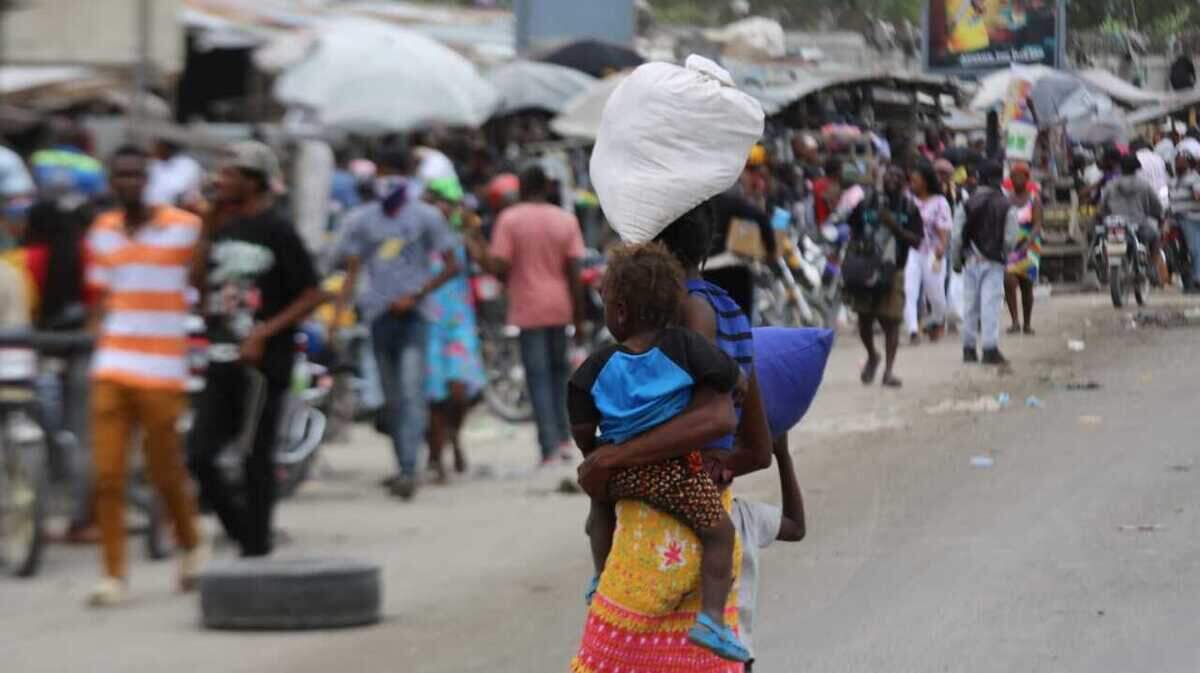
Last month, the House of Representatives passed a bill that would extend TPS (Temporary Protective Status) protections for Haitians for three more years — a critical lifeline for those desperate to avoid returning to the chaos on the island nation that could be described as a “house on fire.”
This bill — which also will need the U.S. Senate’s approval — provides a reprieve to the more than 350,000 Haitians who today live and work legally in the United States under the protection of TPS. These protections will soon end because the administration has determined inexplicably that “country conditions” have improved sufficiently for Haitians in the US to be sent home.
Yet Haiti remains a country on the brink. Since the disastrous earthquake in 2010, which killed more than 250,000 people in a single day and displaced millions more, the country has faced one calamity after another. There is widespread gang violence, kidnappings, a rampant cholera epidemic and spreading food insecurity.
The lack of functioning state institutions has resulted in a general breakdown of security with attacks on women and children becoming commonplace. It would be an act of abject cruelty for the United States to send families back to such dangerous and unsafe conditions. To do so would only exacerbate Haiti’s ongoing humanitarian crisis.
At the same time, taking advantage of the protections TPS affords including the opportunity to work legally, Haitians have already become an integral and contributing part of our society. Haitians in this country are not “on the dole.” They are not “public charges.” They are hard workers filling jobs that, were it not for them, would go unfilled.
The sudden expulsion of Haitian TPS holders would have devastating consequences on our nation’s economy. For example, in health care facilities such as nursing homes, the Haitian work ethic is greatly appreciated even beyond our South Florida community. In places like Indianapolis and Springfield, Ohio, where Haitians were falsely accused of eating people’s pets, business leaders and a few politicians from both parties have said that to lose the Haitians would hurt the local economy.
Of course, some would argue “temporary” should mean temporary. I cannot disagree. TPS was passed by Congress in the 1990s because the lawmakers saw it then as a solution for those who found themselves in the U.S. but because of conditions in their countries of origin could not return home safely. It has turned out to be, admittedly, an imperfect tool — and one that cannot substitute for the hard work of immigration reform that Congress has to undertake sooner or later.
But without any other workable alternative, TPS is what’s available. And the Senate should join with the House in approving a three-year extension for Haitians with TPS.
As I said, this would give Haitians a reprieve, albeit a temporary one; at the same time, three years could give our lawmakers time to explore more durable, more workable solutions. This certainly is better course of action than pulling the floor out from under families without any workable alternative — and to be sure the mass deportation of 350,000 men, women and their children to a country in dire straits is not a workable alternative.
Every single day, I see the human impact of the often-unintended consequences of public policy decisions that result in chronic uncertainty, fear and the disruption of families and entire communities. It’s up to the Senate now to vote “yes” on extending TPS protections for Haitians.
Thomas Wenski is archbishop of the archdiocese of Miami.
This story was originally published June 8, 2026 at 11:35 AM.