
Miami-Dade’s mental health facility must open but, first, we need accountability | Opinion
For more than two decades, Miami-Dade County has waited for the opening of a mental health facility designed to serve some of the most vulnerable individuals in our community. Today, that long-delayed project is finally nearing reality.
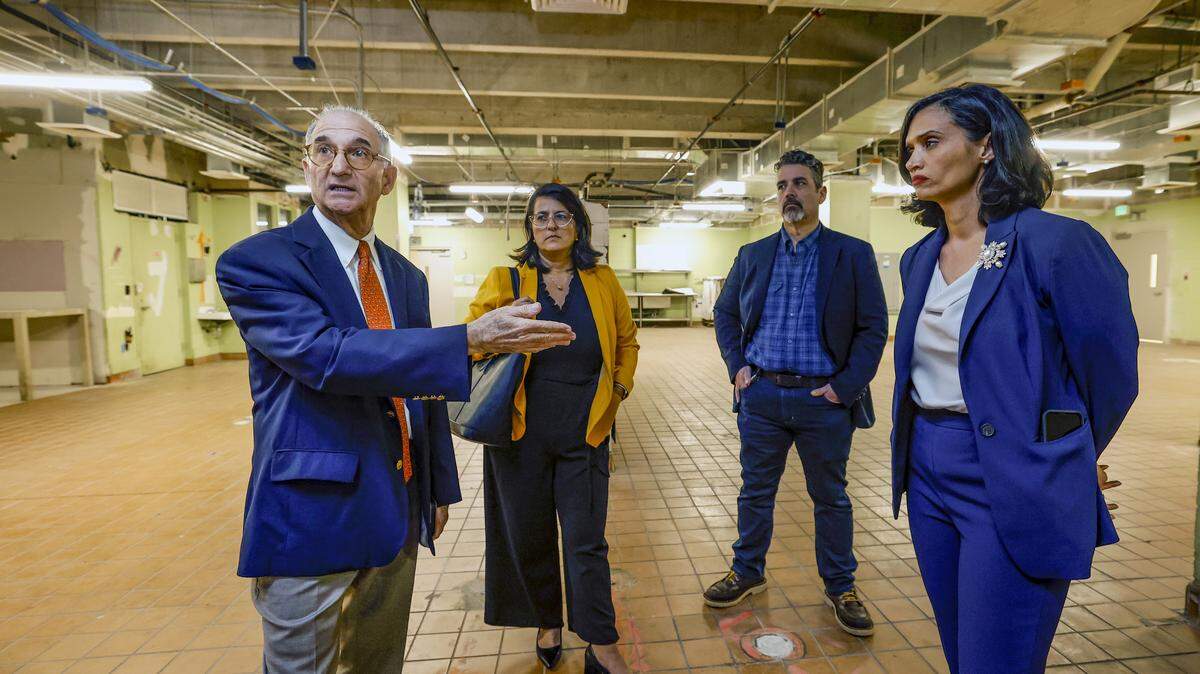
The building itself tells part of the story. Once owned by the state of Florida and deeded to Miami-Dade County more than 20 years ago, the facility is being redeveloped to meet one of the most urgent needs facing our county: expanding capacity in a mental health system that has been under strain for far too long. This delay is not insignificant. It reflects the complexity of the issue, but it also underscores the urgency of getting this right. For too many years, our system has fallen short in adequately serving individuals with severe mental illness, leaving families, hospitals, law enforcement and taxpayers to absorb the consequences.
A vote by the Miami-Dade Commission is pending to open the Miami Center for Mental Health and Recovery at 2200 NW 7th Ave., Miami.
I support opening this facility, but it must be done responsibly. That is why I have proposed an amendment with three key components: first, the development of a long-term, sustainable funding plan; second, the exploration of public-private partnerships to strengthen the project’s viability; and third, the establishment of clear performance metrics to be reported to the Behavioral Health Advisory Committee.
Those metrics are essential. If Miami-Dade is going to make this level of investment, we need to know whether the facility is delivering measurable value to the public. Is it improving access to care? Is it reducing unnecessary hospitalizations? Is it relieving pressure on emergency rooms, law enforcement and families? Is it helping patients stabilize and connect to longer-term support? Accountability and compassion are not opposing values. In fact, if we want this facility to succeed, we need both.
The current reality is clear. Due to the limited number of psychiatric hospital beds in our community, the correctional system has too often become the default point of entry to care for individuals experiencing mental health crises.
The opening of this mental health center presents an important opportunity to change that. Its primary purpose must be to serve individuals with severe mental illness across our community, including those who require intensive treatment, stabilization and long-term support. While the facility may help reduce the number of individuals cycling through emergency rooms, hospitals and the justice system, its mission must be broader than diversion alone.
This center should function as a true behavioral health resource for Miami-Dade residents and families who too often struggle to access adequate psychiatric care before a crisis escalates. This facility cannot be viewed exclusively through the lens of incarceration, homelessness or jail diversion. While those challenges often intersect with mental illness, the broader purpose of this center must be to provide accessible, clinically appropriate care for individuals living with serious mental health conditions.
To date, more than $50 million has been invested in the construction and redevelopment of this facility, which is not yet fully complete. In addition, the initial two-year operational phase is projected to cost approximately $44 million. These are significant investments that deserve serious oversight. Mental health costs are not fixed.
That is why legitimate questions must be answered before this project moves forward into full operation. What happens after the initial two-year funding period? How do we prevent this initiative from becoming an ongoing burden on Miami-Dade taxpayers without clear results? Raising these concerns is not about delaying progress. It is about making sure progress is responsible, sustainable and accountable.
Miami-Dade now faces a clear choice. We can continue managing mental health crises through the most expensive and inefficient systems — emergency rooms, jails and repeated hospitalizations — or we can build a better model through responsible investment and strong public-private partnerships.
After more than 20 years of waiting, this project represents a real opportunity to move forward. But the true challenge is not simply opening its doors. The true challenge is ensuring that it operates effectively, with fiscal responsibility, proper oversight and a patient-centered approach.
René García represents District 13 on the Miami-Dade County Commission.
This story was originally published May 26, 2026 at 10:02 AM with the headline "Miami-Dade’s mental health facility must open but, first, we need accountability | Opinion."