
Venezuela’s freedom of the press is just awakening. It must now be nourished | Opinion
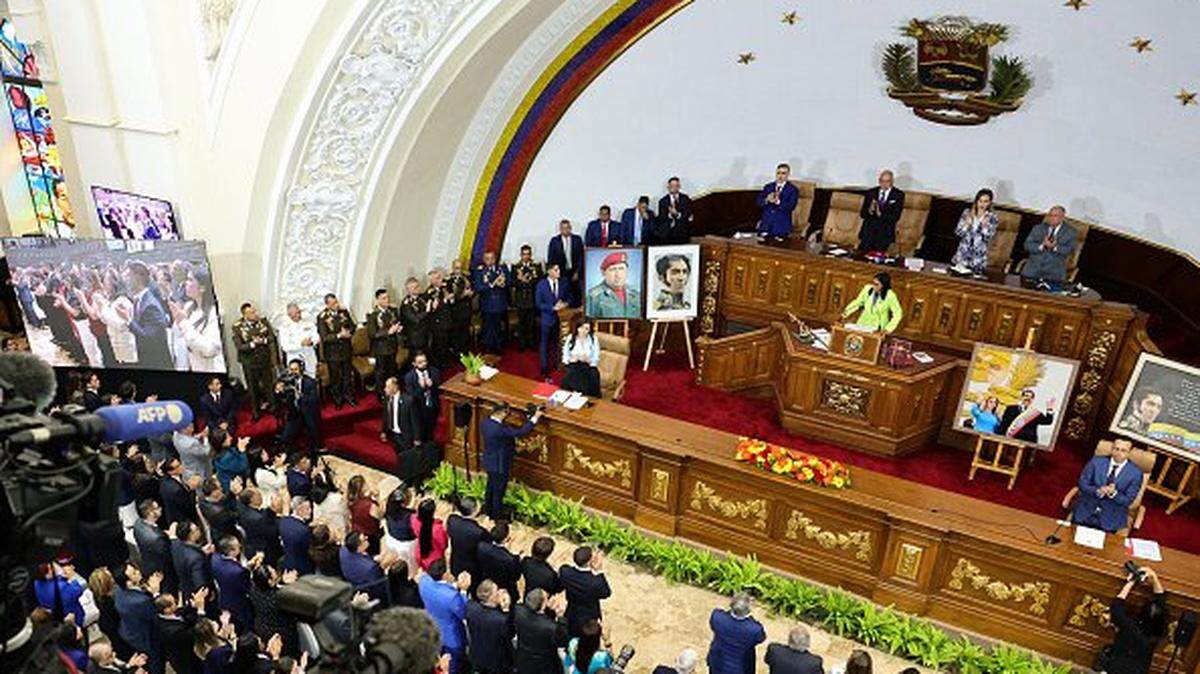
National Assembly President Jorge Rodriguez recently told El Pais in Spain that freedom of expression in Venezuela must now be respected “without restriction.” And indeed, it is true that some slight progress has been made since the Jan. 3 raid on Nicolás Maduro’s bunker.
But it would be a serious mistake to confuse this partial opening with genuine press freedom. Reporters Without Borders still ranks Venezuela near the bottom of its global Press Freedom Index — 160th out of 180 countries — and classifies the information environment as “very difficult.”
Three realities currently characterize the Venezuelan media ecosystem.
First, self‑censorship remains pervasive. Years of lawfare, targeted prosecutions, raids and forced closures have trained Venezuelan editors to avoid certain topics altogether. The “Law Against Hatred, for Peaceful Coexistence and Tolerance,” or Ley contra el Odio, allows for sentences of up to 20 years in prison and media shutdowns for vaguely defined offenses; it has been used to create a chilling effect by treating even criticism of economic policy and acceptance of sanctions as potential threats to the state.
Second, digital censorship has replaced old analog controls. Over the past decade, more than 100 Venezuelan radio stations, newspapers and television channels have been forced off the air. In response, independent journalism moved online. The rapacious Maduro government followed. State‑run CANTV and, increasingly, private internet providers now block dozens of independent news sites and human‑rights portals, often during key political moments. Some get around it, but the effect is to turn access to independent news into a privilege for the wealthy and digitally savvy, not a right enjoyed by all.
Third, persecution and exile continue to hollow out Venezuela’s once formidable journalism cadre. Hundreds of Venezuelan journalists now live abroad, many after direct threats, arbitrary detention or criminal cases. They are doing extraordinary work from Miami, Madrid, Bogotá and elsewhere. But exile imposes costs: physical distance from communities, reduced access to sources and a constant sense that reporting freely means never setting foot in their home country again.
Any alleged “Phase 3” transition that leaves this diaspora in limbo or that suggests they return without legal guarantees of press freedom will remain incomplete and, frankly, a farce. If the transition is to mean anything, freedom of expression has to be a reality-based sine qua non, not just a U.S. embassy talking point. Legally enshrined press‑freedom benchmarks must be part of the democracy agenda.
We suggest three steps Washington and Caracas can and should take immediately:
- End all internet blocking of news and opinion sites. The government should commit to lifting all administrative and de facto blocks on independent outlets and international news services, and to refrain from new blocks during elections, protests or sensitive trials.
- Restore full access to international news channels and platforms. Television channels such as CNN en Español, Telemundo, TelevisaUnivision and regional broadcasters should be allowed to operate freely on cable and satellite services inside Venezuela, without arbitrary suspensions.
- Abolish the legal arsenal used to criminalize speech. The Hate Law, the Simón Bolívar framework and related decrees that make criticism a crime against the state should be explicitly repealed or replaced with legislation consistent with the Venezuelan Constitution and international standards.
As keen observers of Venezuela’s democratic fate, we recognize there have been positive changes since January. The fact that officials now feel obliged to talk about “unlimited” freedom of expression is itself a sign of pressure.
However, World Press Freedom Day in Venezuela this year should be more than a moment for performative outrage or exaggerated applause. It is an opportunity to state plainly that Venezuela’s information space has opened at the margins but remains structurally constrained.
Moreover, if phase three of the Washington-orchestrated transition is to deliver on a democratic transition, the free flow of ideas cannot be treated as a secondary issue. Without such a condition, any claim by the Trump administration or the Rodriguez government to genuine democracy in Venezuela will be farcical.
John Feeley is the executive director of the Center for Media Integrity of the Americas and the former U.S. ambassador to Panama. James “Jimmy” Story was the U.S. ambassador to Venezuela for six years in during both Trump and Biden administrations.
This story was originally published May 3, 2026 at 11:22 AM.