
Miami’s Overtown neighborhood is rising — on its own terms | Opinion
If you want to understand what’s really happening in Historic Overtown, don’t start with a development proposal. Start with the people — and the businesses — that have never left.
This past week, the community gathered to celebrate the 76th anniversary of Just Rite Barber Shop. And yes, 76th. There was no big celebration for the 75th, but 76 showed up with full energy, full chairs and full pride. That tells you a lot about Overtown. It doesn’t wait for perfect moments. It creates its own.
For more than seven decades, Just Rite hasn’t just cut hair — it has shaped community. It’s where people check in, debate, laugh, organize and stay connected. In a city that changes by the minute, that kind of continuity isn’t just impressive. It’s foundational.
Overtown is home to some of Miami’s oldest businesses and churches that date back to the 1800s. These institutions have endured with discipline, sustained by faith and a deep responsibility to their community. They have served as stewards of their real estate through successive economic booms and downturns.
That legacy is visible across the neighborhood, from Greater Bethel African Methodist Episcopal Church and Mount Zion Missionary Baptist Church, both organized in 1896, to St. Agnes Episcopal Church, founded by Bahamian Anglicans in 1898. Institutions like St. John Institutional Missionary Baptist Church (1906) and A.M. Cohen Temple Church of God in Christ (1918) continue that tradition —enduring, adapting and anchoring both faith and economic life.
Black-owned businesses and churches in Overtown are often framed as part of the past. That’s a mistake. What’s happening now is not preservation — it’s evolution.
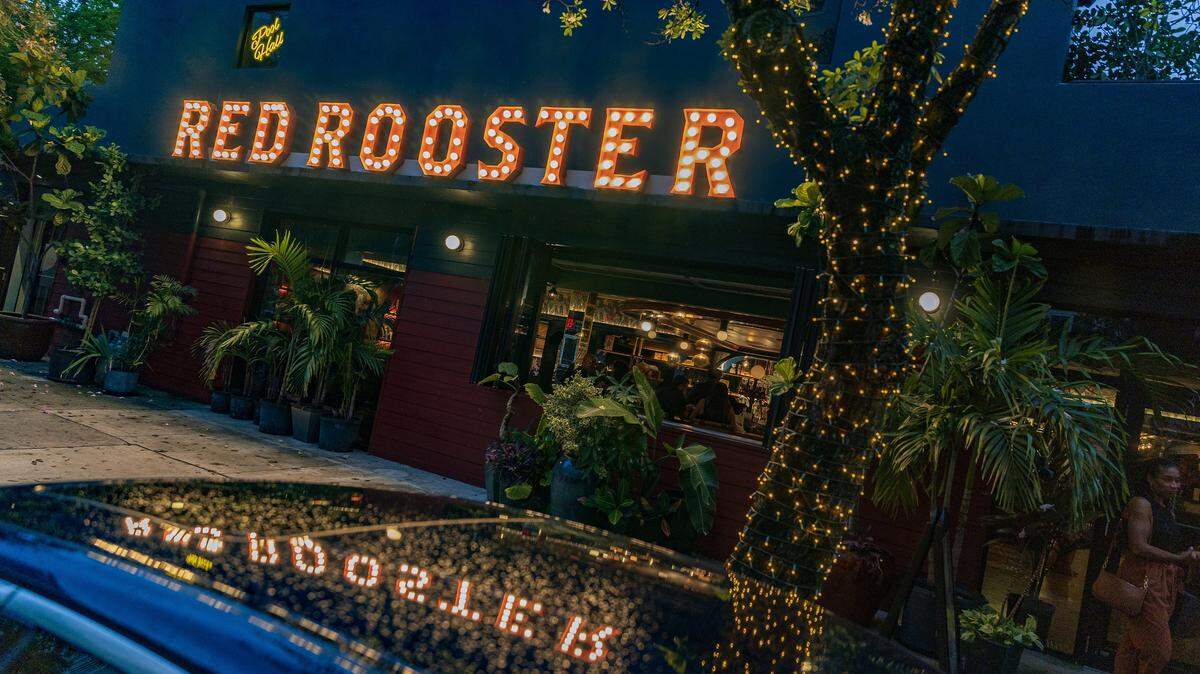
You can smell that evolution in the air. The smoke and spice from Red Rooster Overtown, the wings at House of Wings, the comfort of Lil Green House Grill and the staples at Two Guys Restaurant signal presence and pride. With the reactivation of People’s BBQ, that lineage is being reignited.
My small business in Overtown, Hampton Art Lovers, has helped transform a historic structure, the Ward Rooming House, into a living classroom and gathering place. African American–owned and operated, it is more than a gallery; it is a cultural institution founded to promote African American art and honor fine artists.
The Ward Rooming House is important all by itself. Built in the early 1900s by Shaddrack and Victoria Ward, it once served as a safe house in what was called “Colored Town.”
That same spirit is shaping what comes next. At Northwest Third Avenue and 11th Terrace, a 4,000-square-foot hub, OVRTWN Corner, will offer a marketplace, a café, a bar and a food hall for entrepreneurs, artists and community. Nearby, a planned supper club and lounge called Harlem Square will help revive the legacy of the iconic 1963 Harlem Square Club.
This momentum from projects like these reflects alignment between community effort and public investment. The work of the Southeast Overtown/Park West Community Redevelopment Agency, chaired by Miami Commissioner Christine King, has helped create conditions that support small business growth and reinvestment.
These are not isolated projects. They are signals of a neighborhood building its future from within. During National Small Business Week, May 3–9, we recognize entrepreneurs and small business owners. Overtown already knows: small businesses aren’t secondary — they are the economy.
That’s especially true in Miami. Our economy is dominated by small, locally rooted enterprises. Overtown sits at the center of that reality. And Overtown has something that cities spend millions trying to replicate: authenticity.
For years, the question has been whether Overtown would be revitalized. The better question is: revitalized for whom and by whom?
What’s happening now offers a clear answer. Revitalization led by Black-owned businesses means ownership, growth and spaces that reflect Overtown’s identity, rather than erase it.
There’s something fitting about skipping a 75th anniversary and going straight to 76. It’s imperfect. It’s real. And it’s unmistakably Overtown. All are welcome in Overtown — but Overtown must remain Overtown.
Christopher Norwood is the owner and curator of Hampton Art Lovers at the Historic Ward Rooming House Gallery.