
Florida GOP chose ‘maximum warfare’ in a redistricting race to the bottom | Opinion
“Maximum warfare.” That’s how U.S. House Minority Leader Hakeem Jeffries now describes redistricting. It’s an honest description of how both parties see voters — not as members of communities to respect, but as a battlefield to control.
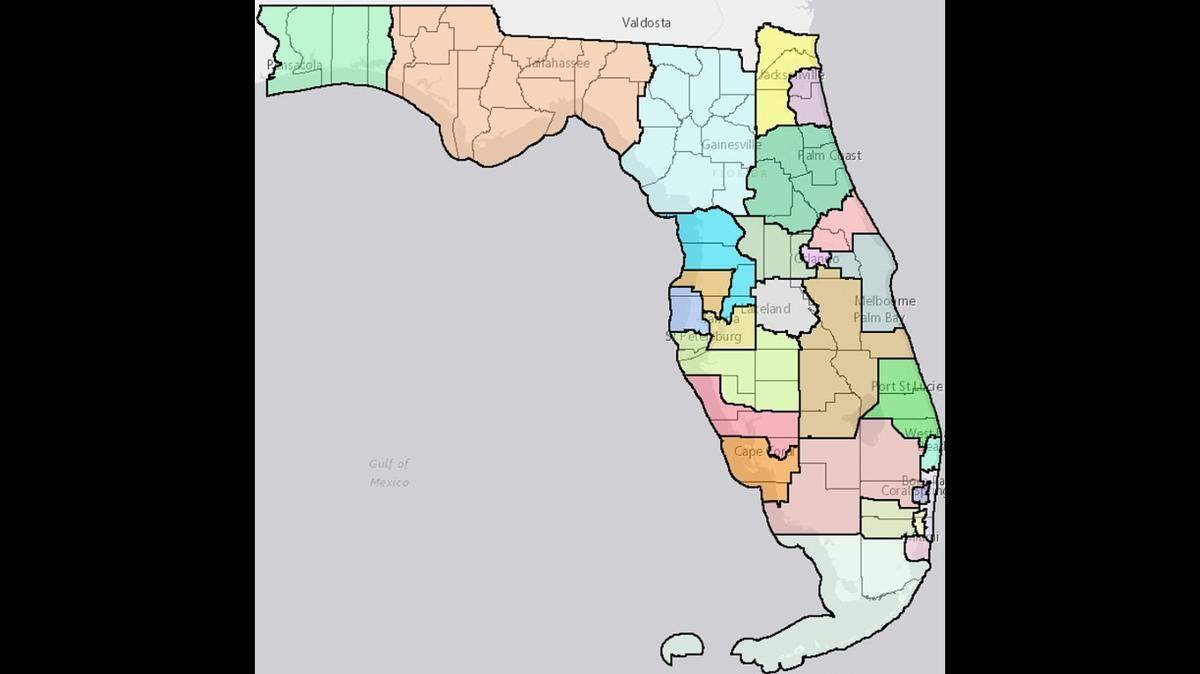
That mindset is now driving Gov. Ron DeSantis and Republican leaders in Florida to pursue unprecedented mid-decade partisan gerrymandering. On Wednesday, the Legislature passed new congressional district maps that increase the number of seats favoring Republicans. It was the same story driving Democrats to draw districts in their favor in Virginia.
All of this is fundamentally wrong. This is not a zero-sum game between parties. It is a disastrous game for voters. As the Brennan Center for Justice put it plainly last week: “In the risky game of mid-decade gerrymandering, it’s the voters who lose.”
As a Virginia Democrat, I vehemently opposed my own party’s attempt to cheat with mid-decade redistricting. It will help us politically — but by manipulating the rules of representation itself.
Our representative government only works if I’m willing to stand up for my neighbor’s right to vote in a free and fair election even if I know he’s going to vote differently than I do. That’s the basic deal in a democracy. Gerrymandering breaks that deal. It tells some voters their voice doesn’t count. Once that happens, we start losing trust in the whole system — not just fair maps, but the idea that this country can keep getting better.
It doesn’t matter who started it anymore. Both parties have contributed to this race to the bottom. And both are now circling the drain. Each side justifies it the same way: The other side did it first, the stakes are too high to sit out and failing to act is unilateral disarmament. It’s as if they confuse destroying democracy with saving it.
This is how permanent escalation — maximum warfare, if you will — becomes the system.
Restraint is still possible, however. In Maryland, Democratic leaders stepped back from the brink. In Indiana, it was Republicans who said no. They recognized that not every lever of power should be pulled simply because it exists.
Florida faces that same choice. Now, with the Legislature having acted, it falls to Florida voters to push back on their representatives and to the Florida Supreme Court to uphold the Florida constitution and protect voters.
Florida’s constitution is not ambiguous. It states plainly: “No apportionment plan or district shall be drawn with the intent to favor or disfavor a political party or an incumbent.” That is not a suggestion. It is a clear boundary rooted in the idea that voters choose their representatives, not the other way around. More than 60% of Floridians — Republicans, Democrats and independents — voted that into the constitution in 2010. Efforts to push mid-decade redistricting for partisan advantage test that boundary directly.
A system where both parties feel entitled to rewrite electoral rules whenever they hold power is a system that erodes trust. Voters begin to see outcomes as manipulated, not earned. Cynicism takes hold. The legitimacy of representative government weakens. People even believe there’s no reason to cast a ballot, because the result has been pre-ordained. That is the path Virginia has started down. I wish we had not gone down this road.
Republican voters in Florida should not tolerate this from their own party. And if those lines are crossed, the Florida Supreme Court should enforce the constitutional guardrails that exist to protect voters from exactly this kind of overreach.
That is how a republic sustains itself: not by demanding fairness from the other side, but by practicing it when it is hardest.
Virginia Democrats had this moment. We failed.
Florida still has the chance to get it right.
Brian Cannon is an attorney and democracy reform advocate who serves as co-chair of the advisory council to No Gerrymandering Virginia.