
Michael Tilson Thomas: the last heir to Leonard Bernstein’s television pulpit | Opinion
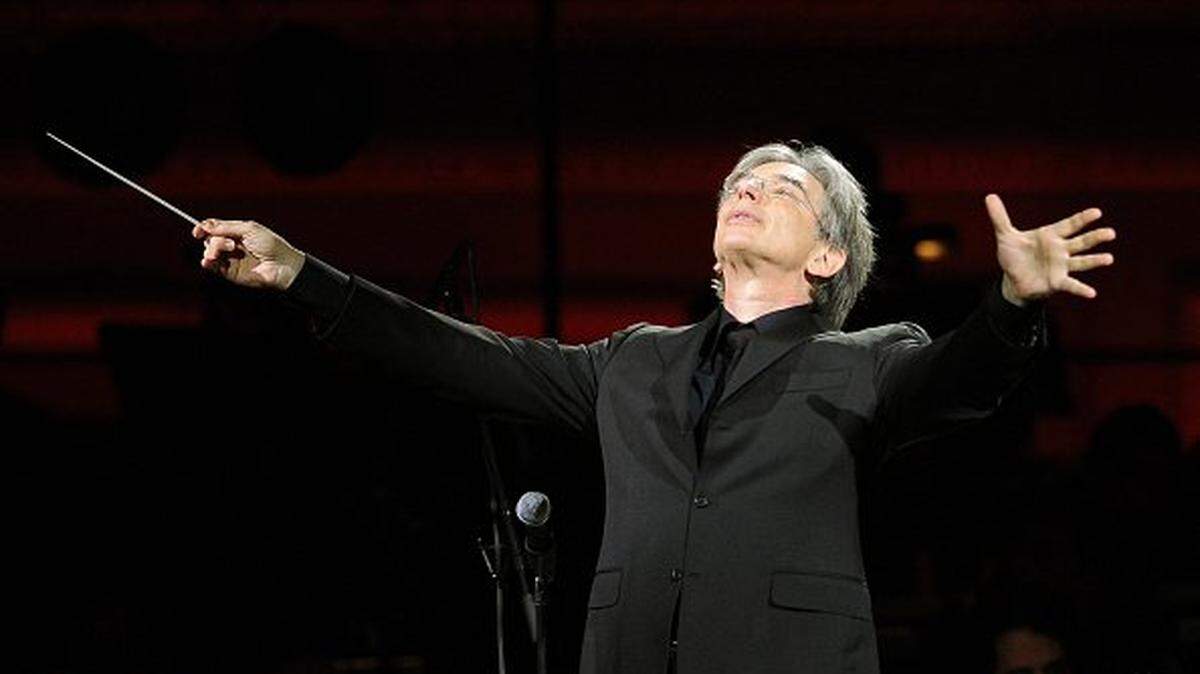
South Florida will mourn Michael Tilson Thomas as a local institution-builder, the Los Angeles–born conductor who chose Miami Beach in 1987 to co-found the New World Symphony with Ted and Lin Arison, and who spent 37 years shaping classical music education in a city that had never had a resident orchestra of international stature.
The tributes are deserved. But the story behind that choice — why a conductor at the height of his international fame needed to build an alternative institution in Miami Beach at all — is largely a television story, and it is the part of his legacy most of this week’s obituaries will miss.
Tilson Thomas, who died April 22 in his San Francisco home at 81 after a five-year struggle with glioblastoma, was the last American conductor fully formed by network television and the only one who carried Leonard Bernstein’s mantle as America’s musical teacher-in-chief.
What Bernstein built
Between 1958 and 1972, CBS aired 53 New York Philharmonic Young People’s Concerts in prime time, first on Saturday mornings, then Sunday afternoons, eventually evenings. The series won five Emmy Awards in the 1960s and was syndicated to more than 40 countries. In 1962, it became the first concert series broadcast live from Lincoln Center’s Philharmonic Hall.
Bernstein wrote the scripts himself, conducted the performances and narrated in a voice that assumed children could understand sonata form if an adult bothered to explain it. This was not educational television in the margins. It was appointment viewing in a three-network era, when a single broadcast could shape a generation’s cultural vocabulary. Bernstein taught America what a symphony was.
What Tilson Thomas inherited
Tilson Thomas studied with Bernstein, absorbed his podium grammar and, in 1971 at 26, stepped into the role Bernstein was vacating. CBS’s decision to hand the franchise to him was a vote of confidence in a protégé and an acknowledgment that the project required a successor fluent in both music and the camera.
His six-year run from 1971 to 1977 kept the series alive during a period when commercial broadcasters were already retreating from public-interest programming. He was the bridge conductor, carrying Bernstein’s pedagogical television into the decade when such television would cease to exist. Deregulation, cable fragmentation and the collapse of network public-affairs obligations closed the door behind him. No major commercial network has aired a sustained classical music education series since.
Why Miami Beach mattered
What distinguishes Tilson Thomas from every other Bernstein disciple is that he understood the door was closing and built an alternative. The New World Symphony was explicitly conceived to pass Bernstein’s training down to the next generation of orchestral musicians when television no longer would.
Its Frank Gehry campus, which opened in 2011, pioneered webcasts, distance learning and the SoundScape Park wallcasts that project live performances onto a 7,000-square-foot outdoor screen — free, public and communal. The wallcasts were, in effect, an attempt to rebuild block by block what Bernstein had once commanded on CBS: appointment classical music in shared civic space.
He did not choose Miami Beach because it was convenient. He chose it because he needed a blank canvas on which to build what television would no longer provide, and South Florida gave him one.
Who inherits this role now? Gustavo Dudamel, the Venezuelan-born music director of the Los Angeles Philharmonic and incoming leader of the New York Philharmonic, makes occasional appearances on PBS. YouTube explainers and TikTok popularizers reach their niches.
None commands the monoculture Bernstein assumed, the bridge role Tilson Thomas played at CBS or the institutional ambition he exercised in Miami Beach. The Bernstein–MTT line appears to end here, not because talent has vanished but because the broadcast architecture that made such cultural authority possible has been dismantled.
Tilson Thomas’s death is not only the loss of a great conductor. It is the closing of a chapter in American broadcasting history that began when CBS decided, in 1958, that teaching children about Beethoven was worth it.
Stuart N. Brotman is former president and CEO of The Museum of Television & Radio (now The Paley Center for Media) and served as Harvard Law School’s inaugural Visiting Professor of Entertainment and Media Law. His most recent book is Free Expression Under Fire (2025).