
Miami showed up. Now let’s build what it deserves: the northeast rail corridor | Opinion
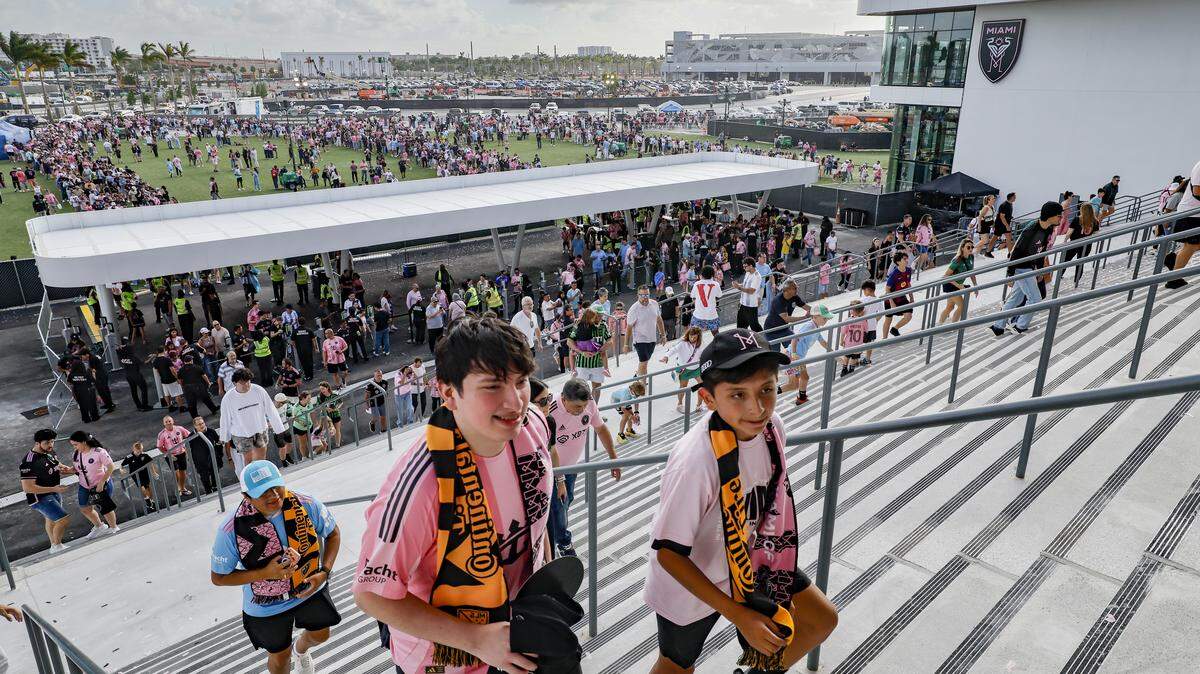
There are moments in a city’s history that feel larger than a single event. When a capacity crowd of more than 26,000 filled Nu Stadium for Inter Miami’s inaugural home match on April 4, we experienced one of those moments.
Families in pink jerseys. Young fans attending their first professional match. Lifelong supporters who have carried this sport in their hearts for decades. They came from across Miami-Dade and beyond, and they turned a soccer game into a celebration of community, culture and civic pride.
But one of the most meaningful parts of the night wasn’t just the atmosphere inside the stadium — it was how thousands of fans chose to get there.
More than 3,000 attendees arrived by public transit. Tri-Rail saw a surge — its eighth-busiest day in history with over 9,000 trips, including over 1,000 trips on special game-day trains — so strong that Tri-Rail now plans to continue dedicated service for Inter Miami matches, making transit a permanent part of the experience. In one of the most car-dependent metro areas in the country, thousands of Miamians made a different choice when they were given a reliable option.
That wasn’t just convenience. It was proof of concept — and a signal that Miami is ready to move differently.
For years, we have talked about the need for better regional transit in South Florida. Opening night delivered the evidence: when we build the right infrastructure, people use it. Now we have to act on that momentum, and the clearest next step is the Northeast Corridor.
The Northeast Corridor (NEC) is a 13.5-mile commuter rail line that will connect downtown Miami to Aventura with stations in Wynwood, the Design District, Little Haiti and North Miami. It is designed to serve more than 100,000 daily commuters, giving residents a high-capacity alternative to some of the most congested roads in our county.
For many, it will mean 30 to 45 fewer minutes of daily travel. That is valuable time returned to families, to productivity, to life. By connecting residents to major job centers, educational institutions, entertainment venues and the economic engines that drive our community, the NEC ensures that opportunity is not limited by geography or gridlock.
This project is not a wish list item. It is the defining infrastructure priority for how our region grows, competes and connects. But it will not happen on its own. It needs our support and action.
We know this works. The challenge now is alignment and execution. To capitalize on this transformative moment, we need a unified focus across local, state and federal partners alongside the business community. We must treat the Northeast Corridor not as just another project, but as the defining priority for how our region moves forward. That means our local leaders, our county and state officials, and our private sector must come together with a shared sense of urgency to get this done.
A global city is not defined only by its skyline. It is defined by its ability to move people — to connect talent to opportunity, neighborhoods to economic engines and fans to the places that bring us together. Opening night gave us a glimpse of that Miami: a city where people have real transportation choices, where major events do not have to mean gridlock and where our mobility options reflect our growth and ambition.
Miami has a home for the beautiful game. Now let’s build the system that gets every Miamian where they need to go — on match day and every day.
Jose Mas is co-owner of Inter Miami, a board member of Partnership for Miami and CEO of MasTec, developers of the Freedom Park project that includes Nu Stadium.
CORRECTION: An earlier version of this article gave an incorrect figure for the total number of people who took public transit to the stadium. The correct number is more than 3,000.
This story was originally published April 17, 2026 at 10:39 AM.