
A Miami school rejected my daughter and started a 15-year fight for inclusion | Opinion
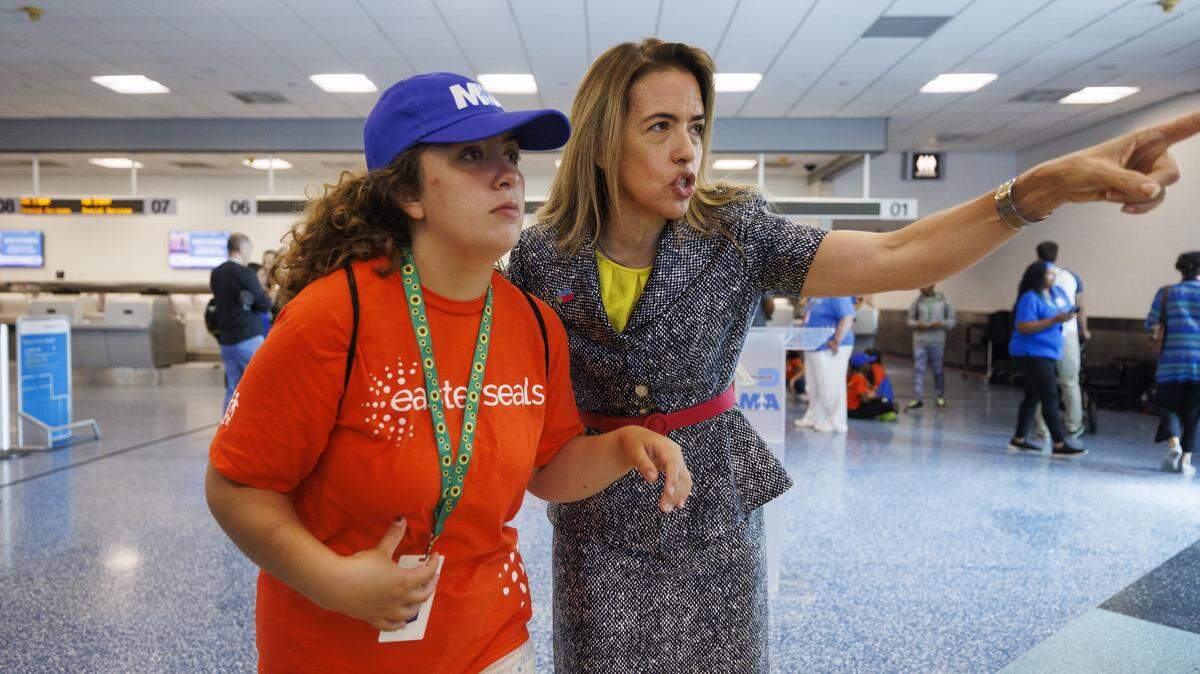
In 2011, as a Miami-Dade School Board member, I wrote an op-ed for the Miami Herald and shared something I had never made public: My daughter Isabela had been diagnosed with autism, and a charter school had turned her away because of it.
Sitting with that rejection, I understood for the first time how quickly a system built without our children in mind could close a door. That piece changed the course of my career and my life. It led to a series of investigations into charter schools, and I began writing about our family’s autism journey for this paper.
What started as one mother’s disclosure became a public commitment I have honored for over 15 years.
In 2020, as a county commissioner, I expanded my focus to include all forms of neurodiversity. Neurodiversity is the recognition that neurological differences, including autism, ADHD, AuDHD, Down Syndrome, dyslexia, epilepsy and Tourette’s, are a natural part of human diversity.
Today, in partnership with Crystal Academy, 27 cities are flying the autism acceptance flag, and I am visiting municipalities and counties across Florida with the Neuroinclusion Toolkit, a free, practical roadmap that I authored that includes law enforcement training, public spaces, sensory-friendly events, government services and employment. It includes model legislation and real examples from Miami-Dade that any community can adopt directly.
The goal is not inspiration, it is replication. Grounded in Miami-Dade’s experience, the toolkit lays out a practical path that any city, county and transit authority can follow.
You do not need to hire a consultant or spend months deciding where to start. Instead, we can work together as a region and a state toward the shared goal of neuroinclusion.
Between 15 and 20% of the world’s population is neurodivergent, studies show. These are not outliers, they are our neighbors, coworkers and family members, and they deserve systems designed to include them.
What has changed since 2011 is not just policy — the conversation has shifted. Families who once felt invisible now have a seat at the table. First responders who once had no tools now have training and cities that once had no roadmap now have one. What has not changed is the urgency. Every year we wait is another year a neurodivergent child is turned away, a neurodivergent adult is unemployed, or a family navigates a crisis alone that better systems could have prevented.
From my time on the School Board to my service on the Board of County Commissioners, I have worked to move Miami-Dade from awareness to action: countywide neurodiversity training for law enforcement and first responders, sensory-friendly public spaces and events, neuroinclusive libraries that earned national recognition, training for transit and parks employees, advisory boards that turned advocacy into policy, employment pathways for neurodivergent adults and the Occupant with Autism decal program that gives first responders critical information before a word is spoken. Today, in partnership with UM-NSU CARD, more than 4,000 Miami-Dade first responders have been trained.
None of this required creating new bureaucracies. Rather, every initiative was built within existing systems.
Fifteen years ago, I shared my family’s story because I believed that sharing our journey could change things — and it did. Isabela is now 22 years old, she completed the Easterseals culinary program and is now thriving in their new adult program. She is a lovely young woman who loves to cook, make jewelry and travel. Her success is a direct result of programs that met her where she was.
Today, I am the proud parent of two resilient adults on the autism spectrum, and together we continue to educate and advocate.
Currently, we have the momentum to make neuroinclusion the standard across Florida, not the exception. Visit www.neuroinclusiontoolkit.com and join us.
Autism Acceptance is not performative, it is about the ongoing work of acceptance, inclusion and education.
Commissioner Raquel A. Regalado represents Miami-Dade County Commission District 7.