
A veil of tyranny hid the truth in Cuba. But now it hangs by a thread | Opinion
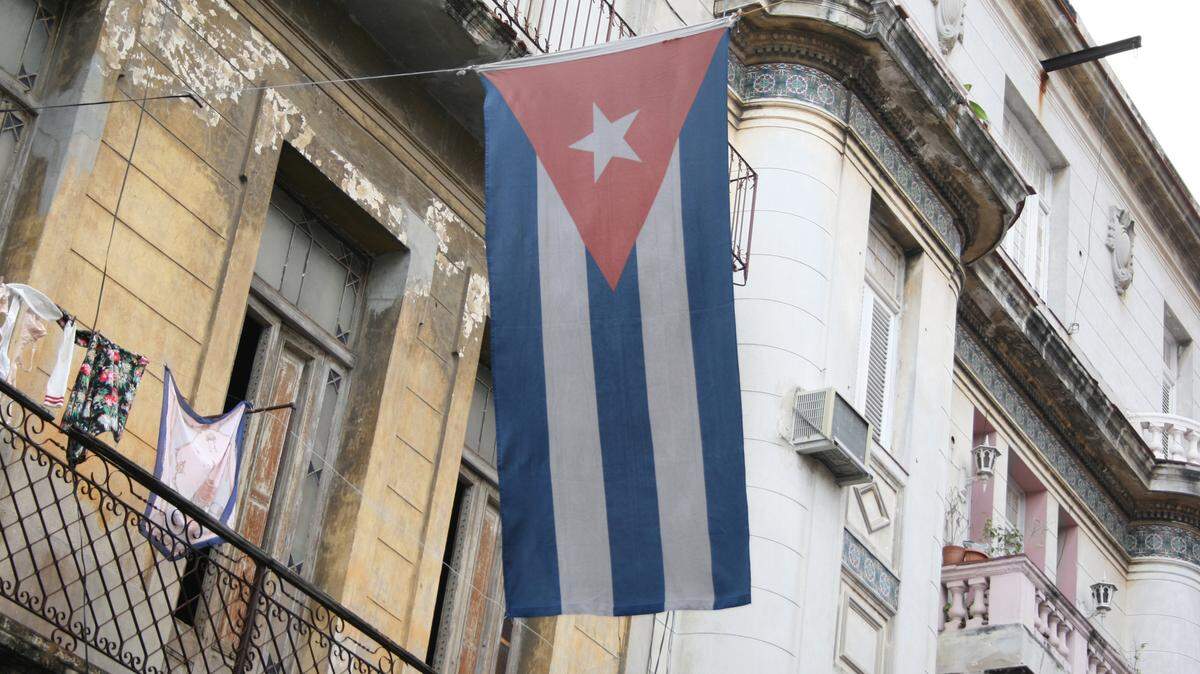
In the 21st century, the separation between the free and unfree world is not a physical wall, as it once was in the form of the Berlin Wall, which came crashing down in 1989. Today, that separation is much more slippery, tricky, transparent — it’s a veil. The veil of tyranny.
As communism fell all over the world in the late ‘80s and early ‘90s, the veil was pulled tighter over Cuba. The wall evolved from an “iron curtain,” as Churchill called Europe’s post-World War II divide, to something more like projection mapping.
Cuba’s veil is alluring on the surface, but that’s a trompe l’oeil effect — a trick of the eye. Some can’t even see it’s there and definitely not what lies behind.
Cuban Americans and American-born Cubans like me, however, can see it clearly because those trapped behind the veil are family, friends, our history, roots — truth.
The veil of tyranny is the painted plazas of Old Havana, façades not meant to be seen beyond. It’s the Buena Vista Social Club(s) dancing for the public, performance hiding the muzzled voices of the young who hunger fiercely for freedom of speech, of press, the right to vote the tyrant out.
The veil of tyranny looks you straight in the eye with the smile of a clown hiding pain, shows its social media teeth biting into Gen Z’s brain like a zombie while housing the shells of courageous artists like Luis Manuel Otero Alcantara, imprisoned for trying to connect to the outside world beyond the veil.
As one of the leaders of the country’s largest protests in July 2021, Alcantara was locked up, silenced. In recent days, the regime has threatened him with death if the U.S. “invades.” Many years ago, my grandfather received the same threat as a political prisoner on the Isle of Pines.
The veil of tyranny is the Che Guevara T-shirt you see at college, on the New York subway, on the London Tube. It’s the veil that hides Che’s truth, how he eliminated trials, calling them a “bourgeois detail,” which led, in turn, to democide, a country killing its own people.
The veil hides the blood of at least 4,466 people killed under the Castro brothers’ regime, though historian R.J. Rummel estimates as many as 35,000 to 141,000. That number is hard to quantify precisely because it is veiled.
Cuba’s veil of tyranny dates back to the Sierra Maestra mountains in the late ‘50s, when it is said Fidel tricked New York Times reporter Herbert Matthews into a free branding campaign, taking the writer in circles, wool over his eyes, creating a greater veil in the pages of the Times.
Generations of my people have been pointing to the veil, saying: “There! It’s right there! Can’t you see it? Covering our island, suffocating it?!”
But it turns out, if you don’t know someone trapped behind the veil or someone who escaped it, then chances are you can’t see it, just as Matthews couldn’t.
The difference now is that the light is hitting differently; the veil is beginning to reveal itself. The veil is enormous — pinned to places like Venezuela and Iran, where it extends to the bodies of women in the compulsory hijab.
Though more slippery — more Slytherin-gone-wrong, to use Harry Potter terms — than a physical wall, you don’t need a hammer to bring down the veil. You need the lightning bolt of the regime’s own making.
The Cuban regime will continue to blame the U.S. for its own darkness, but that’s just a remnant of the veil. Total darkness doesn’t come from a three-month oil blockade; it took 67 years of Castro tyranny to do that. Cuba was already dark. Many just couldn’t see it.
In the extremity of its current night, the veil becomes harder to hold up as the tyrant fumbles in the dark, turning on the lights of a five-star hotel for the Nuestra America delegation, which, in turn, highlights the stark darkness all around it.
What Secretary of State Marco Rubio has been able to do this year is push the regime to reveal itself, to shine a light on its own veil, which is now dangling by a thread.
Vanessa Garcia is an author and screenwriter. She’s currently working on a book about her grandfather, who escaped three tyrannies: Franco, Hitler and Fidel Castro.