
Another gang suppression force may win battles, yet lose Haiti’s deeper war | Opinion
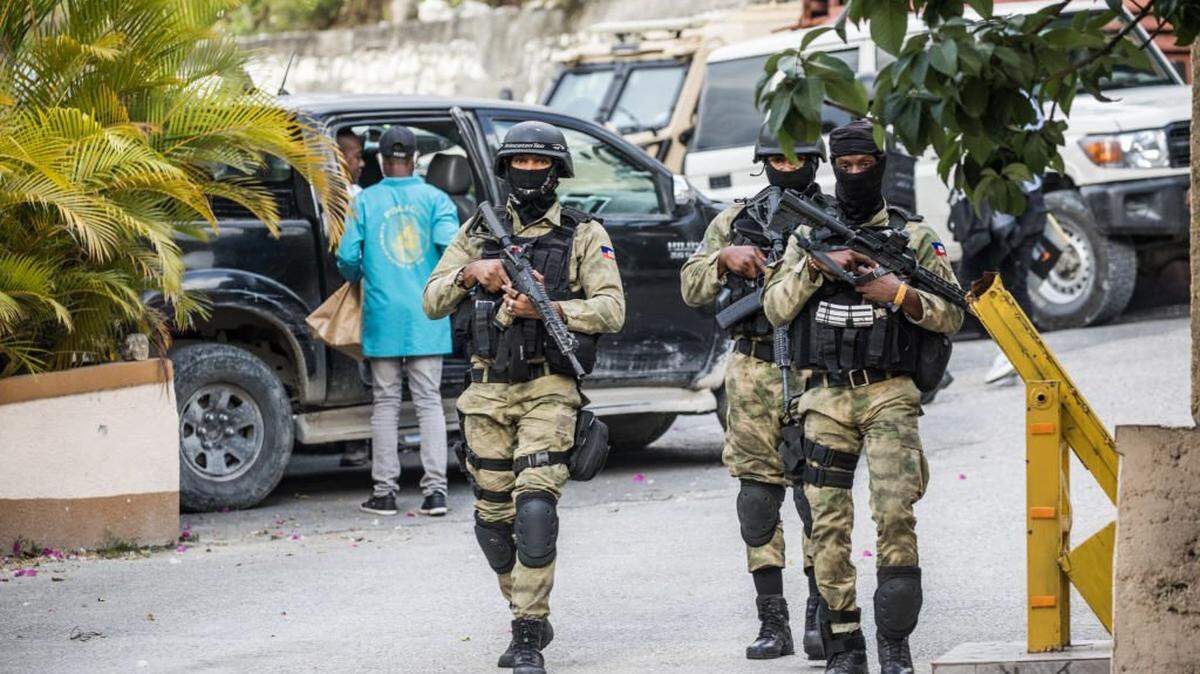
Wednesday’s arrival of an advance party of Chadian soldiers in Port-au-Prince marked the beginning of the deployment of the Gang Suppression Force (GSF) in Haiti. Projected to be 5,500 officers at full strength, the GSF is intended to neutralize the gangs that control around 90% of the capital region, where a third of the population lives.
Yet a security-focused approach will not be enough to establish peace in Haiti. As I analyzed in depth in a recent report for the Global Initiative against Transnational Organized Crime (GI-TOC), the problem with past U.S.-led and UN interventions — and the reason the situation now demands another intervention — is that previous efforts didn’t do enough to address the situation’s criminal, political and economic roots.
The deployment of the Gang Suppression Force, therefore, raises a fundamental question: If the underlying structures of organized crime remain, why would this intervention succeed where others have not?
Authorized by the UN Security Council in September 2025, the GSF is not a UN mission, but a multinational force assisted logistically by a UN support office. The U.S. administration has promoted the new force as a robust improvement on the largely disappointing Multinational Security Support Mission (MSS), led by Kenya, which deployed in June 2024.
Around Washington, there’s a sense of inevitability. The lessons from the MSS have been learned: the GSF will have a military mandate, operational independence and the support infrastructure, funding, and personnel to take on the gangs.
But given the GSF’s focus on security, the current effort is likely to fall short of providing Haitians the peace they need and the stability the broader region requires.
I know this from decades of peace operations in Haiti. Beginning in 2004, UN peacekeeping missions had better success in restoring security and facilitating development. The gangs were approached as localized security threats rather than broader organized criminal networks embedded in political and economic systems. Any gains were lost after the missions’ departure. Criminal groups adapted, grew and deepened their integration into systems of patronage and economic extraction. Violence began steadily increasing, only to explode following the assassination of former President Jovenel Moïse in July 2021.
Subsequently, conditions in Haiti have deteriorated dramatically. One out of every 10 Haitians — more than 1.5 million people — is displaced, while levels of sexual violence are soaring. Moreover, since March 2025, the Haitian National Police has been using increasingly heavy-handed tactics, including indiscriminate attacks by explosive-laden drones. But although Haitian authorities have killed more than 1,200 alleged gang members over the past year, they have not arrested or taken out a single gang leader.
Even if the GSF can push back the gangs, which are larger and better resourced than 20 years ago, the larger issues will remain. The lesson is not that previous interventions were insufficient, but that they were misaligned with the threat.
The U.S. must ensure that the GSF also works to undermine organized criminal networks and cut the ties linking gangs to political and economic actors. Returning the judicial system to functioning is key. The administration should reconsider current restrictions that prevent the State Department’s Bureau of International Narcotics and Law Enforcement Affairs from supporting justice efforts. This could help the Haitian judicial system prosecute gang leaders and their political and economic backers.
Efforts must also intensify to prepare for the disarmament and reintegration of thousands of low-level gang members, half of them children. At the same time, a clear message must be sent to Haiti’s elites: the systems of collusion and extraction that have long underpinned power can no longer endure.
There is a growing sense that momentum is returning after years of political paralysis and deteriorating security under successive transitional governments. But momentum alone is not enough. If this moment is to lead to real change, security must be treated not as the goal itself, but the foundation for a broader transformation of Haiti’s political and economic order.
Sophie Rutenbar is a consultant expert on Haiti at the Global Initiative against Transnational Organized Crime (GI-TOC).