
President Trump: In Cuba, don’t fall for the Venezuela trap | Opinion
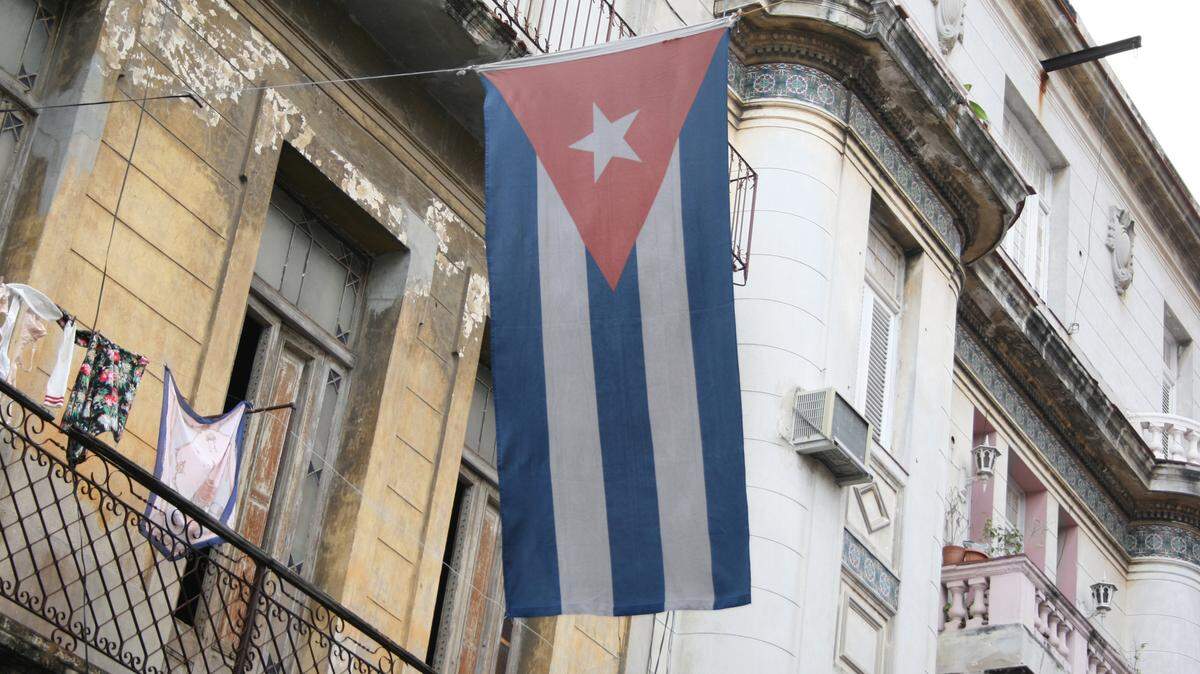
The Trump administration has an opportunity to finally advance meaningful change on an island where political opposition, independent media and free association are banned, and over 1,000 brave Cubans, including Luis Manuel Otero Alcántra and Maykel Castillo Pérez, are suffering in prison because they dared to express dissent.
Cuba’s regime is not only a danger to the Cubans it oppresses; it continues to pose a serious security threat to the United States. It has welcomed Russian naval assets to Havana and is believed to host several Chinese and Russian spy facilities aimed at the U.S. mainland. Cuban authorities are also perpetrators of transnational repression, menacing U.S.-based Cuban activists and journalists with implied death threats and designating them as terrorists under Cuban law.
In Venezuela, after removing Nicolás Maduro, the Trump administration found partners among the remaining regime elements. President Trump has focused on reviving the country’s oil-based economy. U.S. officials may be tempted to accept a similar arrangement with amenable elements of the regime in Cuba, although Havana has very few resources to offer the United States.
Such a deal would be a trap. While this strategy might result in short-term stability, it would amount to propping up the same corrupt regime functionaries that terrorized their own citizens for decades and long sought to antagonize the United States.
U.S. negotiators tempted by the prospect of cooperating with the Cuban regime to secure an opening of the Cuban economy to foreign investment should remember that all authoritarian regimes share one goal — to remain in power. They cannot be trusted to honor their commitments.
The Cuban leadership’s own recent history on prisoner release negotiations is a telling example. Last year, Cuban officials committed to releasing 553 prisoners in deal brokered by the Vatican, but independent Cuban civil society said they couldn’t verify nearly half of those pledged releases. Last month, the regime committed to releasing another 51 prisoners, but many of those releases have yet to be confirmed.
The Cuban authorities have withheld information about the release process and imposed harsh restrictions on some releasees, while some released political prisoners were later rearrested. The regime’s broad, longstanding hostility to democratic values, its history of corruption, its decades-old alignment with U.S. adversaries like Moscow and Beijing, and its deceptions regarding prisoner release negotiations all point to its fundamental untrustworthiness as a diplomatic partner.
Trump has significant leverage over Havana. The loss of Cuba’s ally in Caracas has deeply damaged the Cuban economy. By demanding the unconditional release of all Cuban political prisoners and a commitment to respecting Cubans’ right to express themselves and peacefully assemble, the United States has a historic chance to ease the regime’s stranglehold on the Cuban people and allow them to add their own pressure for political and economic change.
Political prisoner releases should be verifiable, unconditional and allow those who wish to stay in Cuba the right to do so. At a time of acute crisis for the Cuban regime, the United States should neither trust the regime’s offers of cooperation nor come to its rescue. Instead, Washington should partner with the Cuban people to apply greater leverage and to support their democratic aspirations.
The lesson for negotiations is clear: instead of replicating the Venezuela strategy in Cuba, the United States should seize a historic opportunity to lay a path for the Cuban people toward freedom and prosperity. U.S. negotiators should make the unconditional release of all Cuban political prisoners and a commitment to respecting Cubans’ right to express themselves, including through free and fair elections, a nonnegotiable outcome of any engagement with the regime in Havana.
Freedom House has rated Cuba Not Free for the entire 53 years we have documented the global state of democracy. It is the only country in Latin America to have consistently remained in this category. The president has a historic opportunity to change this, but to do so, the United States needs to stand with the Cuban people in their struggle for freedom.
Jamie Fly is CEO of Freedom House. He served as counselor for foreign and national security affairs to then-Sen. Marco Rubio (R-FL) from 2013 to 2017.