
The war in Iran seems distant, but its costs will be felt even in South Florida | Opinion
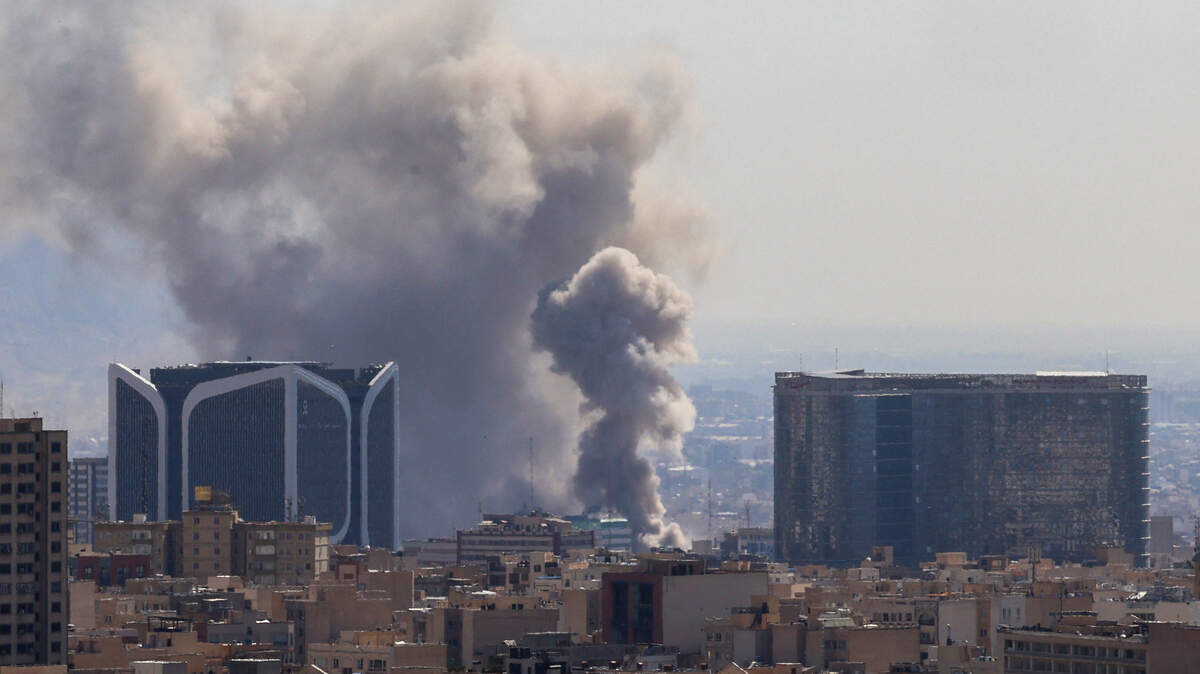
We are a country of immigrants, of diasporas, of people who follow events overseas not out of curiosity but because family, history, and identity are tied to them. When tensions rise in the Middle East, it lands differently here.
The growing crisis between the United States and Iran may seem distant. It isn’t. And if history is any guide, the consequences won’t stay overseas — they will reach into American lives, including right here in South Florida.
We are already seeing the human toll. Israeli civilians are taking shelter from missile attacks, their daily lives interrupted by sirens and uncertainty. These are families who want the same thing anyone wants: safety, stability, and a future for their children. So do Iranian and Lebanese civilians and also Palestinians, more than 50,000 of whom who lost their lives and still live under the shadow of constant siege.
In Lebanon, economic collapse could deepen if conflict spreads. In Iraq, tensions risk reigniting violence that has barely subsided. Across the Gulf — including in Saudi Arabia, UAE and Qatar — the Iranian crisis has disrupted energy supplies and translated into higher gas prices for Americans.
War spreads. It escalates. It rarely ends where it begins.
Leadership matters in moments like this. The long-standing approach of Israel’s prime minister, Benjamin Netanyahu — framing Iran as an existential threat and pursuing sustained confrontation — has helped shape the current landscape. His legal troubles have masked his judgments.
At home, Americans are being asked to trust institutions already under strain. The lingering fallout from the Jeffrey Epstein scandal has reinforced a perception that powerful individuals are not always held accountable.
That erosion of trust matters. When the same system asks the public to support another potential war, skepticism is not unreasonable; it is rational.
Wars are not just fought on battlefields. They are paid for in budgets. The wars in Iraq and Afghanistan cost the United States trillions of dollars. A conflict with Iran — larger and more complex — could cost even more.
And those costs do not exist in isolation. They come with trade-offs that hit communities like ours directly.
At a time when affordability is on the minds of U.S. citizens — lack and affordability of healthcare, lack of affordable housing and the need for investments in public schools and transit — we have to ask: What gets delayed, reduced or cut when military spending rises?
It always comes from somewhere. Every dollar directed toward war is a dollar not spent on housing, healthcare or preparing this region for the next storm.
As an American Muslim, this moment feels familiar.
We have seen how quickly “limited” military actions expand. We have seen how the burden shifts — from policymakers to ordinary people, both abroad and at home.
And we have seen how Muslim Americans, in moments like these, are often viewed with suspicion rather than as full participants in the national conversation. But our perspective is not outside the American experience — it is part of it.
None of this denies the complexity of the threat landscape or the reality that Israeli civilians deserve protection. They do and so do Iranians, Lebanese and Palestinians. The question is not whether security matters. It is how we pursue it — and at what cost.
War with Iran is not inevitable. It is a policy choice. So is investing in the well-being of Americans here at home. In a country like ours, the questions are practical: Will this make our families safer? Will this make our economy stronger? Or will it repeat a costly cycle we already understand?
Because if we rush into another war, we won’t just be sending resources overseas. We will be pulling them away from ourselves. And in a country already stretched by rising costs, that is a price we cannot afford to ignore.
Shabbir Motorwala is a founding member of the Coalition of South Florida Muslim Organizations (COSMOS) and a former member of the Miami-Dade County Asian American Advisory Board.