
Fear has shaped Venezuela. Here’s what it will take for a democratic transition | Opinion
With ongoing operations in Iran and across the broader Middle East, security and stability in the Western Hemisphere still remain a critical priority that hinges on the future outcome in Venezuela. For over two decades, Hugo Chavez and Nicolás Maduro used fear, repression and targeted killings to run Venezuela as a criminal enterprise, one that exported instability through drug trafficking, organized gangs and terrorism. Nearly eight million Venezuelans fled this tyranny, fueling one of the largest migration crises in history.
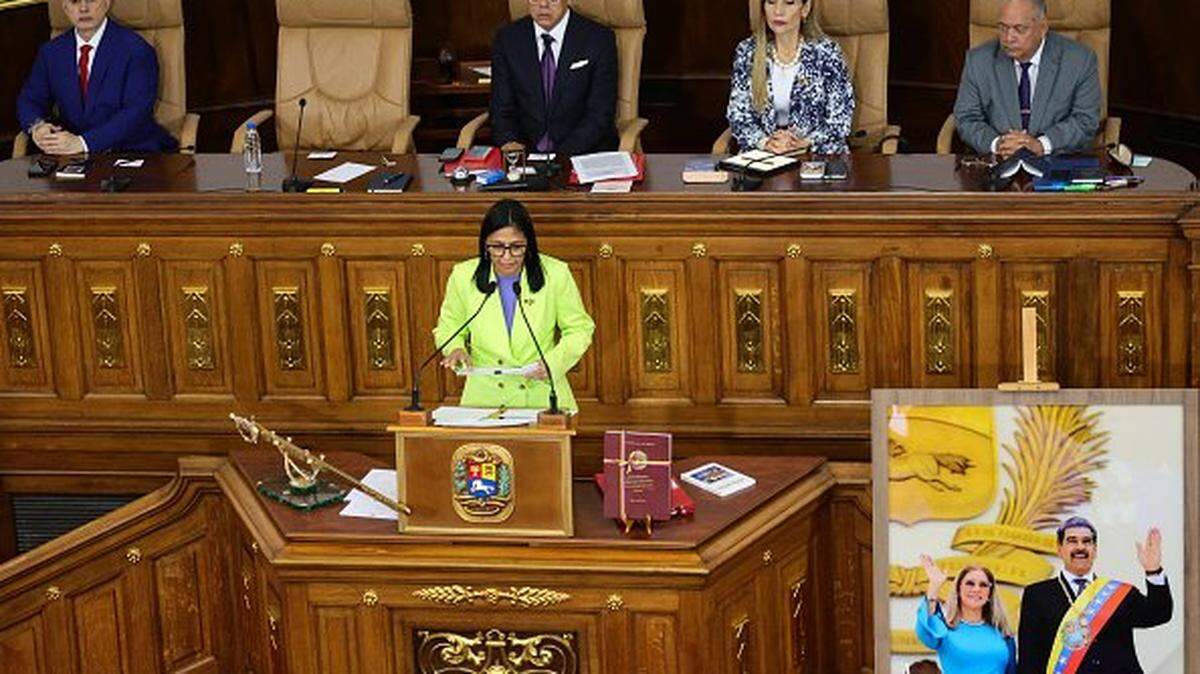
At the center of this illicit operation in a post-Maduro era stands Delcy Rodríguez, who is serving several masters. She is juggling U.S. instructions; alliances with American adversaries like Iran, Russia, China and Cuba; domestic demands from the Venezuelan people and pressure from internal hardliners.
Diosdado Cabello, as an example, controls SEBIN, Venezuela’s feared intelligence apparatus. The Treasury Department called him “the second most powerful man in Venezuela” when they sanctioned him in 2018. But this reality cannot excuse paralysis. Democratic forces must move decisively to reclaim Venezuela’s future.
One key instrument in countering fear and reinforcing hope is the National Endowment for Democracy (NED). NED was born after President Ronald Reagan’s Westminster address in 1982, when he declared that “to witness the gradual growth of freedom and democratic ideals, we must take actions to assist the campaign for democracy.”
With strong bipartisan congressional support, NED advances U.S. interests by standing with the Venezuelan people. NED and its partners support grassroots efforts to demand justice and accountability, equip independent private sector leaders to advocate for democratic reforms, provide reliable information to counter the regime’s propaganda and deliver emergency support — including safe housing, medical assistance and legal protection — for Venezuelans targeted by the regime.
In FY2025, NED invested $5.5 million to assist Venezuelan civic groups, enabling them to document torture, extrajudicial killings and politically motivated prosecutions. This assistance also helped expose the Maduro regime’s ties to transnational criminal networks. These aren’t charity programs. They are strategic investments that support a peaceful transition and ensure economic recovery remains central to Venezuela’s democratic future.
Secretary of State Marco Rubio laid out a multi-phase plan that includes a reconciliation process and recently reaffirmed that for Venezuela to rebuild its economy, “it will need to legitimize its government through an election.”
A new election would significantly accelerate a political transition while restoring predictability and respect for the rule of law. Under those conditions, American capital and enterprise can deliver real market expansion — strengthening both the American and Venezuelan economies. The alternative is the continued presence of narco-terrorist networks, the absence of rule of law and the threat of expropriation that will drive American investors away and undermine U.S. economic interests across the hemisphere.
NED’s goal is straightforward: foster a genuine democratic transition anchored in good governance and free markets — one that unlocks U.S. investments and restores stability to the region. Getting there requires more decisive action.
First, accomplish the safe return of Venezuelans in exile and the immediate, unconditional release of all U.S. citizens and political prisoners still behind bars. No exceptions, no delays.
Second, reconstitute a credible National Electoral Council. This is essential for setting an electoral calendar for conducting future elections that reflect the will of Venezuelans.
Third, strengthen democracy programs. Congress passed an appropriations bill that included $50 million for democracy programs in Venezuela, underscoring U.S. commitment to the Venezuelan people’s future and reducing hemispheric threats before they reach American borders.
The tyrant Maduro is gone, but the tyranny remains. Venezuelans understand Rodríguez is not the long-term solution because they view her as part of the problem. But she should not be underestimated. Her ability to outlast both Chavez and Maduro attests to that.
A democratic transition won’t occur overnight or be easy. However, for the first time in a long while, those who inflicted decades of oppression in Venezuela are the ones gripped by fear today.
Eddy Acevedo is the vice president of policy and government relations at the National Endowment for Democracy. He previously served as a senior foreign affairs staffer in Congress for former Florida U.S. Rep. Ileana Ros-Lehtinen and was a foreign affairs political appointee in the first Trump administration. This opinion is solely that of the author and does not represent the views of the National Endowment for Democracy.
-