
Cuba is stalling for time. What the US should do to address freedom, basic needs | Opinion
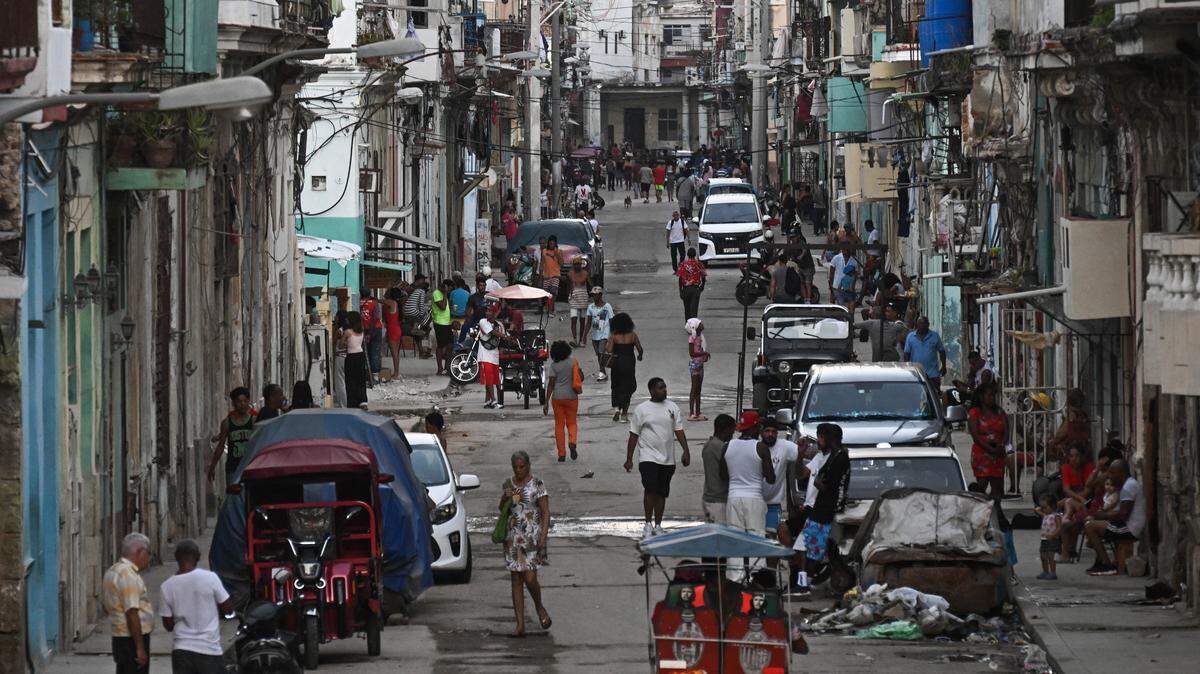
The Cuban government has failed to provide the Cuban people with basic human needs while its ruling class lives in privilege. The failed government cannot take care of its own people. Instead, it starves them — including of freedom. It has lost its legitimacy to govern.
After the loss of Venezuela as its last lifeline, the Cuban military dictatorship has lost its final means of life-support. Cuban President Diaz-Canel’s weak recent “press conference” was a failed masquerade of leadership. It looked as desperate as it was.
It is obvious that the Cuban police state is stalling for time. But time is not on its side. There are signs the Cuban people have lost their fear of the police state. Sooner or later, the regime will collapse. The change, regrettably, could come with violence and chaos, worsening a humanitarian crisis and prolonging the suffering of the population. But there is a better strategic path that is in the best interests of both the people of Cuba and of the United States.
The United States should organize and lead a humanitarian international mission, spread out throughout the island of Cuba, starting by using vessels such as the USNS Comfort and USNS Mercy as bases from which the population could receive basic humanitarian relief.
That mission would deliver food, water and medical supplies necessary to meet basic human needs. And it should bypass the Cuban dictatorship, delivering assistance directly to the Cuban people. If the dictatorship prevents such help, then the people will once again see the hopelessness of a future tied to the current military regime.
At the same time, the United States and its coalition partners should demand the Cuban government immediately begin the transition to a democratically elected government by:
- releasing all political prisoners and allowing for investigations of Cuban prisons by appropriate international human rights organizations;
- legalizing all political activity; and
- dissolving the Committees for the Defense of the Revolution and the Rapid Response Brigades.
Those first steps should be followed by comprehensive fundamental reforms, including all those set out in Title 22 U.S. Code § 6065 (“Requirements and Factors for Determining Transition Government”), to facilitate the rapid movement to a democratically elected government in Cuba, recognizing the civil liberties and humanitarian needs of the citizens of Cuba, and moving towards a market-oriented economy based on the right to own, enjoy and respect private property. Some may not consider this the ideal solution for the Cuban people, preferring for them to help themselves without involvement from the United States.
But that is not realistic. The Cuban people are powerless against the military police state. They need help.
Moreover, since the days of the first European exploration of the island, Cuba has depended on a major foreign supporter, whether Spain, England, the United States, the Soviet Union or Venezuela. Its greatest geopolitical value has been, and remains, its strategic location.
In a world of major powers jockeying for geopolitical dominance, Cuba needs a major foreign supporter. It has none now. And the United States is ideally suited to serve that role.
The Cuban military dictatorship is on the brink of collapse. It is looking for any lifeline, trying desperately to maintain itself on life support. The United States should pull that plug and, instead, give life to the Cuban people.
After 67 years of a ruthless brutal dictatorship, the people in Cuba deserve to live in freedom and with basic human needs.
This is an opportunity that should not be lost.
Roberto Martínez is a lawyer in Coral Gables with the law firm of Colson Hicks Eidson. He is a former U.S. attorney for the Southern District of Florida and was a member of the Florida Constitution Revision Commission.
This story was originally published March 18, 2026 at 12:59 PM.