
The Miami-Dade Urban Development Boundary is a Florida issue, not a county one | Opinion
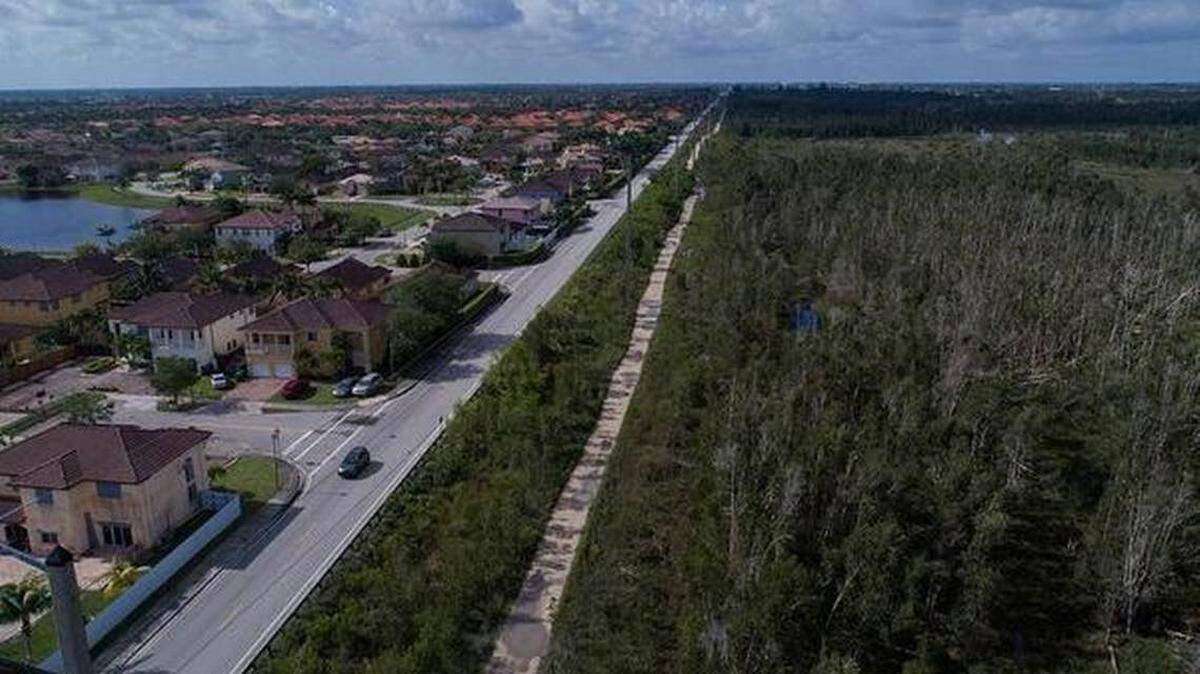
Today, House Bill 399 and Senate Bill 208 are circulating in Tallahassee, advocating for the elimination of the Urban Development Boundary (UDB). If adopted, the consequences would last generations by eliminating the one boundary that forces thoughtful, disciplined decision-making and sets a precedent that signals surrender, not solution.
Why does the UDB exist? Established in the early 1980’s as a planning tool to safeguard Miami-Dade County citizens from sprawl, it also offers flood relief and protects our ecosystems, drinking water and one of our state’s greatest treasures, the Everglades. This makes the UDB not just a local issue — it is a state responsibility. The line forces us to prove that the need outweighs the risks.
There are times when moving the UDB could make sense. I’ve done it.
The first was in 2002 for land in western Miami-Dade that was being used for illegal dumping. It became Beacon Lakes, now one of the most successful logistics hubs in the county. To move the UDB was — and should remain — an arduous undertaking. I had to earn a supermajority (nine of 13 commissioners in Miami-Dade County), and the strongest champion of holding the UDB was Commissioner Katy Sorenson, a respected environmental advocate.
I invited the commissioner to visit the site with me. She did, and seeing it used as a clear illegal dumping site demonstrated that moving the UDB line would help eliminate a neighborhood hazard.
Ultimately, the expansion was approved with just one dissenting vote — hers. Sorenson lauded our success in obtaining the support of the neighbors and how we conducted ourselves. She acknowledged the reason she issued a dissenting vote was to not set a precedent. I respected her principled stance, and today I consider her to be one of our greatest public servants and a friend. Beacon Lakes later became a Harvard case study in stakeholder engagement. I was honored to lecture on it numerous times.
The second expansion came in 2006, when a legally permitted construction debris landfill in northern Miami-Dade, which is now known as Countyline Corporate Park, was transformed into a logistics hub better suited to a growing county. It was within an area under UDB expansion consideration, though not yet approved for development. That vote was unanimous and was achieved without a single objection from neighbors.
HB 399 calls for studies, but do we need a “study” when we already know eliminating the line is unthinkable? Any expansion should take into consideration the impact on our water supply and the Everglades — our most precious natural resource. The Everglades safeguards our drinking water, mitigate flooding, sustain wildlife, and serve as a buffer against storms. Without that land, ecosystems would collapse, water quality would decline and flood risks would rise dramatically.
The bill also explicitly contemplates governance “without having a UDB” and proposes lowering the required supermajority to a simple majority with quorum achieved — meaning only 25% of a county commission’s approval would be needed — with no oversight from the state.
As someone who has successfully moved the line, I understand its value and feel that eliminating it entirely is reckless.
South Florida land is scarce. Most areas that can be expanded – like South Florida’s Lake Belt – are already developed or serve as valuable farm lands or wetlands needed to filter drinking water and grow food. That is why we need a thoughtful approach.
Any elected official who suggests we should not have a line, quite frankly, does not deserve to hold office.
If we remove the line, what replaces it? What safeguards remain? What precedent is set?
Growth must be managed responsibly. The UDB is not an obstacle to progress; it is a guardrail protecting Florida’s future.
It is time to hold the line — for Florida’s sake.
Armando Codina is the founder and executive chairman of Codina Partners, a real estate development, management and investment firm based in Coral Gables.