
Florida lawmakers should reject an attack on public employees in unions | Opinion
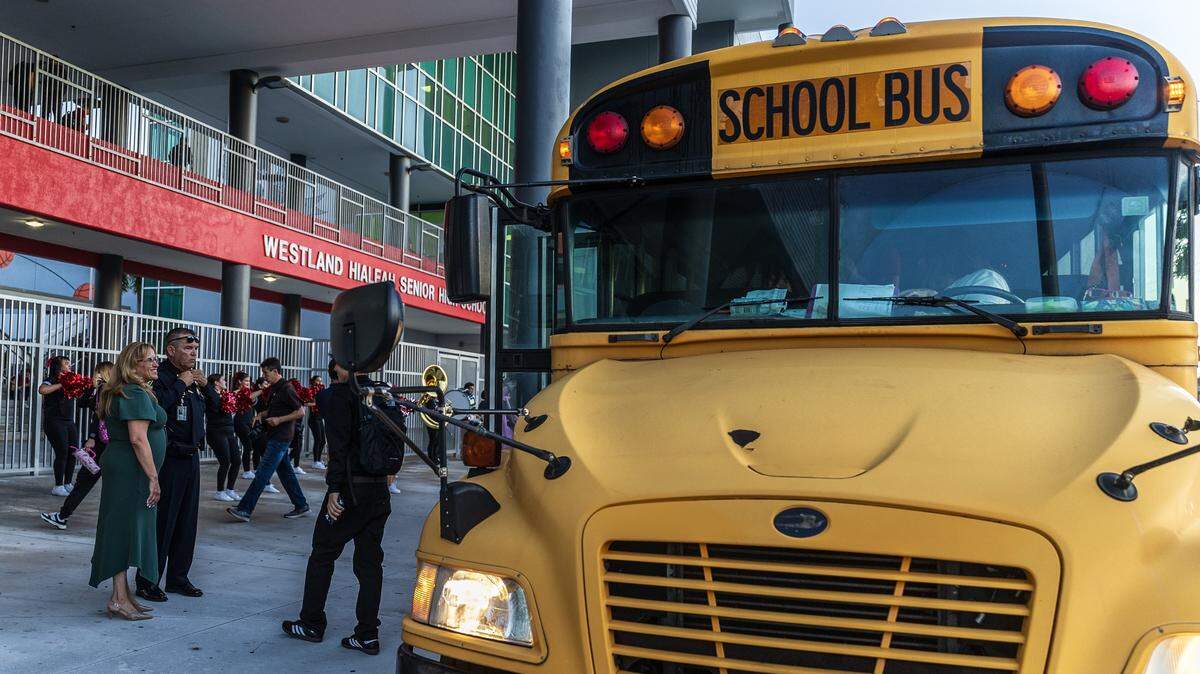
Every day in Miami-Dade County Public Schools, students walk into classrooms expecting the stability of a prepared teacher, a safe environment, and adults they trust will be there for them.
Those expectations are now at risk.
Florida’s Constitution guarantees public employees the right to organize and bargain collectively. That protection exists because strong public services depend on workers having a voice, especially educators, who shape the future of every community in this state.
The legislation moving through Tallahassee is not simply a policy change. It is an attack on the protections guaranteed in Florida’s Constitution and on the public employees who rely on them.
Two bills, House Bill 995 and Senate Bill 1296, would dramatically weaken those rights and destabilize schools and communities across Florida.
A central provision breaks from basic democratic norms by requiring support from more than half of all employees in a bargaining unit, not just those who actually vote. In our country’s democratic system, outcomes are determined by those who participate. Under this proposal, workers who do not cast a ballot would be treated as opposing votes regardless of their views, effectively creating a new definition of democracy and majority rule.
These elections are not run by educators or their organizations. They are conducted by the Public Employees Relations Commission (PERC), a state agency that controls the process from start to finish including scheduling, access, and voting logistics. Participation can therefore hinge on factors outside workers’ control.
If this standard were applied to public elections, neither the governor nor a single state legislator would hold office today under the same rules they now seek to impose on public employees.
The legislation also creates two classes of public employees. Educators, nurses and other public workers would face sweeping new requirements including repeated elections under an unprecedented standard while police, firefighters and certain public safety employees would be exempt. When government imposes one set of rules on some workers and shields others from the same burdens, it undermines the principle that the law should apply equally to all. Democracy cannot be selective. The rules of representation must apply to all citizens, not just to the groups the government chooses.
For educators, this is not theoretical. It directly affects classroom conditions, staffing stability and the ability to retain experienced teachers. Florida already faces significant teacher shortages. Policies that increase uncertainty will only accelerate departures from the profession.
At its core, this issue is about whether our schools can remain stable for the students and families who rely on them every single day.
Students thrive when they are taught by professionals who know them, teachers who understand their needs, their communities and their potential. When experienced educators leave, that continuity disappears and relationships are broken, programs suffer, students ultimately pay the price.
The impact extends beyond classrooms. Schools anchor neighborhoods, support local economies and shape the workforce of the future. Instability in education reverberates across entire communities.
Public education is not just another government service. It is the foundation on which opportunity is built. Weakening the people who make that system work weakens the state itself.
Our students only get one chance at each school year. They deserve stable schools, experienced educators and policies that strengthen, not undermine, the people entrusted with their education.
Florida’s future is sitting in our classrooms today. Protecting the educators who guide those students is not optional, it is essential.
Antonio White is president of United Teachers of Dade.