
Leave politics aside: Bad Bunny’s performance failed, based on other standards | Opinion
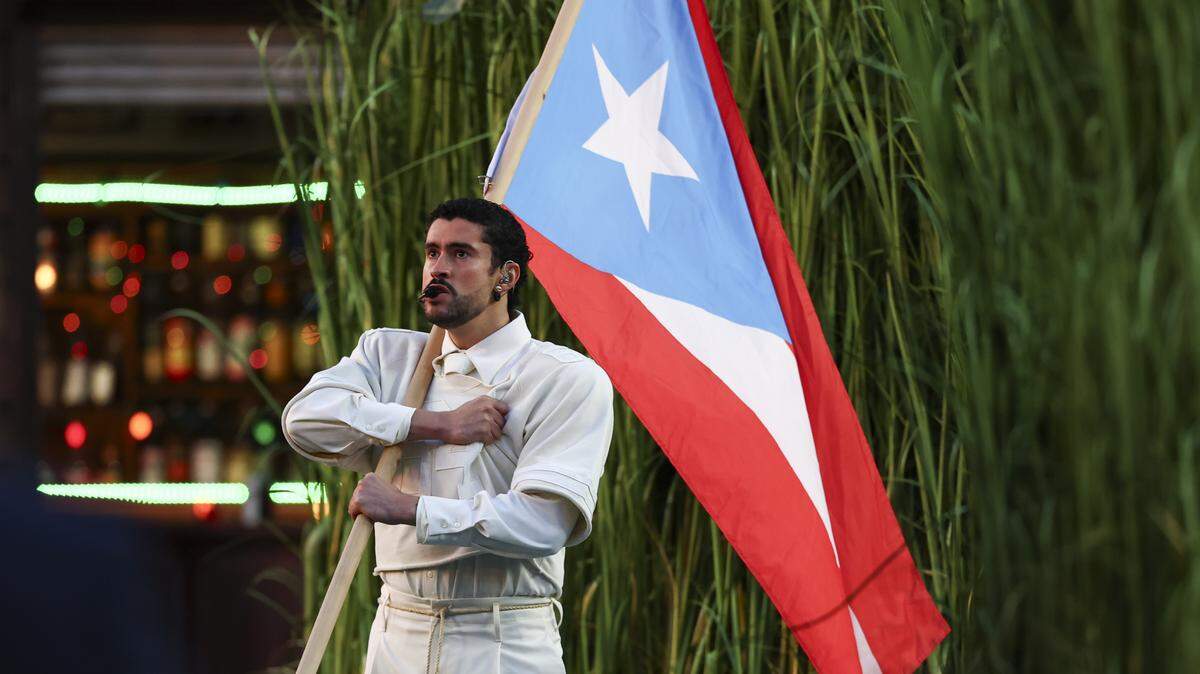
If you want to understand the reaction to Bad Bunny’s Super Bowl halftime performance, you don’t need musical ears — you need a political compass.
At one extreme, the performance was hailed as a triumph: a Spanish-language artist on America’s biggest stage, unapologetic and untranslated. For many, it was historic, inclusive, even corrective — proof that the cultural center has shifted. At the opposite extreme came rejection. The Super Bowl, critics argued, remains one of the last shared civic rituals in American life, and the halftime show felt less like celebration than provocation — a performance that divided rather than unified. So far, this is familiar terrain: another episode in the culture wars.
But as a musician, what unsettles me is what both sides largely ignored: when did we stop evaluating art as art? And as a Latin artist, I cannot avoid the deeper question: Was this truly a fair representation of Latin music — one of the richest cultural inheritances on earth?
We live in a moment when artistic work is filtered first through politics. Watch any awards ceremony: the slogans, the symbolic gestures, the ritual references to the cause of the week. Work is praised less for its excellence than for its alignment. The artist’s tribe often matters more than the artist’s craft. “Art for art’s sake” has quietly given way to art for ideological reassurance. Bad Bunny’s performance can be celebrated or condemned with equal ease depending on one’s political instincts — but ideology is not an artistic standard.
I offer this critique not as a partisan, but as a classical musician — and yes, perhaps as a traditionalist.
I still believe art can be judged by enduring questions: Is it beautiful? Does it enlarge the human spirit? Does it demonstrate craftsmanship — discipline, training, refinement over time? By those standards, the performance fails.
The music often leaned toward the coarse. The vocal delivery was uneven, frequently out of tune when not spoken. And the lyrics — edited for broadcast but easily found in full — are often vulgar and overtly sexualized, delivered in slang so fragmented that even many Spanish speakers struggle to follow it.
The problem is not that Bad Bunny is popular. The problem is that this performance is being hailed as a cultural emblem — as though it represents Latin music and culture at its best. That is a disservice to a tradition of extraordinary beauty and sophistication: rhythmic architectures born of African and Spanish lineages; the structural elegance of mambo and rumba; the tragic lyricism of tango and milonga; the harmonic refinement of bossa nova. From Pérez Prado, Benny Moré and Celia Cruz to Tito Puente, Oscar D’León, and Tom Jobim, Latin music has shaped global culture for generations, influencing artists from Nat King Cole to Dizzy Gillespie and Frank Sinatra. It reflects complexity, discipline, and invention.
When the most visible global representation of that inheritance leans toward the simplistic, it is fair to ask whether we are honoring a culture’s depth or merely exporting its most commercially adaptable surface.
This is not an argument against Latin culture; it is a defense of it. Nor is it a plea for elitism.; it is a plea for standards. The deeper question is not whether Bad Bunny belongs on the Super Bowl stage. It is whether we still believe that beauty, meaning and mastery are worth defending — even when they are unfashionable.
The halftime show did not create our cultural condition. It revealed it. And that revelation may matter more than the performance itself. As NFL Commissioner Roger Goodell said in October: “I don’t want to pick the music that I listen to ’cause none of you would come to the halftime show.”
Orlando Alonso is a Miami-based Cuban-American pianist, conductor and cultural entrepreneur.