
Don’t let Haitian TPS end on Feb. 3. Humanitarian and economic reasons demand it | Opinion
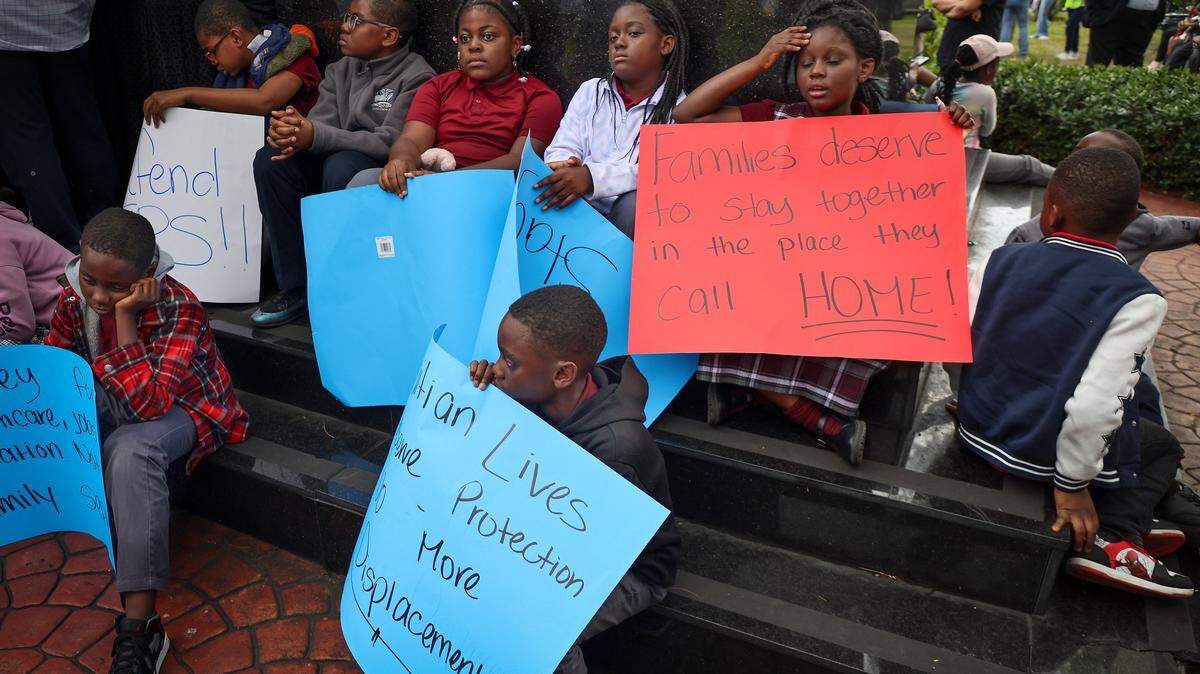
As a Feb. 3 deadline looms, families across the country are stressed beyond their limits. For those who may not understand the significance of this date, it is when the Department of Homeland Security has scheduled Temporary Protected Status (TPS) to end for more than 330,000 Haitians who live and work in the United States.
These individuals will lose their legal status and work authorization because the Trump administration claims that conditions in Haiti no longer warrant TPS and that extending it is contrary to our national interest. Overnight, people who have built lives, families and careers in this country will be stripped of their work permits, placing jobs, homeownership and livelihoods in jeopardy.
Haiti was designated for TPS following the catastrophic 2010 earthquake that killed more than 250,000 people and destroyed much of the country’s infrastructure. More than a decade later, conditions in Haiti have not improved — they have worsened dramatically.
I often wonder whether the American people, busy with their own lives and challenges, truly understand the reality facing their coworkers, employees, employers, teachers, doctors, construction workers, pharmacists and neighbors who hold TPS. People who have built their lives in this country for years are gripped by the fear of being suddenly uprooted and sent to a dangerous country.
These families are living in limbo, at risk of losing legal protections and being rendered undocumented, subject to detention and forced deportation.
These individuals contribute significantly to our economy. In 2021, 94.6% of TPS holders were employed, held $8 billion in spending power and paid $2.2 billion in taxes. Losing this workforce would not strengthen our economy — it would weaken it.
If the Trump administration does not change course, hundreds of thousands of jobs will be left vacant across critical industries, including hospitality, construction, manufacturing and healthcare.
More than 70,000 Haitian TPS holders work in healthcare alone. Their sudden removal would trigger staffing crises in nursing homes and hospitals nationwide. These are the workers who care for our parents, grandparents and loved ones during their most vulnerable moments. In an already tight labor market, businesses would be forced to fire trained, reliable employees and scramble to replace them — at great cost and disruption.
Beyond economics, the human cost is staggering. If TPS holders are deported, what happens to their U.S.-born children? Many would be left behind — separated from their parents, pushed into poverty or placed into foster care. The U.S. does not have the capacity to absorb this crisis, nor should American taxpayers shoulder the burden.
We all want a safer, more stable Haiti. A thriving Haiti is good for the Haitian people and good for the United States. Allowing TPS holders to continue working provides time for the U.S. to take a more meaningful role in supporting Haiti’s recovery and rebuilding its infrastructure, rather than overwhelming a country that currently has no capacity to absorb mass deportations or the cost associated with forced returns.
For these reasons, I urge the Trump administration to reconsider its decision to end TPS for Haitians, rescind the termination and redesignate Haiti for TPS. Doing so protects our economy, strengthens regional stability and upholds America’s humanitarian values while maintaining stability in communities across the nation.
Elected officials, including 60 members of Congress, business and religious institutions and community-based organizations have asked President Trump to extend and redesignate TPS for Haiti. They are also asking for Congress to act and trail-blaze a path for permanency for these hard-working families. It is in the national interest to keep these hard-working families together, allow people to continue working and investing in our economy, protect children’s futures and give Haiti a real chance to recover.
And if the humanitarian argument is not enough, then I appeal to the president as a businessman: do it for the bottom line — the economy — because in the end, it, too, will suffer.
Marleine Bastien was elected to serve as the Miami-Dade County Commissioner for District 2 in 2022 and is the founder and former CEO of the Family Action Network Movement (FANM).