
‘Monster outside your door’: Effects of campus shootings reach all the way to Miami | Opinion
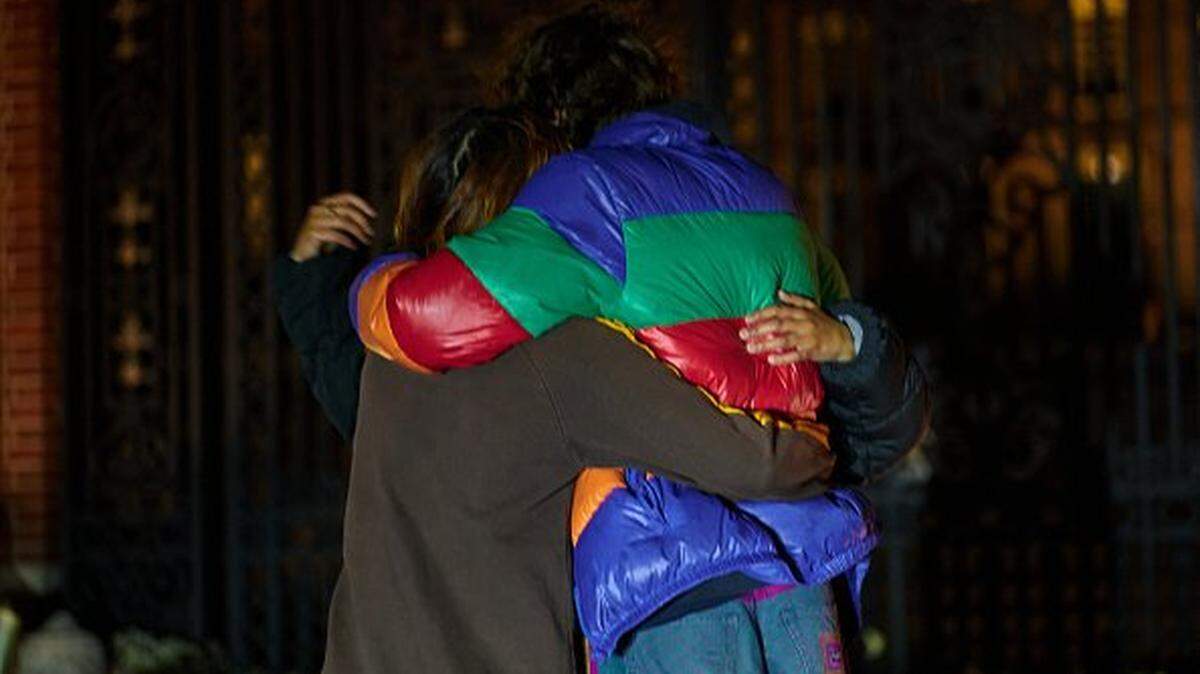
My son, Max, and I had been texting for some time as I wondered what I could do to take his mind off of the noise from outside the door of his Providence apartment. An hour earlier, he had received a call from his girlfriend who advised him to avoid going to his favored study hall, only a block away, due to reports of an active shooter. Soon campus alerts directed students in the immediate vicinity of the shooting, like Max, to stay inside with lights off waiting for an “all clear.”
So Max and a housemate barricaded themselves in their apartment and sat silently on the cold floor of a locked bathroom, listening to police sirens and helicopters buzzing outside, all the while texting with his family and other Brown students.
I wanted so badly for him to be OK — or at least find a way to bring calm to the moment.
“McConkey or Jennings?” I texted, hoping to distract him for a moment with questions about potential Fantasy Football choices.
Within seconds came the response.
“Jennings has a higher floor, but McConkey has a higher ceiling. Go with Jennings.”
The questions about Ladd McConkey (Los Angeles Chargers) or Jauan Jennings (San Francisco 49ers) provided a modicum of normality. But Max stayed in that dark bathroom into the night, quietly texting for hours, wondering who had been injured or killed. Whether they were friends. Whether the gunman was outside his door.
It was anything but normal.
For Max and his Brown University classmates, this event will define their senior year. They are not among the murdered or injured, but the event is transformational, nonetheless. They will distinguish the impacted areas of their campus entirely differently. Memories of walking down Thayer Street or seeing friends at the Engineering Building will be replaced with the jolting images of a crime scene.
Max came home the next day and later that week we went to a movie. A patron came in after us, in a hoodie with his face partially obstructed. Max immediately squatted in his seat prepared to act if the moment called for it, which of course it didn’t. But Max was singularly focused on this stranger for much of the movie.
We teach our kids to be situationally aware, but it’s important to have a balance so that life isn’t processed through a filter that exclusively seeks to recognize and prepare for perils.
In 2024, there were 586 “mass shootings,” defined as incidents where four or more people were killed or injured. Those incidents claimed 711 people with 2,375 injured. But each one leaves a scar beyond the somber body count. How many in each community were impacted forever by the jarring trauma of a mass shooting event? In my own family, I now have a son and nephew who were on two different college campuses during different active shooter incidents.
Of course, to the families affected by the loss of life or injury, the damage is incalculable. But to the wider community, there is also an impact, less severe but still palpable. Places are redefined as memories are crowded out. Our sense of safety is eroded as we are now able to imagine, if not experience, the previously unimaginable.
Often, sea changes in deep-rooted policy happen only when the wider community experiences an issue firsthand. Sociologists call this the “radius of empathy” effect. Marriage equality came to be when people realized the inequality impacted their own friends and family. Mental illness is no longer stigmatized and now insurable as a treatable medical condition because it impacted so many from so many walks of life.
How unfortunate it is that the most likely way our nation will ever free itself from the grip of gun violence is waiting until enough people know or love someone impacted by its ravages — or when they are forced to spend time on the cold floor of a dark bathroom hiding from the monster right outside their door.
Dan Gelber is an attorney in Miami who has served in various elected offices in South Florida. He was the mayor of Miami Beach from 2017 to 2023.