
For a post-Maduro Venezuela, Rubio should take a lesson from JFK and Vietnam | Opinion
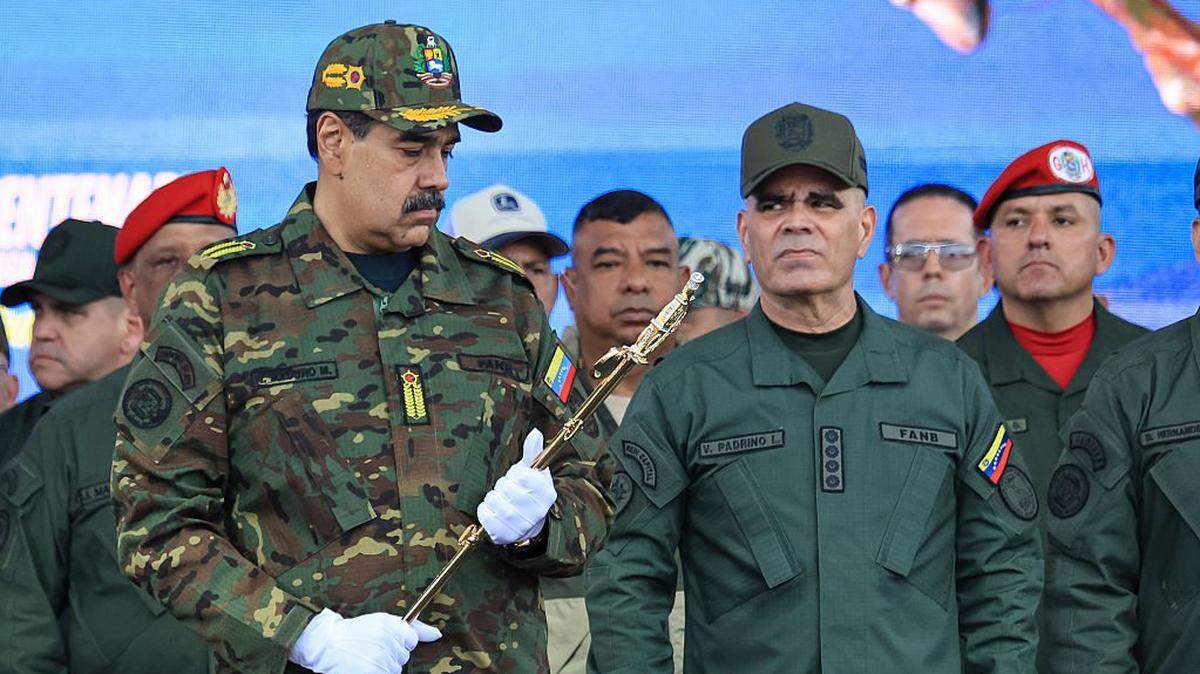
As President Trump ratchets up military and economic pressures on Nicolás Maduro, he faces a thorny question: Who, or what, will replace the Venezuelan dictator if he flees or is overthrown or assassinated?
Would a successor to Maduro be willing and able to crack down on Venezuelan drug smugglers? If the Venezuelan military filled the power vacuum, would it govern any less repressively than Maduro? Would a new Venezuelan leader want closer cooperation with Washington on Caribbean security matters? Would he or she allow more U.S. oil drilling on Venezuelan territory?
President John F. Kennedy faced similar questions when, in 1963, his administration secretly encouraged a military coup against South Vietnam’s authoritarian president, Ngo Dinh Diem.
Diem was a longtime ally of the United States. In 1961, JFK launched an expansive program of military and economic aid, Operation Beef-Up, to help him battle a widening insurgency by communist-led Viet Cong guerillas. But Diem also faced an uprising by Buddhists, who made up a majority of South Vietnam’s population and claimed that Diem, an ardent Catholic, was persecuting them. As Diem’s police and army arrested thousands of Buddhist protesters, often brutally, Kennedy came under criticism in Congress and the press for his strong support of the South Vietnamese leader.
For the Kennedy administration, the final straw came in August 1963, when Diem’s security forces raided Buddhist temples in Saigon, Hue and Danang, arresting 1,400 priests and nuns. The State Department instructed the U.S. ambassador to covertly inform Diem’s generals that if they overthrew him, American aid would continue unabated. Kennedy publicly berated Diem and cut off U.S. subsidies that paid for much of his government and army. A swaggering, hard-drinking CIA agent, Lucien Coein, became the sole conduit of information between Washington and the generals.
On Nov. 1, 1963, rebel troops and tanks laid siege to Diem’s palace as aircraft strafed and rocketed it. Diem and his brother, Ngo Dinh Nhu, chief of the secret police, surrendered the following day, but soldiers shot and bayoneted them to death inside a U.S.-supplied armored personnel carrier.
The generals had promised to stay out of the new government, but they promptly formed a junta. Their shaky, inept regime came to an abrupt end three months later, when another general, Nguyen Khanh, overthrew them.
Under Khanh, South Vietnam spiraled into political chaos and street fighting between Buddhists and Catholics. JFK was assassinated three weeks after Diem and Lyndon Johnson became president, vowing not to lose the war in Vietnam.
LBJ grew frustrated as one Saigon government after another rose and fell and the Viet Cong made battlefield gains. In February 1965, he authorized a massive aerial bombing campaign against North Vietnam, and then sent in the first of what would become more than half a million U.S. troops into South Vietnam. American involvement in the war dragged on for another eight years, leaving more than 58,000 Americans dead and another 306,000 wounded.
JFK devoted little thought or planning to who would replace Diem, and squandered any opportunity he may have had to shape a post-coup government. The Trump administration has suggested it is making plans for a post-Maduro Venezuela, but so far few details have emerged.
Such planning is likely to fall largely on Secretary of State Marco Rubio. It will be up to Rubio to figure out how Washington can help a new Venezuelan government disrupt the cartels, revive the economy and steer a more democratic course.
What will Rubio’s plans look like? How much money and effort will the White House invest to make them effective? South Floridians of Venezuelan extraction should watch closely to see what Trump and Rubio have in mind for their native land post-Maduro.
As the old saying goes, if you break it, you own it.
Jack Cheevers is the author of “Kennedy’s Coup: A White House Plot, a Saigon Murder, and America’s Descent Into Vietnam,” to be published by Simon & Schuster on Feb. 17.