
Current efforts are not enough. The permanent solution for Haiti is a bigger army | Opinion
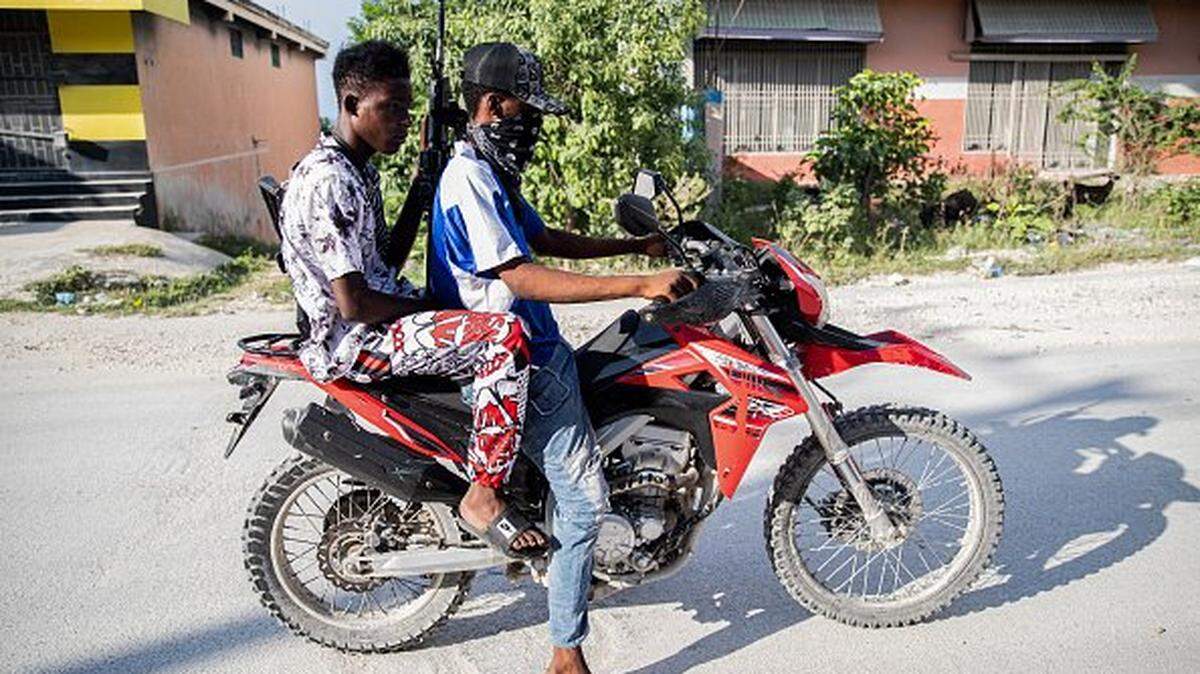
As Haiti reaches the conclusion of yet another brutal year, its suffering seemingly has no end.
The Trump Administration has not been indifferent to the crisis, supporting a political process to improve governance, appointing one of its best ambassadors to Port-au-Prince and leading an effort to mount an international “Gang Suppression Force” (GSF) that would push back on the gangs and allow for elections.
But even if the 5,500 soldiers and police officers of the new force succeed in containing the gangs and restoring order, there is no force to then “hold” and “build” the nation. For this, Haiti needs to vastly increase the size of its army, providing the country the capacity to sustain the security that is the basis for everything else.
Unlike previous efforts, the new Gang Suppression Force will have formed military units in larger numbers and will be better positioned to confront the gangs. But the force will not be able to stay indefinitely. The current strategy is to enlarge the Haitian National Police (HNP), with SWAT units in the lead. Given the strength and firepower of the current gangs, however, it is doubtful they can be contained by law enforcement entities alone.
A more appropriate force is the Haitian army.
During the initial democratic transition from François Duvalier to Jean-Bertrand Aristide, the Haitian army was seen with some reasonable skepticism because of its history of repression. It survived the initial transition as the country deemed an army a natural part of its national symbols and a statement of sovereignty, but it was disbanded in 1996 amidst stirrings of a coup. A small army was brought back under President Martelly but capped at just over 1,000 officers and soldiers, where it has remained since. It carries out duties related mostly to protection of infrastructure.
It is time for Haiti to put the task of fighting gangs — at this point, a military task — in the hands of a much larger army. An internationally supported program, in which the Haitian army would grow from 1,000 to 10,000 people, would finally give the country the means to effectively push back the gangs and to hold the territory they cede.
Similar programs have been successful before. A notable example was El Salvador in 1983-84, when the country faced a communist insurgency that was threatening to topple its government. The U.S. trained hundreds of new junior officers and soldiers, allowing the country to take on the insurgents, recovering territory and ultimately preparing the country for peace talks and reconciliation six years later.
There will be strong opposition from some quarters to this proposal in Haiti. Many observers have human rights concerns, others fear an army could again meddle in politics. But both need to be balanced with the already dire human rights violations Haiti faces from gangs, and the fact that there is at present no effective political process because of the gang takeover. Concerns could be mitigated by the widespread inclusion of mentors and trainers among a new force, and by political monitors. An aggressive system of vetting followed by assertive internal affairs units in the army would also help allay concerns.
There are a host of other things that will need to happen for order to be fully restored: a strengthened judicial and prison system, disarmament programs and youth diversion projects. But the army could be a critical new player in achieving these goals, in some cases providing needed muscle and, in others, the platform from which they can be managed.
There is no risk-free or cost-free way to restore security to Haiti. But with the power mismatch between gangs and those fighting them, a new force is needed. The army is the natural place where this new force can be formed and deployed.
Keith Mines is a former special forces officer and diplomat who served in Haiti in the 1990s and was most recently vice president for Latin America at the U.S. Institute of Peace, where he managed the Institute’s Haiti program. He is the author of “Why Nation Building Matters: Political Consolidation, Building Security Forces, and Economic Development in Failed and Fragile States.”
This story was originally published December 29, 2025 at 5:00 AM.