
Where’s benefit to students in Trump library land transfer? Here’s how to do it | Opinion
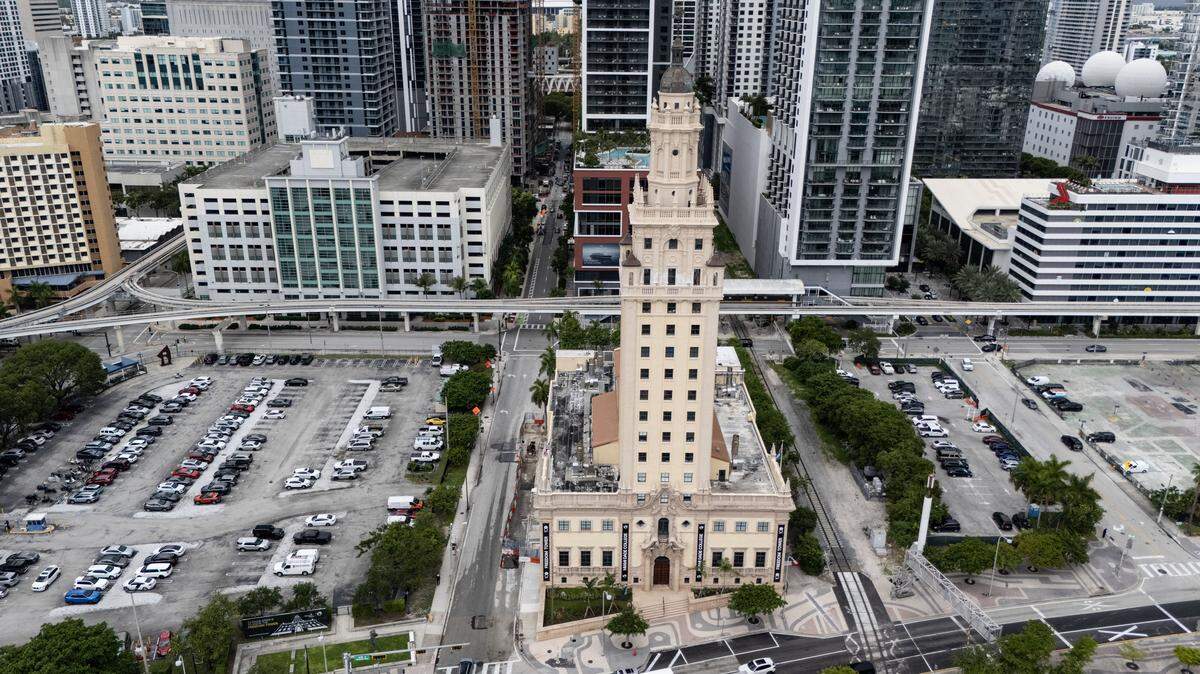
Our community was caught off guard and has become divided over the no-cost transfer of a strategic and valuable 2.63-acre Miami Dade College property to the Donald J. Trump Presidential Library Foundation. The land is adjacent to MDC’s downtown Miami campus.
MDC is an important anchor institution in our community. I write to encourage Gov. Ron DeSantis, the Florida Cabinet, college trustees and the Trump Presidential Library to reunite our community through a public-private partnership supporting scholarships and programming at MDC.
For more than 40 years, I have dedicated my time, energy and resources to advancing the mission of MDC. My commitment — and that of the Wolfson family across four generations — has always been guided by a single goal: expanding economic opportunity through education. Since Col. Mitchell Wolfson helped found Miami Dade College in 1960, our family has proudly served as its largest and longest-standing benefactor, giving hundreds of millions of dollars in support through our family foundations and providing countless volunteer hours.
My concern is not with the idea of a presidential library, but with the proposed terms of the transfer and the absence of any requirement that the transaction benefit MDC students.
A transfer without clear restrictions or obligations gives weight to news reports suggesting the property may ultimately be developed for commercial purposes, with only a portion dedicated to the library. Thus far, the governor and Cabinet are only requiring that construction of a component of a presidential library begin within five years of the property being transferred. Even if construction of a component of a library were never completed, the new owner will own the property free and clear, free to do with it what they wish, without having paid anything for it.
When MDC acquired the property in 2004, its Board of Trustees envisioned potential partnerships with major commercial real estate developers, recognizing the site’s extraordinary value and prime location. They imagined a project with educational facilities as well as revenue-generating components, with MDC retaining a share of the financial upside. That revenue, in turn, would flow directly into scholarships and programming.
Any project pursued on this land, whether tied to a presidential library or a broader mixed-use vision, must ultimately compensate MDC fairly, expand opportunities for students and deliver economic benefits to the community at large.
Consider the property’s value in practical terms: If MDC had sold this land at a very conservative valuation of $67 million, it could award over 23,000 scholarships to students for one year at the current tuition cost of $2,838. If, instead, the $67 million were invested as an endowed fund, a 5% distribution per year would support at least 1,100 annual scholarships at the current tuition cost every year in perpetuity, and this number would grow over time.
The discussion over this land is, at its core, a discussion about values. It asks whether we choose a future that broadens opportunity or one that limits it. It asks how we honor the purpose of public investment and how we safeguard institutional assets. And it challenges us to set our ambitions far higher than a $67 million land value.
At this moment, we stand before an extraordinary national milestone: America’s 250th anniversary. This anniversary presents a once-in-a-generation opportunity for MDC to lead with exhibitions, lectures, cultural programming, research and public forums that illuminate the ideals at the heart of our democracy. This milestone should not merely be commemorated; it should be leveraged to shape the next chapter of America’s story.
That is why the time to think boldly is now. MDC envisions a $250 million matching fund to create a $500 million Scholarship and Programming Endowment at the college. The $250 million exists in MDC’s endowment currently. When matched, a $500 million endowment would expand scholarships, strengthen civic learning, advance workforce innovation and lay the groundwork for “America 500.” This effort would create a legacy of opportunity for generations and would more than compensate for the value of the land.
One can imagine hundreds of millions of dollars flowing into this matching fund through continued partnership with industry, philanthropists, the state and through collaboration with this historic project in the heart of downtown Miami. Such partnerships require bold, forward-looking leadership grounded in a shared commitment to a better tomorrow in our community.
Louis Wolfson is chairman and co-founder of Pinnacle Housing Group.