Haiti’s fragile hope: Can a UN gang suppression force restore order? | Opinion
The United Nations Security Council, with the Trump administration leading the charge, has authorized a 5,550-member strong Gang Suppression Force (GSF) to confront gang control in Haiti.
It marks the first solid hope for restoring security since the assassination of President Jovenel Moïse in 2021.
Yet, despite the U.S. deploying a massive naval force to the Caribbean, no one has explained who will bridge the five-month security gap before the suppression force becomes fully operational. Nor is there any sign of urgent action to install a legitimate Haitian government after the transitional presidential council’s term ends on Feb. 7.
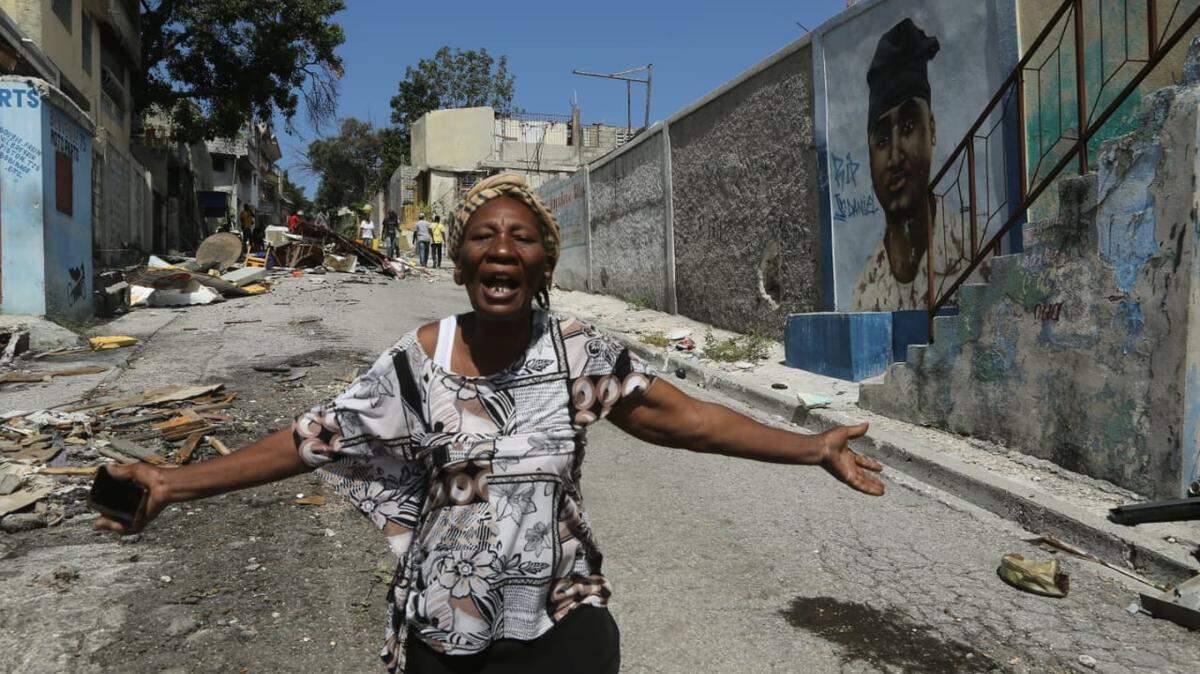
Once again, the secretary general reported that 90% of Port-au-Prince is under gang control; more than 4,400 people have been killed since March; half of the country’s 11 million people need emergency food aid; 1.4 million are displaced and women and children continue to face sexual violence.
The Biden administration secured a small Kenyan-led Multinational Security Support mission (MSS) to bolster the Haitian National Police (HNP). The MSS has offered limited help but, as predicted, it was woefully inadequate.
Gang violence, financed by kidnappings, extortion, drug trafficking and corruption, has gone largely unchecked. Sanctions on gang leaders and arms suppliers have done little to stem the crisis.
Has the international community, particularly the U.S., learned the lesson of that failed support mission?
If not, the Haitian people’s hope for peace will fade like a raisin in the sun. Neither the U.S. nor any other member of the GSF Standing Group of Partners has offered heavy weapons, operational intelligence, air power to stop drug flights, naval power to intercept smuggling or logistical support to dismantle gang leadership.
Those steps are essential to disarm and dismantle Haiti’s armed groups, whether through negotiation or force.
On Oct. 1, Secretary of State Marco Rubio said the U.S. would support “swift deployment” of the GSF, whose one-year authorization took effect Oct. 2. He offered no details on how or when.
The Trump administration has deployed ships with thousands of Marines to the Caribbean, a few hundred miles from Haiti. An aircraft carrier will arrive within days.
The legality of attacking alleged drug trafficking vessels and threatening action against Venezuela has been challenged in Congress and across the hemisphere.
If even a small percentage of that armada — particularly Marine special operations — were redirected to bolster the Kenyan police troops as the country transitions to the GSF, Haitian and regional support would be immediate and lawful.
The Security Council’s Chapter VII resolution specifically calls on member states to “conduct either independently or in cooperation with the HNP and Haitian armed forces, intelligence-led counter-gang operations to neutralize, isolate and deter gangs.” The GSF has both the Organization of American States and the Haitian government endorsement. Congress should also be consulted.
The traditional peacekeeping contribution channel should ensure core funding for the gang suppression force’s support office, but full troop funding depends on the UN voluntary trust fund. U.S. peacekeeping arrears — with the Trump administration refusing to pay $800 million in Congressionally appropriated funds — could undercut UN support.
Security, however, is not the only pillar of recovery. The political pillar requires compromise — not in February, when the transitional council’s mandate expires, but now.
A Haitian-negotiated, civil-society-informed, internationally advised agreement on transitional governance will take time. Haitian leaders must act with urgency.
If the Gang Suppression Force establishes real security, a transition government could plan elections by the end of 2026, launch economic recovery and deliver humanitarian relief.
Without security, Haiti remains a failed state. With it, there is hope for something better.
Mark L. Schneider is a former director of the Peace Corps, former head of Latin America and the Caribbean at USAID and former deputy assistant secretary of state for human rights.