
The 1919 immigrant shipwreck off Key West that still echoes today | Opinion
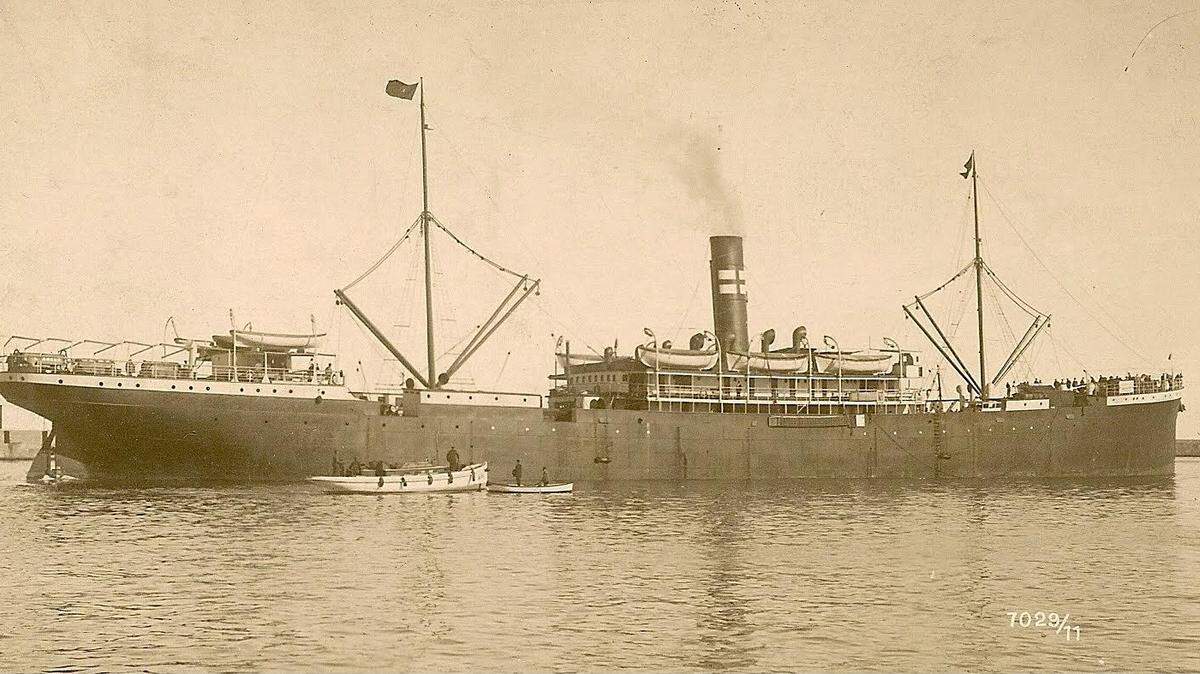
One hundred and six years ago this fall, a ship carrying Spanish immigrants on their way to Havana sank off the coast of Key West during a devastating hurricane.
The 1919 hurricane, as it came to be known, caused untold damage in Havana and the Keys, including the near-destruction of the San Carlos Institute.
Almost 500 passengers and crew members perished in the shipwreck; their bodies were never found. It is believed they were either swept away by the currents or buried deep in the ocean where they remain.
Though there was robust international coverage of the tragedy back then, including front-page stories in the Miami Herald and other dailies, I didn’t know about the shipwreck of the Valbanera until 2006 when, at a shop in Key West, I bought a coffee table book called “El misterio del Valbanera” (The Mystery of the Valbanera), written by a Spanish expert on shipwrecks, Fernando García Echegoyen.
After years of covering immigration locally and nationally, I was surprised that I had never heard of this incident, to this day enshrouded in mystery and uncertainty.
The story of the Valbanera became an obsession, one that finally found its outlet in a novel, “Deeper than the Ocean,” that took me years to complete and that will soon be released.
But the questions remain: Why don’t we know about this shipwreck? What happened to the bodies? Why has history swallowed up this event so completely that even in South Florida and the Caribbean, few remember that name? After all, most people know about the Titanic and always have, even before the famous 1997 film.
I think the Valbanera was forgotten because of what Carmen Lamas, associate professor of Latino/a literature at the University of Virginia, calls “the anonymity of migration” — the erasure of one’s past in the service of a dreamed future. Also, the victims of the Valbanera were mostly poor immigrants in search of a better life in the Americas, while many of those who perished on the Titanic, which also included poor immigrants, were wealthy and connected.
My research into the Valbanera disaster led me to hundreds of stories about shipwrecks in the Caribbean, starting with one of Christopher Columbus’ ships, the Santa María, that sank off the coast of Haiti on Christmas Day 1492.
Of course, more recently, an untold number of nameless and faceless migrants have disappeared at sea while rowing to freedom and opportunity from countries in crisis such as Cuba and Haiti.
When I went to the beach in Cuba, my mother, who like many Cubans didn’t know how to swim, always warned me to have “respect for the sea.” In my childhood, there were many things I had to have respect for, and I didn’t think too much about the meaning of that word.
But now that I know better, now that I know that the Caribbean Sea is a graveyard of crushed dreams, I understand what she meant and I understand her fear of the ocean.
I, too, have always been afraid of the sea. I’m attracted to it but also afraid. I’m convinced many of us islanders carry that fear deep in our genes, like a wound, like a warning. Respect, indeed, for the thousands who are resting at the bottom of the sea or deeper, like the 488 who perished in the Valbanera so many years ago, but not, it turns out, yet forgotten.
Recently, former NBC reporter Kerry Sanders, intrigued by my novel and researching his own story for the Discovery network, dove down to the site of the wreckage about 43 miles from Key West.
There, under 25 feet of clear sparkling water, the Valbanera still rested, part of its old hull encrusted with sea life, a reminder that dreams have a way of resisting even the embattlement of the waves and the ravages of time.
Mirta Ojito, a former Miami Herald and el Nuevo Herald reporter, is the author of “Finding Mañana: A Memoir of a Cuban Exodus.” Her debut novel “Deeper than the Ocean” will be released Nov. 4 .

This story was originally published October 1, 2025 at 4:10 PM.