
Empty classrooms don’t have to mean decline. They can spark Miami’s next chapter | Opinion
Miami has always been a place where challenges spark reinvention. The same is true in our schools. We already see what’s possible in nationally recognized magnet programs, thriving public charters and district models where students excel.
Now, with nearly 128,000 empty student seats across Miami-Dade, we have the rare chance to expand those successes — to turn vacant classrooms into launchpads for the next generation.
The good news is we don’t need to guess at what works. Miami is home to models that deliver results, and welcoming Success Academy is part of building a true portfolio of schools — one that gives families different kinds of high-quality options to match their needs and preferences.
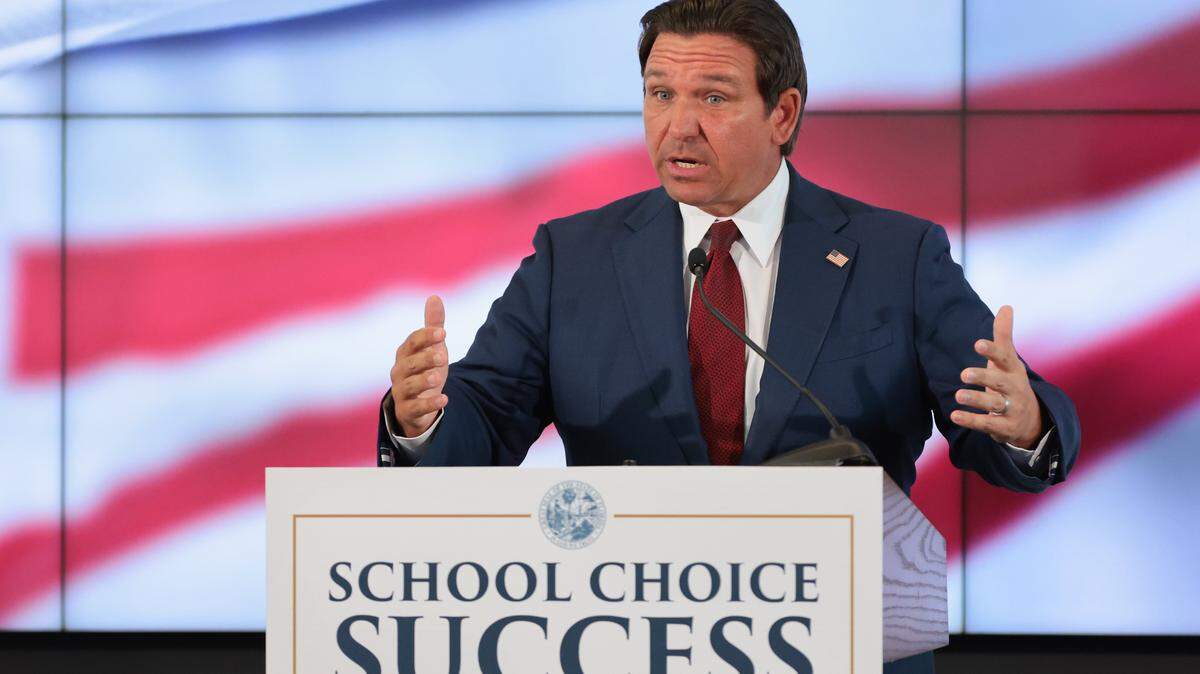
At a press conference Thursday at Florida International University, Success Academy CEO Eva Moskowitz appeared alongside Gov. Ron DeSantis, Miami resident and Citadel founder and CEO Ken Griffin and FIU president Jeanette Nuñez, to announce Success Academy’s expansion into South Florida.
Florida’s recent reforms to the Schools of Hope program ensure that only proven models like these can expand, particularly in communities where families are eager for better opportunities. That’s not just good policy; it’s a smart investment.
When taxpayer dollars are directed toward schools with a proven ability to deliver, the return is measured in higher student achievement, stronger graduation rates and a better-prepared workforce.
The arrival of Success Academy in Miami-Dade shows what this looks like in practice.
In New York, Success serves predominantly low-income Black and Latino students and has become one of the highest-performing school systems in the state.
Last year, 93% of its students scored proficient in reading and 96% in math — far outpacing city-run schools, where just 56% met reading standards and 57% met math standards. These results are no accident. They come from high expectations, excellent teaching and a relentless focus on learning.
For taxpayers, that consistency represents true value: public dollars delivering exceptional outcomes through public charter schools. Soon, Miami families will have access to that same level of excellence close to home.
Our recent report, Beyond the Grade, underscores both the urgency and the opportunity. It celebrates standout programs but also highlights stagnant literacy rates, declining enrollment and underused schools.
The path forward is clear: fill those empty seats with high-quality options, replicate what’s already working and ensure that every family — no matter their neighborhood — can access a public school where their child can thrive.
This work cannot fall on educators alone. Parents, civic leaders and the business community all have a role to play. Leaders like Griffin have demonstrated what’s possible through bold investments in education, setting an example for others to follow.
By supporting public schools that deliver results, investing in programs that make a difference and holding ourselves accountable, we can make sure every child in Miami has access to an excellent education.
Empty desks don’t have to symbolize decline. They can spark Miami’s next chapter — one where every child learns to read, every family can count on a great school and every public dollar goes toward proven success.
By embracing a portfolio of schools, we ensure families have real choices and every child has the chance to thrive.That’s the Miami we believe in: a city where opportunity isn’t left to chance but built — one student, one classroom, one school at a time.
Ana-Marie Codina is CEO of Codina Partners, a real estate development and investment firm she co-founded with her father Armando Codina in 2009. She is co-chair of the Partnership for Miami. Teri Williams is president and chief operating officer of OneUnited Bank. She is a director of CCC Intelligent Solutions and serves on the board of the 79th Street Corridor Initiative. She is also a founding member of the Partnership for Miami.