Restore full funding to care for Miami-Dade’s most vulnerable | Opinion
Miami-Dade County is preparing to approve a $12.9 billion budget for the upcoming 2025-2026 fiscal year. A public budget hearing will be held Thursday.
Yet, despite this unprecedented investment, the current proposal would deliver only a fraction of the funding needed to sustain the essential services that keep our most vulnerable seniors, children and families safe, nourished and stable.
Based on the current proposal, a fraction of the support means 30% of our neighbors who rely on critical services today — those who are frail, poor or living with chronic disabilities or mental health conditions — will be left without food, shelter, childcare, homecare, residential treatment or job support. This action unravels a resilient safety-net of services that has served our community for decades.
Community-based organizations (CBOs) serve every zip code in the county and form the foundation of a social services network that has stood strong through hurricanes, tragedies and everyday crises.
These nonprofit providers care for survivors of abuse, people with disabilities, seniors aging in place and children in danger. This work has been accomplished with cultural and religious competence, guided by shared principles of compassion and service upheld across faith traditions, even though funding has not increased in more than 10 years.
Our agencies have partnered with Miami-Dade government to leverage and maximize corporate and philanthropic dollars. Private sector funding will be lost along with the county share.
This would devastate the quality of life for tens of thousands of residents. County funding of CBOs allows safety-net agencies to bring in millions more from donors, businesses and the state, stretching every public dollar to help more people. If full funding is not restored, that support will vanish. Residents will lose critical services and agencies will lose nongovernmental matching funds.
A drastic reduction in these services threatens the closure of trusted legacy providers and the loss of hundreds of trained, culturally competent, trauma-informed professionals.
It will worsen homelessness, mental illness, hunger, hospitalizations, incarcerations and even lead to preventable deaths. We cannot claim scarcity of resources when the budget has grown to $12.9 billion. This is not a test of economics but of conscience.
We must ask ourselves: Are we willing to let a budget be balanced on the backs of those least able to bear it? Will we be remembered as a community that met record needs with record neglect — or with compassion, dignity and moral clarity?
Here is what we are asking:
- Fully restore FY2025–26 funding for legacy safety-net CBOs. Partial support is not enough. A fraction of life-sustaining care does not lead to stability, self-sufficiency or a better quality of life. The lives of seniors, children and families should not be diminished to a line item or a percentage.
- Establish a dedicated funding source to sustain these essential services in perpetuity. As a vibrant and resource-rich county, we must invest in a permanent solution that protects those who cannot care for themselves and uplifts those who hold promise for success when given the right support.
To our elected officials: You have always stood tall for the wellbeing of our residents. We ask you now to stand firm once again. Do not let Miami-Dade become a fractional supporter of the poor and those living with illness and struggle.
To our residents, partners in faith, business and philanthropy: Thank you for your continued advocacy and generosity. We ask that you raise your voices with ours, because our community must not walk away from its shared commitment to dignity, equity and care for our neighbors who need us most.
Together, let us fulfill our obligations to the people who need us most.
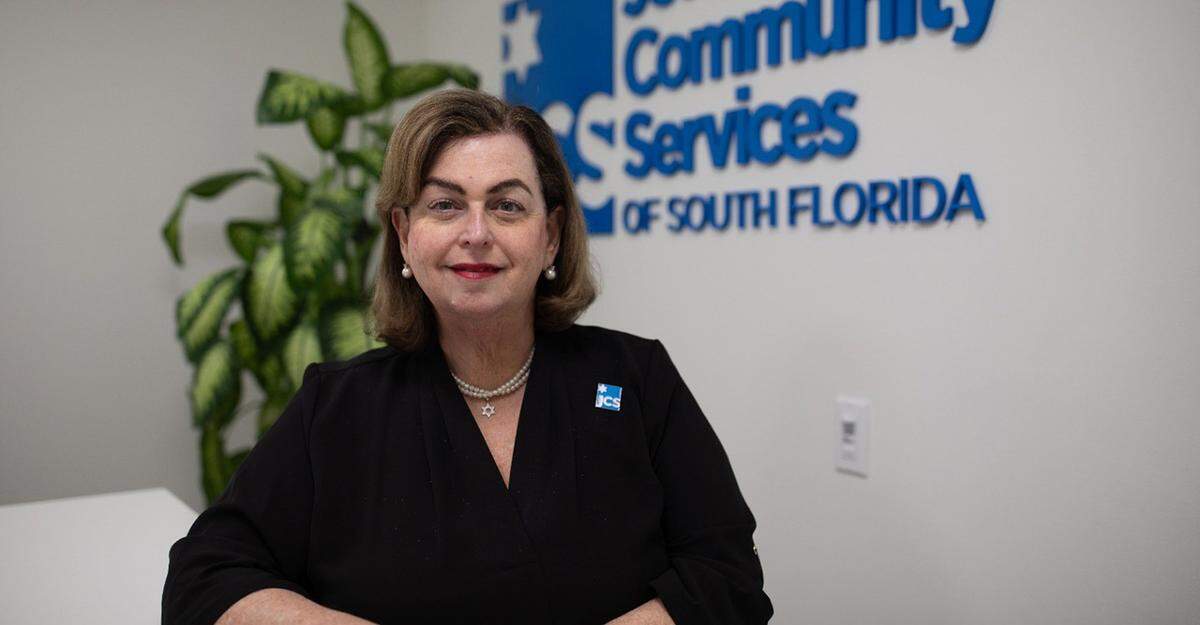
Miriam Singer is president & CEO of the Jewish Community Services of South Florida. She is writing this article on behalf of The Advocacy Collective, a coalition of 60 community-based organizations serving Miami-Dade.