It’s not ‘Florida humor.’ Racist memes from Alligator Alcatraz are cruel | Opinion
The first time someone close to me sent me a racist political meme was in 2008, right after Barack Obama was elected. I stared at the meme in disbelief. I thought, what kind of person thinks this is funny? Better yet, what kind of person knows me so little that they think I would think it’s funny?
I didn’t respond, until the second one came.
I wrote back immediately — not with anger, but with clarity.
“This is not OK,” I said. “Please don’t send me jokes like this again.”
And they didn’t ever again.
Don’t get me wrong, I have a sharp sense of humor. But there’s a difference between laughing at the absurdities of life and laughing at someone’s race or at someone’s suffering.
Right now across Florida, thanks to Alligator Alcatraz, people are laughing.
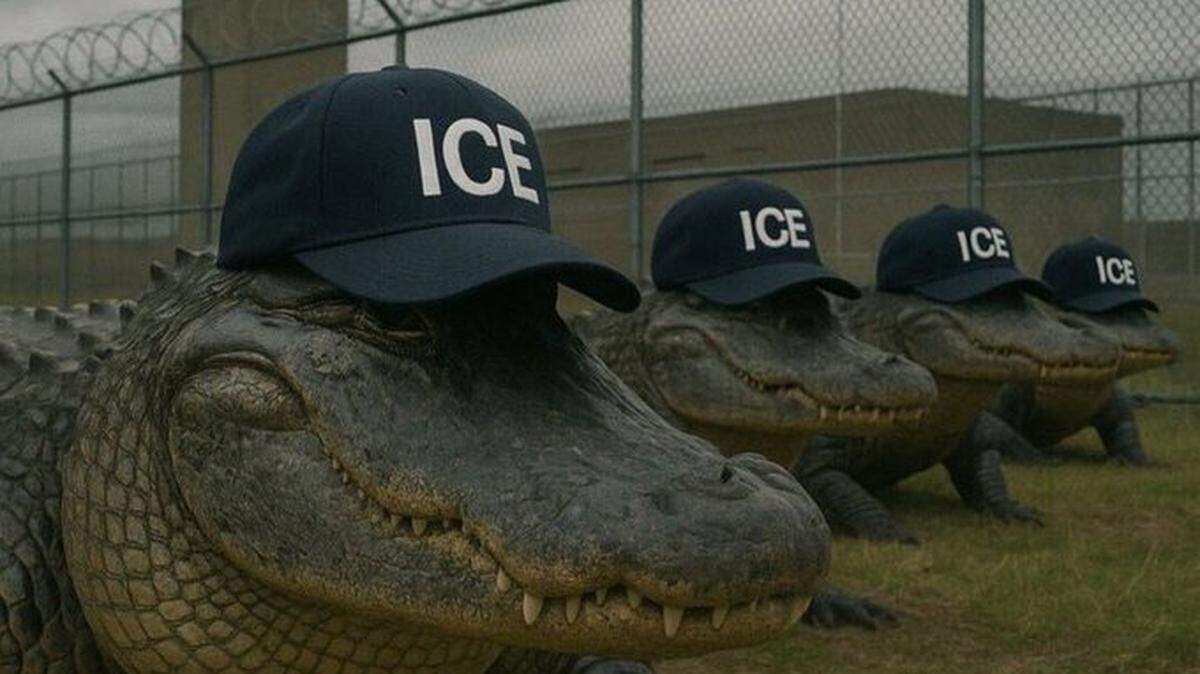
They’re laughing at AI-generated memes of alligators wearing ICE hats at the detention center, shared by no less than our own U.S. Department of Homeland Security.
They’re buying t-shirts that say “Alligator Alcatraz — bring on the gator bait.” They’re taking selfies in front of the facility, like it’s some new roadside attraction at the edge of the Florida Everglades.
They’re gleefully joking about human beings — detained immigrants — being guarded by alligators and snakes.
How is this funny? When did we become people who cheer for this kind of cruelty and make Etsy or eBay shops out of someone else’s pain?
I know, “They’re just jokes.”
But how are we OK with joking about humans enduring inhumane conditions?
How are we OK with turning “gator bait,” a phrase with a vile, racist history, into Florida’s next big branding moment?
Not all of us are OK with it. Many of us are sick to our stomachs and quietly wondering what happened to the people around us who used to be kind — the people now sending group texts filled with cruelty and calling it patriotism.
Some people are starting to speak up. Calls to boycott Etsy are growing after Alligator Alcatraz merch showed up on its platform. Buyers and sellers are saying: No. We don’t want our small businesses tied to big hate.
This isn’t just about a joke or a t-shirt or even one facility. This is about what we’re passing down to our kids and to each other.
Every time we dehumanize someone or turn them into the “other,” we lose a little of our own humanity and set the stage for something far more dangerous. This is how history repeats itself — a joke here, a meme there, a slow drip of cruelty dressed up as humor. And this is how it escalates — when we get used to it, when we stop seeing people as people.
History has shown us where that path leads. When a society grows numb to dehumanization, the unthinkable becomes acceptable. That’s how atrocities happen — not all at once, but bit by bit, when we look away or laugh along.
Every time we stay silent, we send the message: This is fine. It’s not. We can have different and strong opinions about immigration. We can vote, protest and debate. But we cannot lose our empathy. The moment we do, we’re the ones who’ve crossed the line.
Cruelty isn’t just dangerous. It’s contagious.
The next time someone sends you a “funny” meme about immigrants, don’t let it slide. Say something. That’s how it stops — with one person choosing not to laugh and refusing to join in.
One person saying, “That’s not funny to me.” That’s all it takes to shift the energy. To remind people who they are, or who they used to be.
Cruelty is contagious. But so is decency. So is courage. So is kindness.
Marianne Murciano is a journalist and TV and radio host from Miami and Chicago. She is the founder of Savvy Planet and a Cuban American who arrived in Miami on Jan. 14, 1961.