Florida bill to ban books from schools over ‘sexual content’ threatens literary classics | Opinion
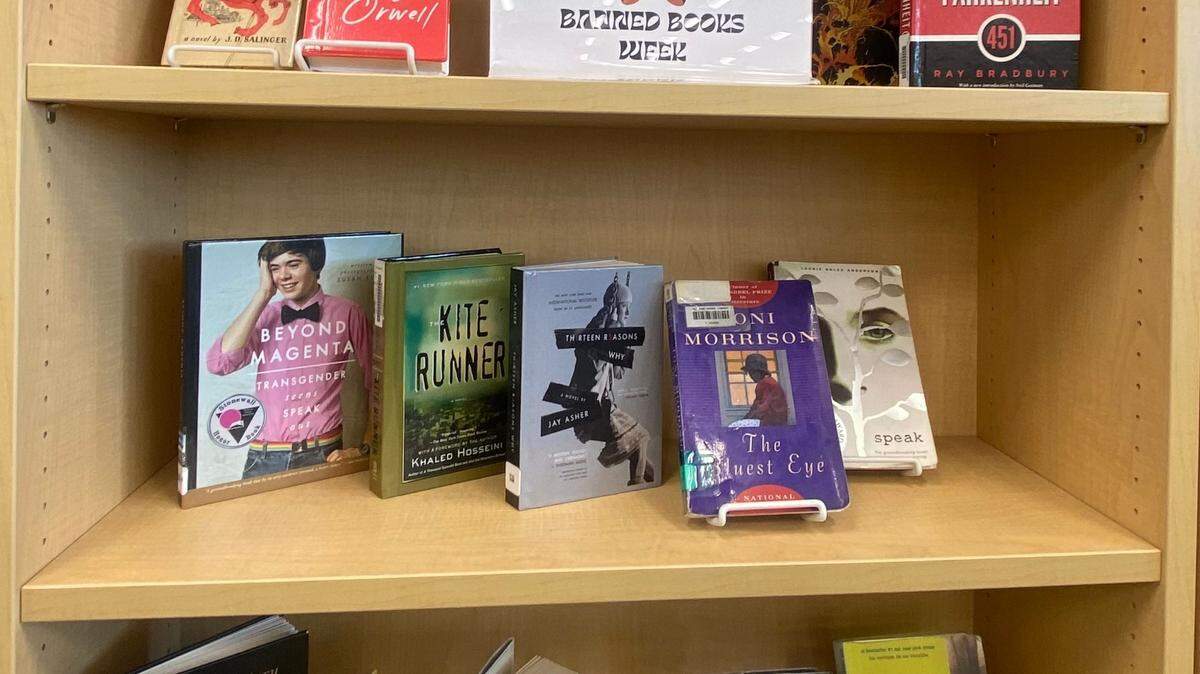
Classic books like “1984” by George Orwell, “I Know Why the Caged Bird Sings” by Maya Angelou and “The Diary of Anne Frank” offer profound insights into history, humanity and the complexities of our shared world.
These are not fringe books. And yet, under the proposed House Bill 1539, now advancing in the Florida legislature, these titles could be removed from public school libraries and classrooms after little more than a formal complaint by a single person because they include sexual content.
HB 1539 proposes a sweeping and rigid overhaul of how books are evaluated in Florida’s public schools, defining those that may be challenged for being “harmful to minors.”
According to the bill’s wording, that means any book containing “depiction of nudity, sexual conduct or sexual excitement... patently offensive to prevailing standards in the adult community as a whole.”
HB 1539 proposes a sweeping and rigid overhaul of how books are evaluated in Florida’s public schools. If a book in a school is challenged as “harmful to minors,” districts would be required to permanently remove the book, regardless of its educational value, cultural relevance or historical significance. The bill expressly forbids any consideration of a work’s literary and artistic merit as a whole.
Even foundational books, like the ones above, could be removed from public schools based on isolated scenes or language. One frivolous complaint will be all it takes to ban books, ignoring their context and complexity.
Lawmakers should think carefully before making it even easier for censorship to spread.
Policies like this have long been exploited by a loud few and those eager to turn personal morality into public restriction. These measures are used to ban books from classrooms and libraries, often without a transparent review or meaningful public input.
The bill effectively guts the third prong of the “Miller test,” the standard established by the U.S. Supreme Court in Miller v. California (1973), which protects works, taken as a whole, with serious literary or artistic value, from being labeled “obscene.” That safeguard has protected important books from being labeled obscene for decades.
By narrowing what is considered acceptable in Florida, this bill invites confusion, weakens First Amendment protections and opens the door to costly legal battles over free expression, which will fall squarely on Florida taxpayers.
Let’s be clear: HB 1539 threatens to sever the thread between students and textually rich literature. It reduces sophisticated narratives to flattened singular passages, ignoring the breadth and power a story can offer when taken as a whole.
By rejecting the holistic evaluation of books, this bill undermines a key foundation of both literary expression and public education. This bill sidelines inquiry in favor of control. It does not protect knowledge; it restricts it. It does not enliven thought; it narrows it.
PEN America has urged Florida lawmakers to reject HB 1539, warning that it endangers students’ First Amendment rights and undermines the foundation of our public education system and academic freedom.
The bill’s new definition of “harmful to minors” diverges sharply from constitutional standards. If passed, HB 1539 would likely result in the removal of widely taught and historically significant works from public school libraries and classrooms.
It would deny public school students the chance to engage meaningfully with literature, to grapple with big ideas and gain a deeper appreciation for language and artistic expression.
Our literary canon captures pivotal moments in our shared story and presents a layered portrait of life.
When students are exposed to a wide range of reading materials, they don’t just access information; they build cultural understanding and sharpen their imagination.
Protecting access to nuanced works isn’t just about saving books; it’s about cultivating intellectual and emotional growth for as many as possible.
William Johnson is the director of PEN America’s Florida office.