
Reyes was a powerful voice for the people of Miami | Opinion
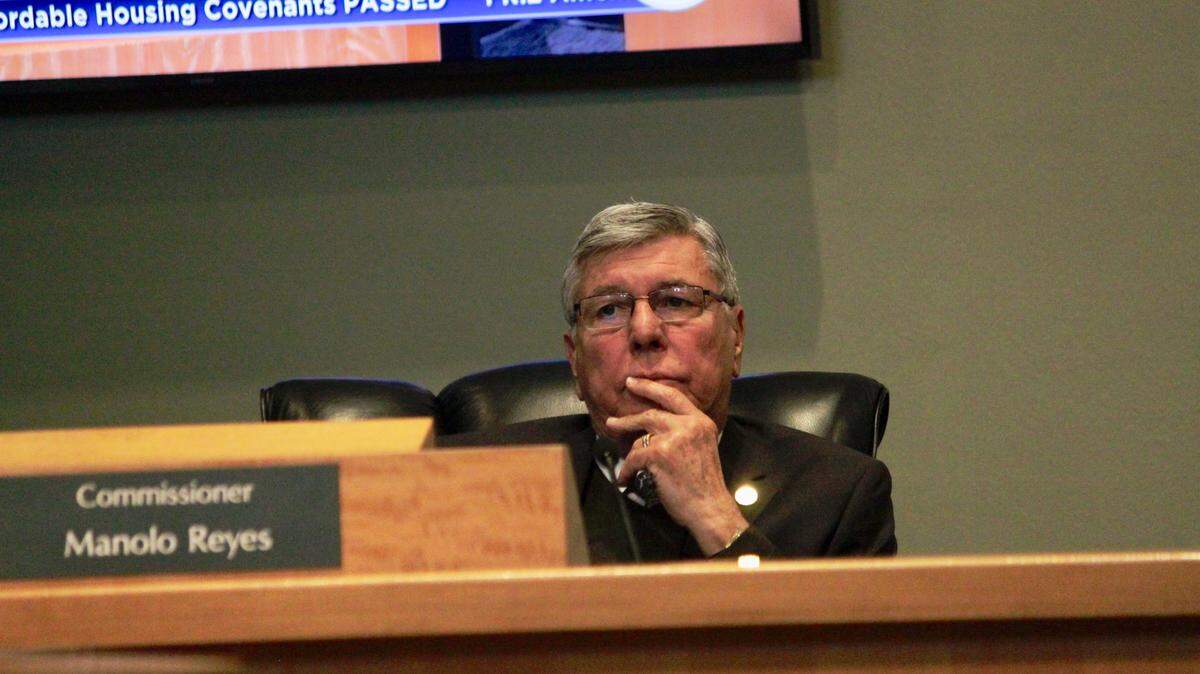
On the Miami Herald Editorial Board, we learned firsthand of the influence and quiet charm of Miami Commissioner Manolo Reyes, who died Friday at 80.
As part of our candidate interview process during endorsement season, we sometimes asked Miami commission candidates which sitting commissioner they would most like to emulate, if elected.
Time after time, the answer was the same: “Commissioner Reyes.”
We grew to expect the response — Reyes, despite frequent turmoil on the dais, was a uniting force. When told of his popularity, Reyes was surprised. “I’m very flattered,” he said humbly.
That was Reyes — steady, low-key and approachable. He often sat quietly in his seat at the commission dais, representing Miami’s District 4, watching as the more outspoken commissioners had their say.
But when it came time for him to speak — or more importantly, to vote — Reyes let his principles speak louder than any raised voice. He was, famously at City Hall, the lone commissioner to vote against the controversial Miami land-for-soccer-stadium deal — not for politics, but because he believed it was the right thing to do. He didn’t seek the spotlight. He sought what was best for the people of Miami, a much-too-rare goal in politics today.
Back in the 1990s, Reyes was a well-known local politician frequently running for the Miami city commission. He lost six times. He left public life to teach, but returned to politics in 2017 and won his first commission spot at age 73. He was older, wiser and more determined than ever to serve his community. It was in his blood — his father, Ernesto, had been the mayor of the city of Victoria de Las Tunas in a pre-Castro Cuba.
When he came in for his first candidate interview with the Board in years, he was a little nervous, but his sincerity shone through.
“I’m so glad I have a new chance to serve the people,” he told us in 2017. And he meant those words. “I really missed it; I know now it’s my true calling in life.”
We endorsed him. But we had to reschedule his interview. He was a high school government and economics teacher at the time, and the appointment conflicted with class. “I am a man of my word; I can’t let my students down,” he said.
Reyes was an old-school public servant. He shook every hand he could and never turned away from a conversation —whether it was with a voter, a city worker, or a reporter. Yes, he was a nice guy — in the most honorable sense of the phrase. He was proud to say he was just an economist at heart and that he still lived in the same Flagami home for some 50 years, where he raised his children with his wife, Selva.
Reyes’ roots in the Miami Cuban exile community were deep and personal; he was often present at anti-Castro demonstrations. But he never forgot that Miami, a place he loved dearly and served proudly, had become his second home.
From pushing for the redevelopment of downtown Miami to reviving the Shenandoah pool to advocating for the hiring of an inspector general for the city, Reyes never stopped fighting for what he believed would make Miami a better place.
Life threw him a curve ball. Just as he won his third term, he was diagnosed with leukemia. When we spoke, he sounded unshaken. “I’m going to beat this; it’s just a bump in the road,” he said. And for a while, it was.
Ever the idealist, Reyes was embarrassed by the drama in city politics — and he wanted to change it. He began talking about running for mayor, even as he turned 80. But his cancer returned, dashing his dreams and, ultimately, claiming his life.
Reyes leaves behind a legacy of integrity and service. In a city known for its clamor, he was a quiet constant — always thoughtful, always grounded, always for the people.

Click here to send the letter.
BEHIND THE STORY
MOREWhat's an editorial?
Editorials are opinion pieces that reflect the views of the Miami Herald Editorial Board, a group of opinion journalists that operates separately from the Miami Herald newsroom. Miami Herald Editorial Board members are: opinion editor Amy Driscoll and editorial writers Isadora Rangel and Mary Anna Mancuso. Read more by clicking the arrow in the upper right.
What's the difference between an op-ed and a column?
How does the Miami Herald Editorial Board decide what to write about?
The Editorial Board, made up of experienced opinion journalists, primarily addresses local and state issues that affect South Florida residents. Each board member has an area of focus, such as education, COVID or local government policy. Board members meet daily and bring up an array of topics for discussion. Once a topic is fully discussed, board members will further report the issue, interviewing stakeholders and others involved and affected, so that the board can present the most informed opinion possible. We strive to provide our community with thought leadership that advocates for policies and priorities that strengthen our communities. Our editorials promote social justice, fairness in economic, educational and social opportunities and an end to systemic racism and inequality. The Editorial Board is separate from the reporters and editors of the Miami Herald newsroom.
How can I contribute to the Miami Herald Opinion section?
The Editorial Board accepts op-ed submissions of 650-700 words from community members who want to argue a specific viewpoint or idea that is relevant to our area. You can email an op-ed submission to oped@miamiherald.com. We also accept 150-word letters to the editor from readers who want to offer their points of view on current issues. For more information on how to submit a letter, go here.