
FSU professor: DOGE killed my book grant | Opinion
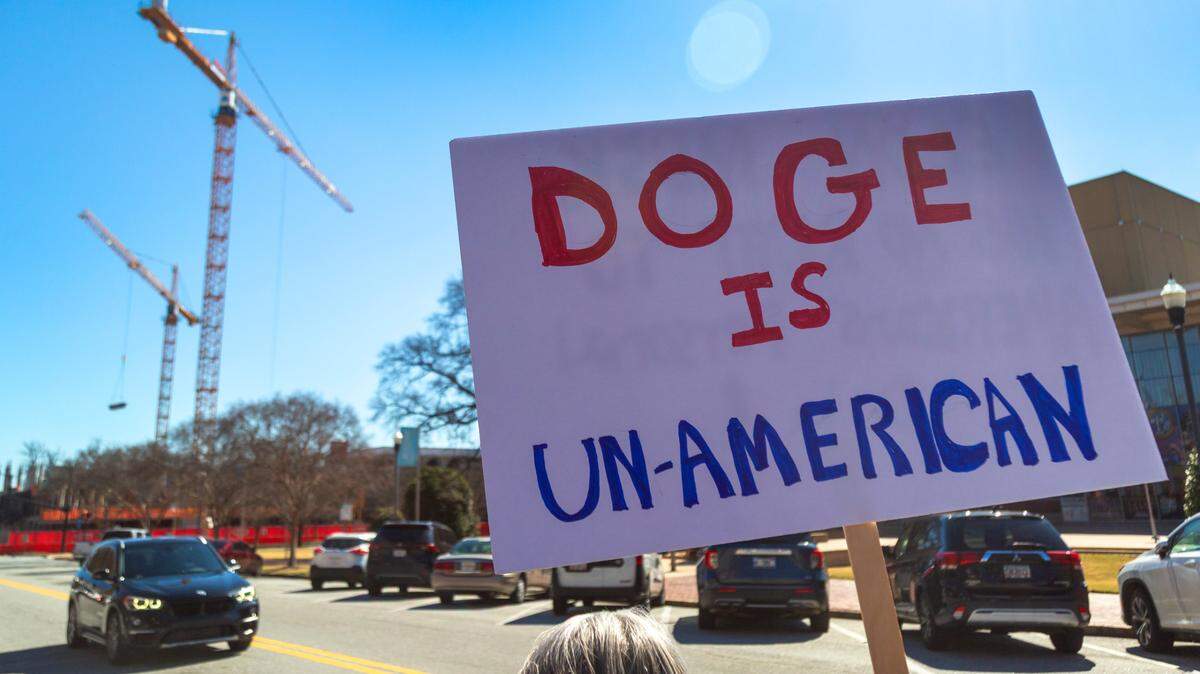
For twelve hours on April 3, I thought my grant had managed to hide from the DOGE minions when they tore through the National Endowment for the Humanities (NEH) office.
I was wrong.
I am one of 25 scholars who received 2024-2025 NEH Public Scholar grants to translate their scholarship into “well-researched nonfiction books in the humanities written for the broad public.”
The program, which was founded in 2016, has previously supported books about “The Star-Spangled Banner,” the making of modern Chinese food, the poet Robert Frost and the classic film “Casablanca.”
In August 2023, my fellow grant recipients and I each submitted a book proposal, bibliography, work plan, resumé, writing sample and two letters of recommendation as parts of our applications. And then we waited.
Our proposals got vetted by field specialists who reviewed each application according to criteria that included appeal for general readers, record of experience, depth of research and quality of writing sample. You may object to your tax money being used to support the writing of books, but you can rest assured that the authors of those books got vetted more carefully than did Pete Hegseth before he became secretary of defense.
My project focused on the little-known author of the most famous poem in the world: “Twinkle, Twinkle, Little Star.” Jane Taylor lived at a moment in history dominated by addled and narcissistic men. As a child, she watched King George III parade through London after he recovered from a bout of madness. As a young woman, she fled with her siblings from a rumored Napoleonic invasion.
My fellow grant recipients are writing books about NASA Voyager spacecrafts, the film director George Cukor and American retirement, among other topics. When the termination notices started landing in our email boxes, we checked in with each other to find out if we’d been voided individually or en masse.
When I didn’t immediately receive a termination message after the bad news first broke, I imagined Jane Taylor running through the hallways of the NEH building like a Gothic heroine, somehow managing to dodge DOGE.
Then I checked my junk mail. There my termination message had landed because it was sent from a spammy-looking sender— not even an official NEH address.
The termination letter drew on the authority of a clause in the Code of Federal Regulations, which specifies that a grant can be terminated if an award “no longer effectuates the program goals or agency priorities.” The letter said that the grants were cut off in order to “safeguard the interests of the federal government,” and it referenced a spate of recent executive orders.
“Due to exceptional circumstances, adherence to the traditional notification process is not possible,” said the letter. Of course, there has never been a traditional notification process for using executive orders to terminate grants authorized by Congress. Also, most of the staff who know how to use the official NEH email system have been put on leave.
The cancellation of the public scholar grants wasn’t the worst recent default on congressionally approved government spending. DOGE couriers fired the entire staff of the Institute of Museum and Library Services. Cuts to the NIH, NOAA, FEMA and Social Security are more frightening.
But as someone who writes reference letters for optimistic 20-year-olds, I worry most about how agency cuts impact those embarking on careers. Young people who worked hard and followed rules are getting fired or having their graduate school plans dashed by the “genius” and Napoleon enthusiast Elon Musk.
After Jane Taylor delivered her younger siblings to safety from Napoleonic invasion, she wrote, “[W]e felt it a little mortifying that our neighbor Bonaparte should have it so much in his power to give us such a thorough panic, and so completely to derange all our affairs.”
Today, I believe we’re living under a DOGE regime that operates without regard to human decency and rule compliance. I wish our elected representatives would wrest back control.
Judith Pascoe, author of four books, is a George Mills Harper Professor of English at Florida State University. She lives in Tallahassee.
This story was originally published April 14, 2025 at 9:03 AM.