
Despite Trump’s claims, birthright citizenship has been settled by Supreme Court | Opinion
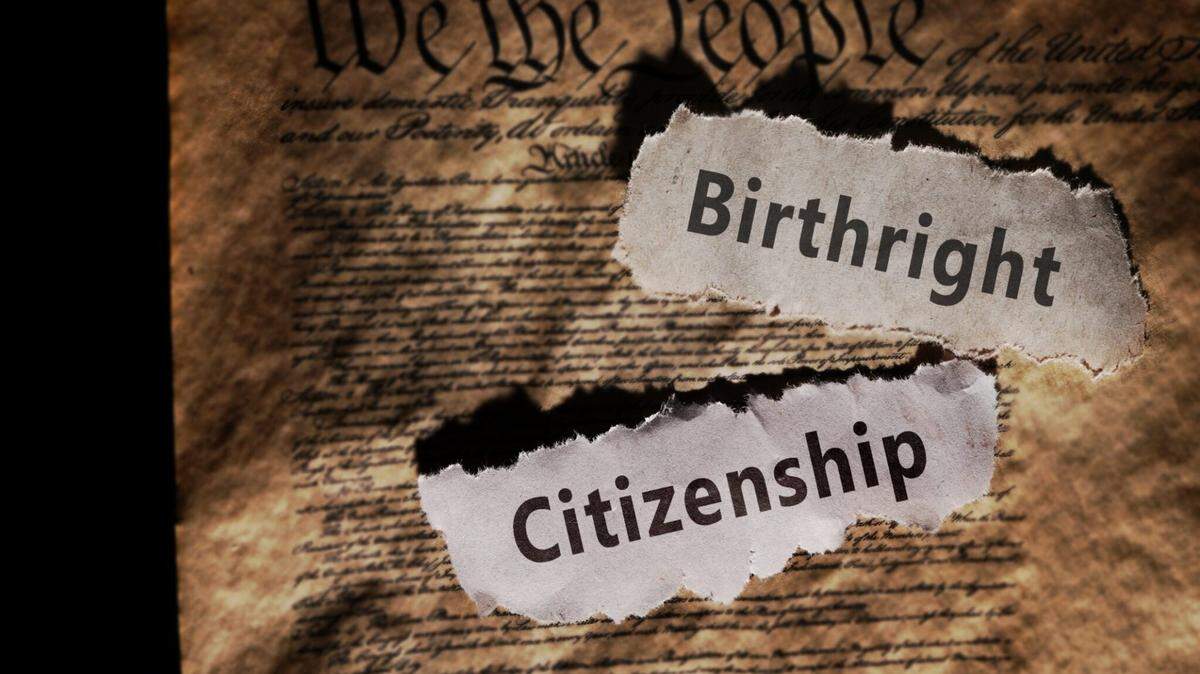
Some 75 days into his presidency, Donald Trump has not given up on one of his first acts — to end birthright citizenship with the “Protecting the Meaning and Value of American Citizenship” executive order.
But there lies the problem, which includes over a century of U.S. Supreme Court precedent recognizing birthright citizenship and the fact a president cannot rewrite the Constitution. While he can propose an amendment, Trump evidently prefers a faster route.
On March 13th, after four federal courts enjoined the implementation of the executive order, the Trump administration petitioned the U.S. Supreme Court to allow him to enforce it.
But there are two problems with Trump’s tactic: First, the executive order is blatantly unconstitutional, as the first court to consider the issue found.
Second, the filing’s procedural posture is a delay tactic that will resolve nothing.
In terms of the procedural posture of the case, Trump urges the justices to block the injunctions issued by federal district judges in Seattle, Maryland and Massachusetts. Trump argues lower federal courts cannot stop enforcing a nationwide executive order. While this argument has some support from two of the nine Supreme Court justices, this procedural argument does not address the executive order’s legality.
Trump’s team is wrong asserting that:
▪ The 14th Amendment has never been interpreted to extend citizenship universally to everyone born within the U.S.
▪ The 14th Amendment has always excluded from birthright citizenship persons who were born in the U.S. but not “subject to the jurisdiction thereof.”
Indeed, every single U.S. Supreme Court decision considering the issue of birthright found all persons born in the U.S. are, in fact, U.S. citizens. The cases include Wong Kim Ark, Elk v. Wilkins, Perkins v. Elg and Afroyim v. Rusk.Iz, U.S. citizens.
The Supreme Court in Afroyim prophetically rejected the very action Trump is trying to achieve with his executive order: One of the purposes of the 14th Amendment was to prevent both the executive and legislative branches of government from interfering with the concept of citizenship.
More recently, the Court in Plyler v. Doe, rejected attempts like those being made by Trump, essentially stating that:
Whatever his status under the immigration laws, an alien is a “person” that “within its jurisdiction” confirms the understanding that the 14th Amendment’s protection extends to anyone, citizen or stranger, who is subject to the laws of a state and reaches into every corner of a state’s territory.
These Court decisions should have ended the debate, but Trump’s team argues because undocumented immigrants arrived by violating U.S. law, they are not subject to our laws.
They argue that U.S. born children of the undocumented are by extension somehow not citizens. They look to the “subject to the jurisdiction thereof” language of the 14th Amendment to ascertain the “original meaning of the term.” But the original meaning of “subject to the jurisdiction” was intended by Congress to mean being capable to be punished by the U.S. And, of course, both the undocumented and their children are subject to our laws because they can be punished if they violate them.
The most disturbing aspect of Trump’s effort is it punishes children for wrongs of their parents, a proposition rejected by the Supreme Court in Plyler v. Doe: “regulation directing the onus of a parent’s misconduct against his children does not comport with fundamental conceptions of justice.”
Indeed, not only do biblical references, such as Ezekiel 18, agree that children should not bear the sins of the father, a slew of federal courts have rejected punishing children for failures of their parents.
Moreover, no president can rewrite the Constitution by executive order.
Ultimately, the U.S. Supreme Court will decide this issue. If they act as politicians and are motivated by what are political calls to curb Latin-American immigration, then Trump, as well as future presidents, will be able to rewrite our Constitution with a stroke of a pen: a sad day for separation of powers, democracy and over a century of Supreme Court precedents.
Ediberto Roman is a professor at the Florida International University College of Law.

This story was originally published April 3, 2025 at 11:41 AM.