
Venezuela exports dysfunction throughout our hemisphere. It must be stopped | Opinion
A month into his second term, President Donald Trump is fulfilling his promise to tackle America’s border crisis — taking bold steps to arrest or discourage the flow of migrants at our border and treat the crisis with the seriousness it requires.
The new administration will obviously need to prioritize both the enforcement of our own laws and the incentives driving uncontrolled migration to deliver on its promises.
But it will also require an uncompromising approach to the countries responsible for so much of this crisis — namely, the autocracies, failed states and dysfunctional governments that are either unwilling or unable to meet the needs of their citizens, many of them in Latin America.
Tailored approaches will be needed for different countries depending on their level of dysfunction and our ability to work with particular governments to stem the flow of illegal migrants.
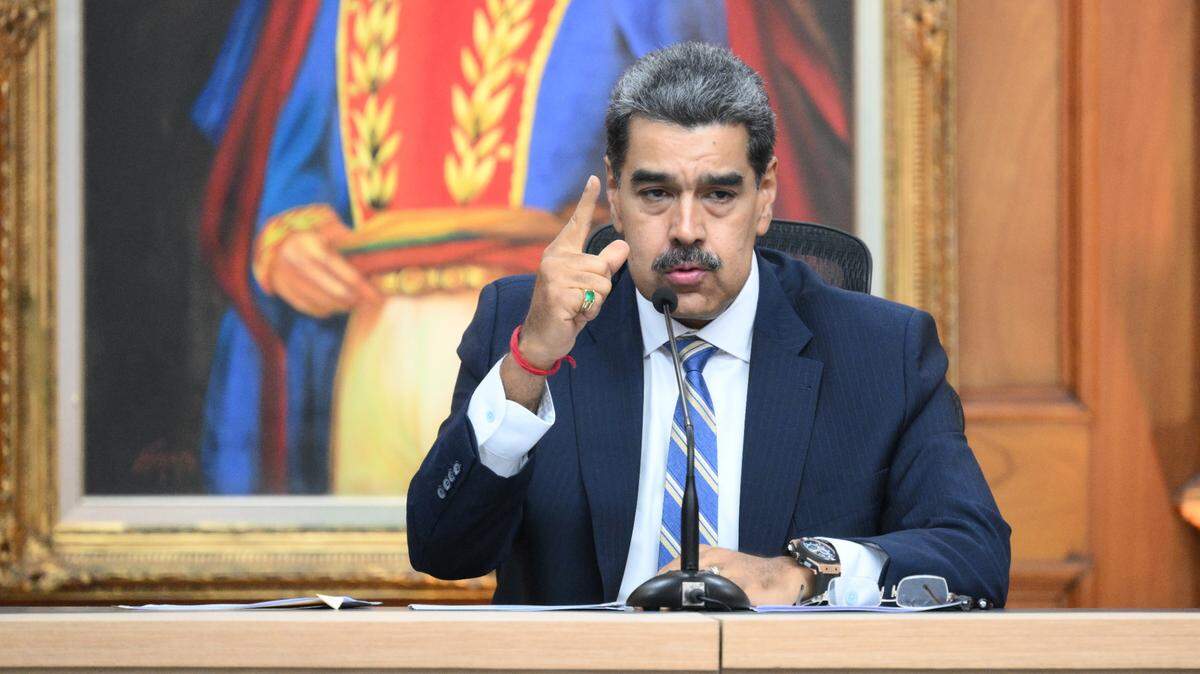
In the case of autocracies like Venezuela, the challenges we face are peculiar to the country’s despotic nature. Indeed, the Nicolás Maduro regime offers perhaps the best example of how authoritarian states destabilize and export dysfunction throughout our hemisphere, contributing to the migrant crisis and cascading problems like gang violence, human trafficking and the fentanyl epidemic.
The Maduro regime’s socialist utopia has managed to reduce Venezuela — once the wealthiest country in South America — to an impoverished basket case. Systemic corruption, runaway inflation, a complete breakdown in the rule of law and a total lack of fundamental freedoms have driven nearly eight million Venezuelans from the country , nearly a quarter of the original population. Many have settled in South Florida.
This has stress-tested the institutions of neighboring host countries like Colombia, which has the largest population of Venezuelan migrants of any country in the region. Mass migration through Colombia has fueled the expansion of gangs and paramilitaries within Colombia who traffic in migrants over the Panamanian border.
Criminal gangs like the notorious Tren de Aragua have exploited this chaos to expand its presence throughout the Western Hemisphere, including the U.S. And as Secretary of State Marco Rubio pointed out in his confirmation hearing, the regime leveraged the flow of migrants to extract concessions from the Biden administration and secure its hold on power.
Venezuela’s tyranny is costing us billions. Between 2017 and 2024, the U.S. spent more than $3.5 billion in humanitarian assistance for vulnerable Venezuelan migrants and refugees fleeing Maduro’s tyranny. This includes $162 million in FY24 alone spent supporting Venezuelans inside Venezuela.
American adversaries like China, Russia and Iran have further exacerbated the situation to expand their influence in our hemisphere and undermine American interests. Russia is Venezuela’s most important trade partner and military ally, with the Kremlin projecting power and undermining American interests by propping up the Maduro regime. And Iran has longstanding security and intelligence ties with Caracas.
In short, the failures of authoritarian governance — and the malignant designs of our authoritarian adversaries — are a key component of the migration crisis in our hemisphere. While enforcement of our border is paramount, attacking the various drivers of mass migration will provide the support structure for a long-term and lasting solution to this Hydra-headed problem.
As long as countries like Venezuela remain in the hands of dictators, they will continue to destabilize the region and undermine American interests. Efforts to strengthen and sustain the rule of law throughout our shared hemisphere will ultimately depend on the proliferation of freedom throughout Latin America.
Protecting its borders is one of the most complex challenges facing the new administration and will require every tool available to the government to deliver a lasting and sustainable solution that makes America safer, stronger and more prosperous.
To succeed, enforcement of our immigration laws must be underpinned by a more expansive campaign to bolster the rule of law throughout the region and tackle autocratic regimes like Venezuela’s that profit from the status quo.
Daniel Twining is the president of the International Republican Institute and Eric Farnsworth is the vice president of the Washington office of the Council of the Americas and the Americas Society.