
As the U.S. pulls out of the world stage, its influence will also diminish | Opinion
For almost two years, while a Miami resident, I served as the United States representative to the World Bank, the world’s largest multilateral development bank deploying more than $130 billion annually in loans, credits, grants, equity investments and guarantees to governments and private businesses in emerging markets.
The bank works in more than 170 countries in conjunction with partners in the public and private sectors in a joint effort to end poverty. At the World Bank, I led the U.S. government’s shareholding and delegation and served on the board of executive directors. My last day on the job was last week.
As the new Trump administration pauses foreign aid and assistance programs — as well as pulls out of the Paris Climate Accord and the World Health Organization — I believe that the U.S. government is ceding ground on the world stage, that our adversaries will fill the void and that the “America First” doctrine will ultimately mean “America Absent” in global affairs.
Given the ongoing crises and conflicts around the world including growing food insecurity, the cataclysmic impact of the threat of climate change, the Bank remains a critically important institution to create sustainable and inclusive economic growth and resiliency for the most vulnerable.
The bank is also one of the most important forums and organizations to align with allies, push back on adversaries and advance U.S. interests and values around the globe. But in order to do so, the U.S. cannot take a “go it alone” attitude. We need to engage multilaterally — as well as bilaterally — with our allies and partners.
The World Bank is a testament to the fact that multilateralism works. I’ve always sought to be a bridge builder. I’ve always put our country’s interests first, championed our values and advocated for our priorities. When I was representing the U.S. government, my colleagues at the World Bank always knew where I stood.
Nevertheless, I always sought to listen, learn and understand where my foreign government counterparts and fellow board members were coming from, what was important to them and the diverse constituencies they represent. Whenever there were divides (as there often were), I always sought to bridge them — because I believe in bridges, not walls. But I never compromised on our interests or our values. One can engage multilaterally and still put America’s interests first.
The organizational spirit of the World Bank is one of consensus as we try to end poverty around the world. While never easy to achieve — especially in a group representing 189 member countries — engaging multilaterally in a consensus-driven process yields better results and adds value to our decision making: from the bank’s historic replenishment of International Development Association (IDA) and the establishment of the Framework for Financial Incentives (FFI) for cross-border externalities, to lowering the bank’s equity to loan ratio to 18%, freeing up an additional $130 billion in financing over the next 10 years.
From a domestic lens, these investments are in America’s interests because, among other things, they help address some of the root causes and push-pull factors of migration to the U.S. and instability around the world.
During my tenure, I used the U.S. chair (both my voice and vote) to shine a light on the vulnerable, the underrepresented, the discriminated against and the disaffected to help bring forward their concerns and amplify their stories.
This remains a very important aspect of the U.S. government’s fiduciary responsibility at any multilateral organization. I look forward to the World Bank continuing to lean in on these important issues regardless of who sits in the U.S. chair — or especially if it remains vacant.
The world still looks to the U.S. for leadership in this space, and if we choose not to engage and lead, we’re not putting the American people and our interests first. Rather we risk being altogether absent, and therefore putting America last.
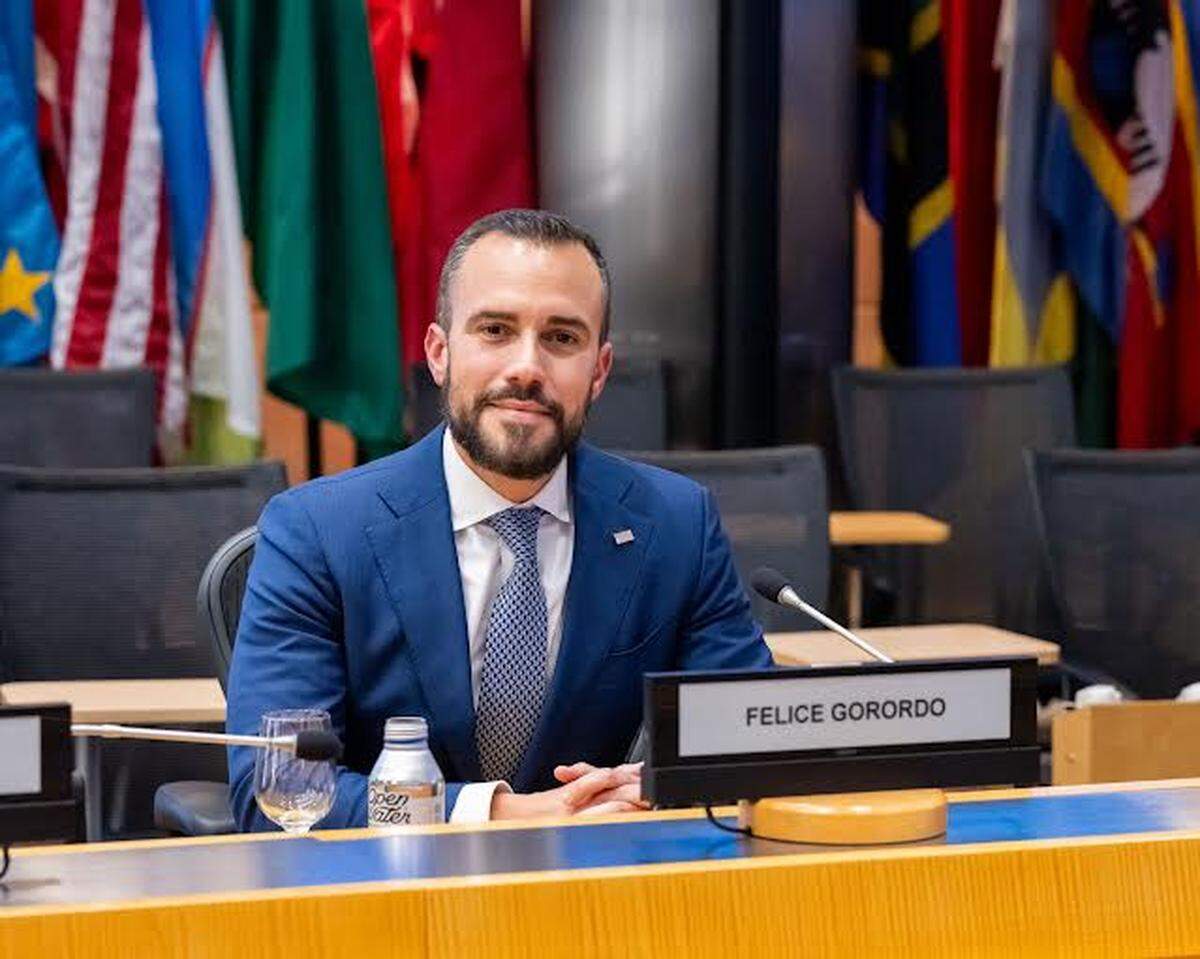
L. Felice Gorordo,a Miami resident, is the immediate past World Bank alternate executive director for the U.S. He previously served in the White House under Presidents Barack Obama and George W. Bush. Follow him on X @fgorordo.
This story was originally published February 4, 2025 at 11:08 AM.