
Americas Act can help reshape the global economic landscape | Opinion
As President-elect Donald Trump assumes office, he inherits rare bipartisan support for a top foreign policy goal: winning the economic competition with China.
Central to this strategy will be the Americas, starting with North America’s industrial base.
The region offers unparalleled advantages: abundant natural resources, private capital, industrial capacity, clean energy and a complementary workforce.
The Americas’ proximity to the U. S. reduces logistical barriers, while its political leaders are eager for closer ties to the U.S. economy.
Together, the Americas can break China’s dominance in sectors like critical minerals, semiconductors and pharmaceuticals.
Biden’s Americas Partnership for Economic Prosperity and Trump’s Americas Crece initiatives sought to spur this realignment of supply chains by mobilizing more private capital.
Collaborations with partners like the Inter-American Development Bank created new financing tools to channel more investments in infrastructure and innovative technologies that align with U.S. national interests.
However, both initiatives were unfunded policies driven solely by the executive branch, thereby limiting their impact and durability.
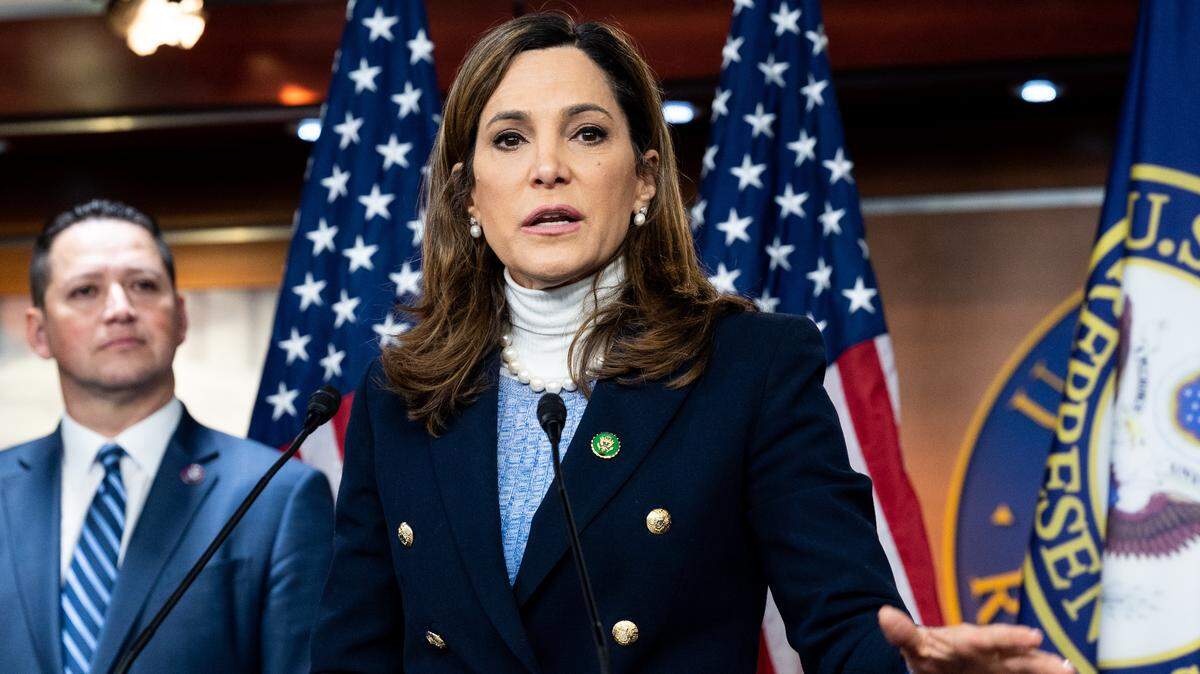
The Americas Act, whose sponsors include Republican Miami Congresswoman Maria Elvira Salazar, aims to fill this gap. This bipartisan bill would offer businesses financial incentives and policy certainty, encouraging investments that reduce reliance on China.
It also envisions expanding the U.S.-Mexico-Canada Agreement (USMCA), promoting high labor and environmental standards across the Americas, and positioning the U.S. as the nucleus of global supply chains.
Key appointments in Trump’s administration, such as Miami Republican Sen. Marco Rubio for secretary of state and Mike Waltz for national security advisor, also recognize the critical place Latin America holds in U.S. foreign policy, particularly as it relates to China.
However, the USMCA—the foundation of North America’s industrial platform—is under threat.
Without it, efforts to reshore supply chains and out compete China face significant hurdles. President-elect Trump’s tariff threats may very well just be posturing, but USMCA renewal is far from a safe bet. I offer three cold, hard truths that fuel this concern:
First, since Trump was elected in 2016, the U.S. trade deficit with Mexico has nearly tripled from about $60 billion to an estimated $160 to $170 billion this year.
Second, Chinese foreign direct investment in Mexico has surged, reaching $5.6 billion in 2023 – more than 20 times greater than 2018 when the USMCA was signed.
We have also seen a rapid rise in Chinese investments in early-stage technology companies, particularly in Mexico.
Finally, the leader-level political dynamics are fraught with potential pitfalls that could undermine negotiations. President-elect Trump’s disregard for quiet, closed-door diplomacy will strain Mexican President Claudia Sheinbaum’s political space to compromise.
Meanwhile, Prime Minister Justin Trudeau’s public betrayal of Mexico by offering to ditch the USMCA for a U.S.-Canada agreement has undermined the trust between two of the three parties.
Meanwhile, China stands ready to exploit any cracks. President Xi Jinping would welcome a weakened or broken USMCA, eliminating the only credible competitor to China’s supply chain dominance.
Despite these challenges, the U.S. —and its partners in the Americas—have a generational opportunity to reshape the global economic landscape. Strengthening the USMCA, passing the Americas Act, and adopting a bipartisan hemispheric policy could establish the Americas as the world’s most competitive regional economy.
A prosperous hemisphere that would not only outcompete China but also curb migration and reduce crime through economic growth.
This vision requires a unified effort. Policymakers, business leaders, and civil society must champion the strategic importance of the Americas. U.S., Mexican, and Canadian companies and workers stand to gain immensely from reshoring and nearshoring.
A united economic bloc in the Americas—led by the United States—would bolster regional stability, advance U.S. interests, and offer a compelling alternative to China’s global ambitions.
The time to act is now—before this historic opportunity slips away.
Ramon Escobar is managing director at Actum – a global consultancy. He previously served two decades as a U.S. diplomat in the Bush, Obama, Trump and Biden administrations, most recently as director for Western Hemisphere Strategy at the National Security Council.