
Two mysteries remain unsolved after Trump’s Mar-a-Lago press conference | Opinion
During President-elect Trump’s wide-ranging press conference at Mar-a-Lago on Monday, he fielded questions about numerous major policy issues ranging from vaccines and tariffs to Ukraine and Syria.
Fortunately, the assembled reporters also got around to asking Trump for his thoughts about two unsolved mysteries that have left many Americans mildly concerned and some others extremely worried.
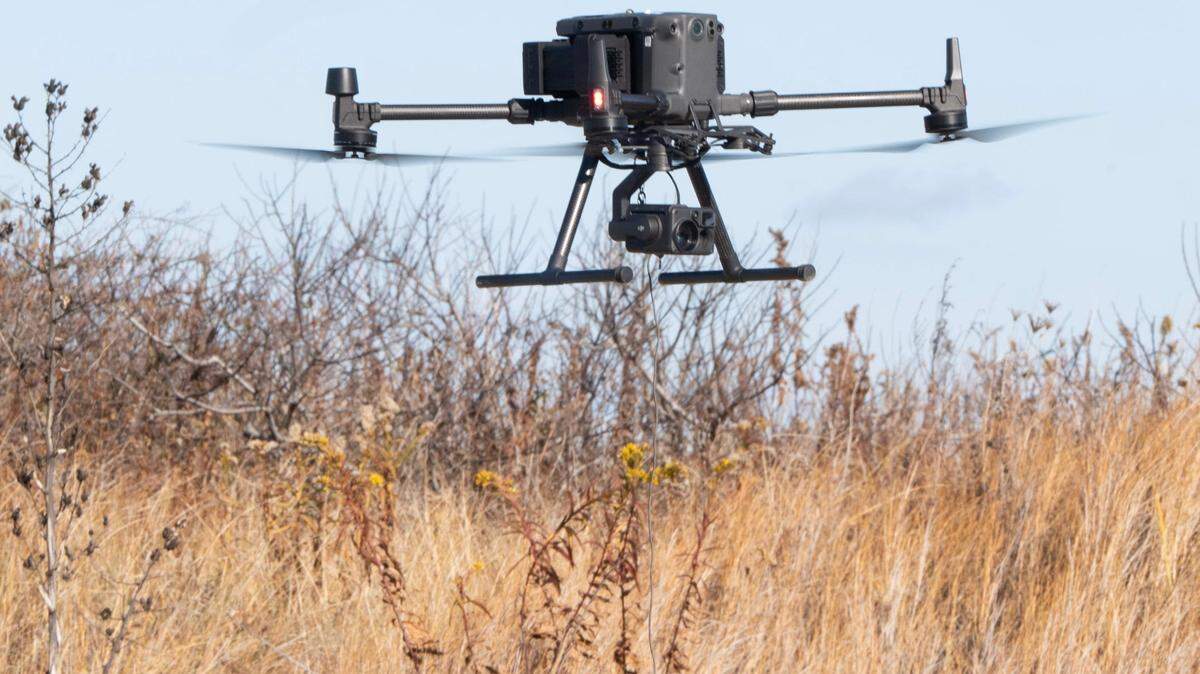
The first mystery has to do with the nature of the drones that have been hovering over various sites in New Jersey and other northeastern states. Some of these aircraft are much larger than hobbyists’ model planes of yore and, in some cases, have even caused temporary shutdowns at nearby airports.
Biden administration officials have sought to reassure the public that there’s no evidence that hostile foreign powers are responsible for any of the hundreds of drone sightings, but the lack of transparency has left many observers unsatisfied.
Moreover, a separate drone incident in California has added to some critics’ national security concerns. Police there tracked a drone that had hovered over Vandenberg Space Force Base. They arrested its operator, a Chinese national.
Although the arrested person is a legal U.S. resident, the regime in Beijing has been known to pressure Chinese nationals residing in the United States into doing their bidding by threatening to inflict repercussions on their relatives in China.
Experts have testified that a drone hovering over a hostile foreign power’s potential targets could fine-tune the GPS settings for a site, facilitating an accurate trajectory for today’s long-range missiles. Bottom line: The public needs a better explanation of what’s going on with this sudden proliferation of drones.
Meanwhile, the other “mystery” Trump addressed may be easier to solve. It came up when the president-elect was asked about the odd phenomenon that Luigi Mangione, the man arrested in connection with the murder of United Healthcare CEO Brian Thompson, has become a kind of folk hero on social media and elsewhere. There’s even speculation regarding who might play Mangione when Hollywood produces a movie about him.
Trump, who has been targeted by at least two would-be assassins that we know of, dutifully expressed his dismay that anyone would regard as some kind of hero any person who’s facing charges of committing a cold-blooded murder.
No doubt most reasonable Americans agree, but in his response Trump could’ve gone further by indicating that he at least has a glimmer of understanding as to why so many Americans despise our nation’s healthcare system — a system in which they feel trapped with little hope for reform.
The reasons for their disaffection aren’t hard to find. Americans pay more for healthcare than do the residents of other developed nations, but the results are worse when measured in terms of disease occurrence and life expectancy.
For workers, the premiums for the coverage provided by their employers have risen faster than their wages. Meanwhile, thousands of Americans who lack “Obamacare” or any other form of insurance are saddled with unpaid medical bills that are often sold off to speculators working in tandem with debt collectors.
In rural areas, national hospital chains, which together posted $90 billion in profits last year according to a Rice University study, have acquired and closed local hospitals that were deemed too inefficient, leaving whole areas with little access to timely care in case of emergencies.
Any hope for reform is up against obstacles erected by formidable economic interests. Among them is “Big Pharma,” the huge companies that aggressively peddle their pills and vaccines after years of avoiding responsibility for the problems caused by opioid addiction.
The health insurance companies — $25 billion in profits last year — are also happy with the status quo. So, at a time when tech billionaires and others are visiting Mar-a-Lago to seek favors from — or protection from — policy shifts during Trump’s second term, don’t be surprised that so many Americans who have lost hope about healthcare reform regard Luigi Mangione as some kind of folk hero. It’s really not a mystery at all.
Robert F. Sanchez, of Tallahassee, is a former member of the Miami Herald Editorial Board. He writes for the Herald’s conservative opinion newsletter, Right to the Point. It’s weekly, and it’s free. To subscribe, go to miamiherald.com/righttothepoint.