
Florida’s trying to reason with the hurricane season | Opinion
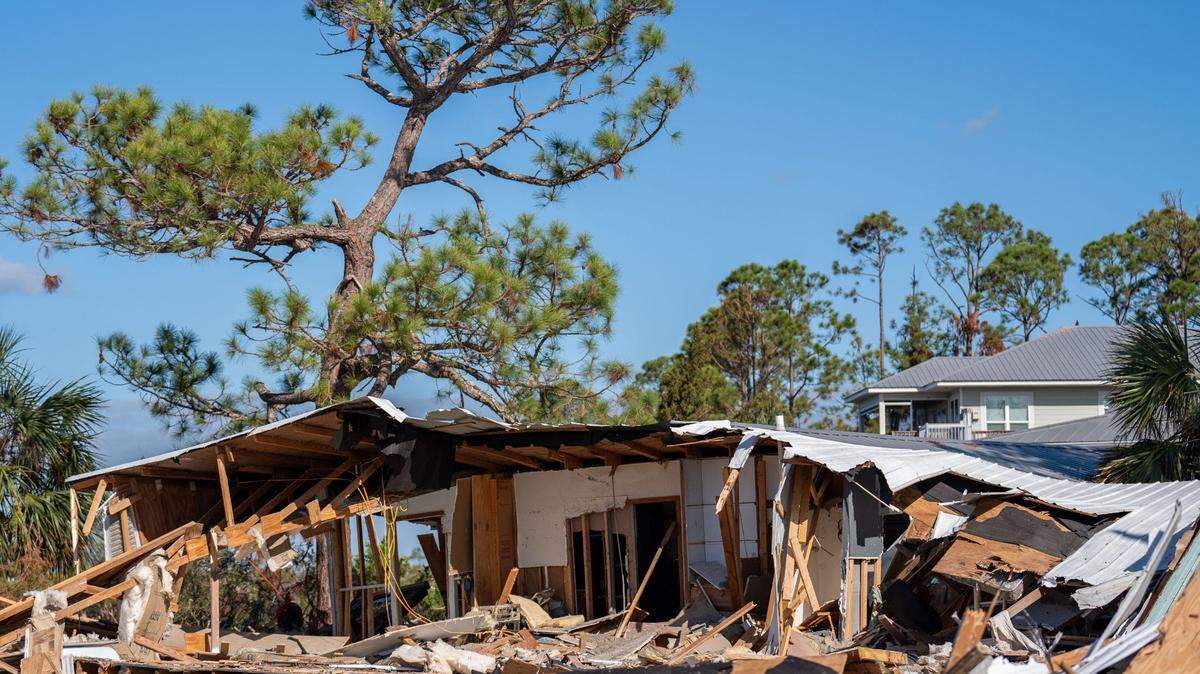
On Thanksgiving Day this year, storm-battered Floridians may be forgiven if they breathe a sigh of relief and say a little prayer of thanks for the fact that the 2024 hurricane season — one of the worst on record for Florida — will end on Saturday.
Two major storms, Helene and Milton, took a heavy toll. Lives were lost, homes and businesses were destroyed, and whole neighborhoods were wiped out. Beyond the tangible damage to property, many residents also found that the daily routines and pleasant Florida lifestyles they’d enjoyed were damaged, some beyond repair.
Property insurers, hard hit by losses from Florida’s hurricanes and tornadoes atop the damage from storms, wildfires and other disasters elsewhere, are still working through a backlog of claims, including some from Hurricane Ian two years ago.
Fortunately, in many parts of the state, efforts are finally underway to rebuild the structures that were damaged or destroyed and allow residents to reclaim a sense of normalcy in their everyday lives.
Unfortunately, some residents are now so discouraged by what they’ve endured that they’re already dreading the June 1, 2025, start of another hurricane season and its seemingly endless caravan of disturbances heading off the coast of Africa and elsewhere and in the general direction of …Florida.
The reinsurance industry is also keeping a wary eye on the same maps. Its global companies provide insurance for insurance companies. Those policies serve as a hedge against a geographically or chronologically concentrated spate of claims larger than a single insurer could handle, and reinsurance rates have been rapidly rising in the wake of storms that are more frequent and intense.
Meanwhile, lenders won’t provide mortgages for would-be borrowers if the borrowers can’t find affordable property insurance … or insurance at any price. So the state’s real estate industry could grind to a halt if insurance isn’t available.
Miamian Tom Gallagher was Florida’s treasurer/insurance commissioner in 1992, when Hurricane Andrew caused widespread devastation in southern Dade County and a major disruption in the state’s property insurance marketplace.
Under pressure to cap property insurance rates, Gallagher repeatedly cautioned that regulating insurance requires a careful balancing of two factors seemingly at odds: affordability and availability.
That is, insurance companies can’t be compelled to operate in Florida. If they aren’t allowed to charge rates that keep them solvent enough to pay claims, they’re free to pull out entirely or, say, to shun the more vulnerable coastal areas.
However, even if insurers try to limit their exposure to the state’s safer areas, they’re up against a surge in construction costs. Supply-chain issues lingering after the pandemic saw huge price hikes for basic products such as plywood and lumber, while a shortage of skilled labor also led to a spike in construction workers’ wages.
These increases in the cost to rebuild coincided with a last-minute flood of lawsuits targeting insurers and filed by personal injury attorneys in 2023, just before the effective date of a new state law aimed at curtailing the kinds of frivolous litigation that had earned Florida the dubious nickname “judicial hell hole.”
During the 2024 election cycle, Florida’s Democrats pinned their hopes for a large turnout on three key issues — abortion, marijuana and property insurance. In particular their ads tried to exploit the public’s discontent about the high cost of insurance.
This strategy obviously didn’t work, but the insurance issue didn’t go away. Further reforms are needed, including an additional boost to the state’s catastrophe fund and a continuing effort to downsize Citizens Property Insurance, the state-operated “insurer of last resort.”
Moreover, because this is what the pundits call a pocketbook issue and was percolating in Florida at a time when polls showed that the race for the White House was heavily impacted by pocketbook issues, Florida’s Republican leaders — safe for now — will ignore its long-term impact at their political peril.
Robert F. Sanchez, of Tallahassee, is a former member of the Miami Herald Editorial Board. He writes for the Herald’s conservative opinion newsletter, Right to the Point. It’s weekly, and it’s free. To subscribe, go to miamiherald.com/righttothepoint.