
How Miami-Dade turned fully ‘red’ in 2024 with the help of Hispanic voters | Opinion
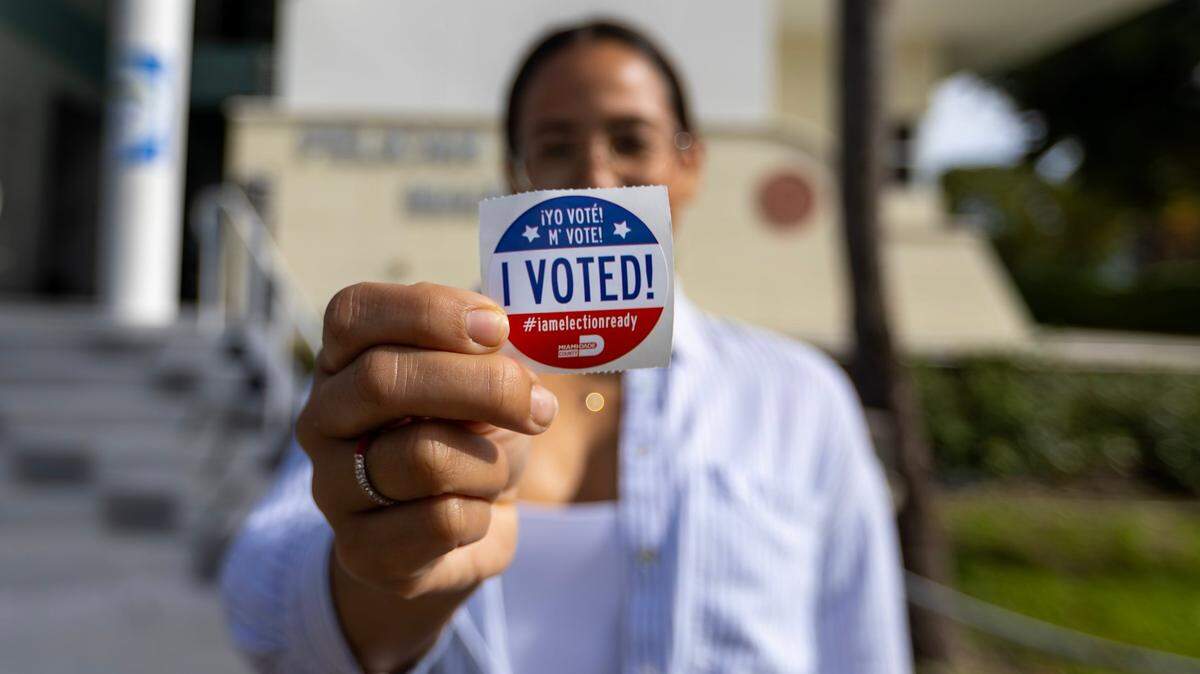
The results of the 2024 elections sent a shockwave through Miami-Dade County, which swung entirely red for the first time in decades.
This transformation was not an overnight shift but rather the result of a sustained, deliberate effort by Republicans to build a coalition that resonated with Miami’s diverse communities. Understanding how this shift happened reveals essential lessons about campaigning, community engagement and the shifting priorities of Miami-Dade voters.
Here are three primary reasons Miami-Dade flipped red in 2024:
Permanent GOP campaigning
The GOP has executed a near-constant campaign in the county, establishing and maintaining a robust presence in Miami-Dade communities for at least the last three decades. Republican operatives and candidates have worked hard to forge relationships, host local events and align their messaging with voters’ values and concerns. This steady engagement has allowed Republicans to build a narrative and establish trust.
Democrats, in contrast, have too often waited until the final months of an election to start engaging with voters. This late entry has disadvantaged them, as it’s difficult to counter a years-long narrative in a campaign’s closing months or weeks.
Democrats have relied on familiar talking points, assuming a lasting loyalty from historically Democratic groups, especially Hispanics, without dedicating the necessary time to rebuild connections.
Misreading Miami’s history
Another reason for Miami-Dade’s red shift lies in Democrats’ approach to Miami’s diverse communities, including Black, Haitian, Cuban, Venezuelan, Colombian and Mexican voters. Miami-Dade is a county shaped by a unique political history that is inseparable from the experiences of immigrants who fled leftist regimes in Latin America. Democratic campaigns that embraced progressive labels and social justice narratives have struggled in Miami, where words like “socialism” and “progressive” are often viewed with skepticism.
Republicans capitalized on this disconnect by framing all Democrats as socialists, an accusation that resonated strongly with voters who associated leftist ideologies with political oppression, economic mismanagement, and corruption. Although Democrats are not socialists, the GOP’s ability to exploit these perceptions gave them a significant advantage.
A recent Florida International University’s poll underscores this trend, revealing that 15% of Latino respondents in Florida reported changing their party affiliation in the past year. Notably, 42.3% of those switched to the Republican Party.
Candidate selection
Democratic candidates have struggled to connect with the community partly because they often lacked deep personal ties to Miami-Dade. On the other hand, Republican candidates are often community fixtures with a personal history in Miami’s Cuban-majority neighborhoods.
The GOP’s candidates may have controversial views or unpopular stances on some issues, but their deep-rooted connections earned them trust that transcends policy positions. For Miami-Dade voters, the choice often came down to electing a familiar figure versus a candidate seen as distant or unfamiliar. In a county that values community bonds, the Republicans’ ability to field candidates with local roots proved decisive.
Beyond these campaign strategies, Miami-Dade’s shift reflects a broader disillusionment with the country’s direction. Although the U.S. economy has shown positive indicators, residents face high housing costs, expensive groceries and fluctuating gas prices.
On abortion, it was clear that many Latino men and women felt comfortable voting for Trump while supporting Florida’s Amendment 4 to protect reproductive rights. This complex dynamic underscores the nuanced political leanings of Miami-Dade’s Hispanic community, prioritizing issues based on personal values rather than strictly party loyalty.
Another baffling issue was the support for mass deportations in a largely Hispanic county. Although the county is home to a significant number of undocumented residents, support for Trump’s stance on immigration extends beyond a simple focus on law and order.
For long-established Hispanic residents who went through years of bureaucratic hurdles to gain legal status, the recent influx of migrants obtaining work permits represents a perceived inequity. Additionally, there is a view among some established Miami-Dade Hispanics that newer migrants are not “gente como nosotros”— or “people like us” — reflecting a divide rooted in social class.
In the end, Miami-Dade’s shift to an entirely red county in 2024 reflects Republicans’ effective strategy and Democrats’ failure to understand unique community dynamics.
Eduardo A. Gamarra is director of the Latino Public Opinion Forum and professor of politics and international relations at FIU.