
Here’s the hope for America of two first-time voters from Miami | Opinion
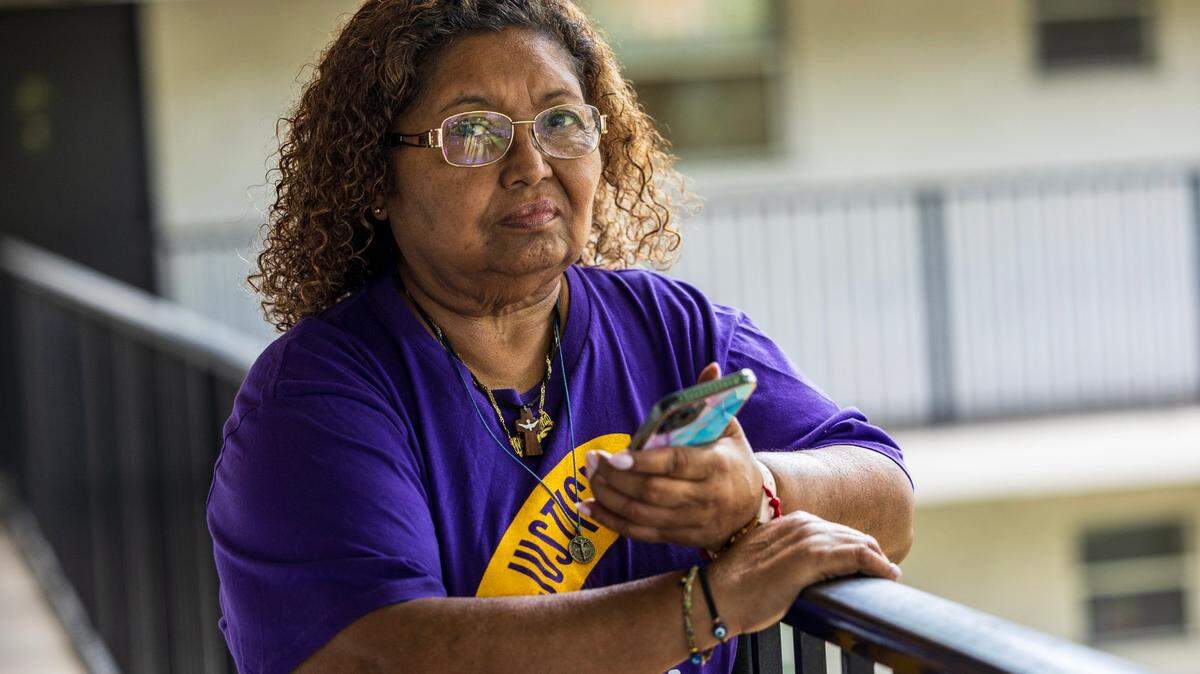
This year, we both get to vote in our first U.S. election. When we do, we will both be thinking about our mom, and all the other undocumented Nicaraguan immigrants in the United States.
Our mom is one of the 200,000 plus undocumented Nicaraguans living in the U.S. under constant fear of being deported. She came to the U.S. in 2000 after Hurricane Mitch, and has been here ever since, taking care of our family and tirelessly working to make Florida a better place for all its residents.
If she had arrived in the U.S. only months earlier, she would have been eligible for Temporary Protected Status (TPS). TPS is a provision under which the government grants protection from deportation to people from certain countries afflicted by natural disasters, war, or other dangerous conditions.
But people from Nicaragua are only eligible if they came here in 1999 or earlier.
Miami and the U.S. is the only home we have ever known. One of us was only ten when we moved from Nicaragua to Florida, the other was born here. But presidential administrations from both political parties have refused to expand TPS for Nicaragua so people like our mom can have some protection from deportation.
Conditions in Nicaragua have deteriorated to the point where it would be unsafe to return, and our lives and our communities are here in Florida. Long term, we need permanent fair and humane paths to citizenship, but expanding TPS designations is something that the Federal government can do right now to provide relief for people who cannot return to their home countries.
Christell, 30
I did not even know what it meant to be undocumented until my senior year in college. After completing four years of the medical assistant program, I had to drop out because of the lack of a state ID, without which I could not get in-state tuition rates. This was a turning point for me, and I joined my mother and many other immigration activists to advocate for in-state tuition for undocumented students.
This led to the passing of the landmark law that gave undocumented students access to in-state tuition rates.
I was a co-founder of Students Working for Equal Rights, which was the first immigrant youth network in Florida. In 2023, I was a co-teacher at the American Friends Service Committee’s (AFSC) Florida Immigrant Youth Art Program.
Currently, I am a teacher because I want to contribute to the education system in the U.S.
Leah,19
I was born in the U.S. and have been an immigration activist since I was 10.
I have been a youth volunteer for local and national campaigns for the rights of immigrants. I was a spokesperson for the Families Belong Together Campaign and the End Child Detention.
Even though I am a U.S. citizen, I advocate for this cause for my family and all those families who do not have access to fundamental human rights because of being undocumented.
The values of community organizing for immigrant causes were passed down to us by our mother, a community organizer for AFSC’s Florida program.
AFSC coordinates local, statewide, and national campaigns to demand the fair treatment of all immigrants. Right now, we are working to expand and redesignate TPS as part of the #TPS4Nicaragua campaign.
Last year, the Biden administration seemed open to the redesignation of TPS for Nicaragua, but it did not end up happening. Instead, the temporary Cuban, Haitian, Venezuelan, and Nicaraguan (CHNV) Humanitarian Parole program was created which applied only to newcomers.
Recently, it was announced that there will be no renewals for CHNV recipients, and Nicaragua is the only country that has been left unprotected. The current country conditions, including human rights violations, make Nicaragua a fit for the statutory requirements for TPS. For the advocates of TPS for Nicaragua, this is a matter of equity and fairness.
As first-time voters, we want to highlight the importance of voting in the upcoming election and encourage other young people from mixed-status families to use this opportunity to get involved.
Often children from undocumented or mixed-status families must grow up faster than other kids our age because of the additional responsibilities that we carry. We constantly need to prove ourselves, face various hurdles, and be in chronic fear of family separation.
For us, voting is not only about choosing candidates but about creating engaged constituencies who are working to make our communities better and allow all our families to have a dignified life in the U.S.
We are hopeful that there is light at the end of the tunnel, and we will continue to advocate for policies that will grant TPS and a pathway to citizenship for our Nicaraguan community.
Leah and Christell Cayasso are Miami residents who are volunteers for AFSC Florida and various local organizations advocating for creating welcoming, dignified and just immigration.
This story was originally published November 4, 2024 at 3:35 PM.