Stop the Florida Legislature from ending police oversight panels. We need them | Opinion
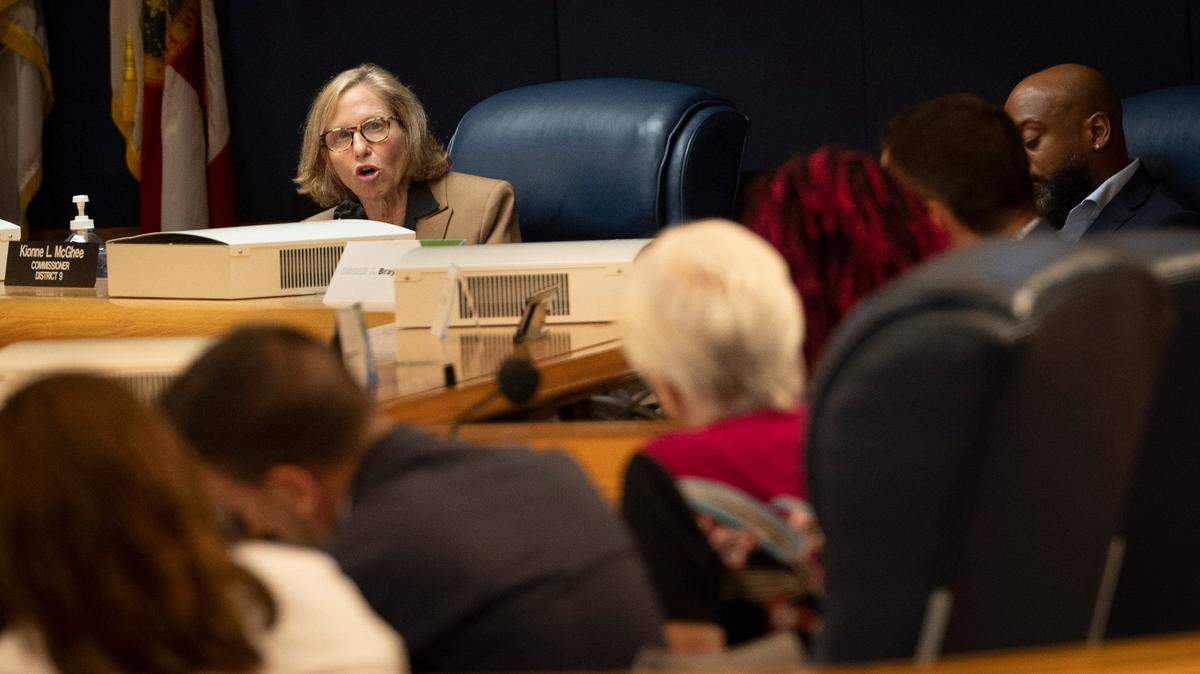
Civilian oversight of police is a long-standing and increasingly common democratic institution. It has been in existence nationwide for 75 years, often in response to civil rights violations, Department of Justice investigations, consent decrees or public demand. Our communities and institutions must uphold the truth and stand firm, especially when faced with opposition to our democracy.
In South Florida, we have had a mixed bag of all the above. But what has remained constant is the overall approach of civilian oversight to help empower communities to participate in how they are policed, and operate in a way that empowers public safety to lower crime and evolve law enforcement. Now, this oversight that took a century to build is being threatened, based on political misunderstandings, falsehoods and fallacies in Florida.
House Bill 601 and Senate Bill 576 are moving through the Legislature pushed by Republican lawmakers who argue that civilian oversight of law enforcement acts as a harbor for anti-police sentiment, radical ideology and a dismantling of police departments. This sentiment is far from the truth.
The truth, that many law enforcement leaders have found police oversight to be helpful in their momentous task, is well documented. These civilian oversight agencies are unbiased, which helps them unite stakeholders to work together and improve policing. Changing that would subvert local authority and the will of the people within these communities who overwhelmingly support strong, independent and effective civilian oversight with the authority to investigate alleged police misconduct and to improve police policies, procedures and training.
If enacted, HB 601, and SB 576 have the potential to undermine a community’s ability to influence policing culture and training in an effective, fair and transparent manner.
Civilian oversight mechanisms have existed in Florida for decades, with both the Miami Civilian Investigative Panel and St. Petersburg’s Civilian Complaint Review Committee in continuous operation for over 20 years. As in many jurisdictions across the United States, these cities have used civilian oversight of law enforcement to build trust where issues exist between police and the communities they serve.
The impartiality of these civilian oversight agencies allows them to bring stakeholders together to work collaboratively and proactively, making policing more effective and responsive. Because of this, elected officials throughout the country are increasingly establishing robust, independent civilian oversight to to promote public trust in law enforcement and reduce exposure to misconduct risks. These bills show a lack of understanding of the basic tenets of civilian oversight.
Everything mentioned thus far is familiar to greater Miami-Dade and Broward counties. A few short years ago, in Miami-Dade, we banded together to pass a comprehensive police oversight ordinance for our county. Now the state seeks to undo decades of hard work.
As always, we are best heard by contacting our elected officials in Tallahassee, and showing up for committee meetings at our state Capitol. It will take a concerted effort to push back and, hopefully, eliminate these bills that are contrary to progress and effective policing.
Attacking civilian oversight of law enforcement is not an isolated incident. This session, the Legislature has put forth numerous bills that look to erode civil and human rights.
This determined effort is in large part due to culture wars and dysfunctional governance. Calling out this dysfunction is part of the overall goal, but in our current environment, we must be brave enough to name the forces whose only intent is oppression and power.
Our unity will be our greatest strength and will fuel our ability to resist and persist. The truth-seeking function that makes our democracy great will always rest in “we the people.” Now more than ever before, the power of the people must be stronger than the people in power.
Rodney W. Jacobs, Jr., is executive director of the Miami Civilian Investigative Panel. Ursula Price is executive director of the Miami-Dade County Independent Civilian Panel. Philip C. Harris is assistant to the city manager/executive director of the North Miami Citizens Investigative Board.
.jpg "Headshot_Rodney Jacobs (2).jpg")