Rand Paul uses a Seinfeld joke to make a serious point about government spending | Opinion
Seinfeld, a hit sitcom in the 1990s, not only created memorable characters, but it also created a new holiday. Known as Festivus, it’s celebrated each Dec. 23, and its rituals famously include an airing of grievances.
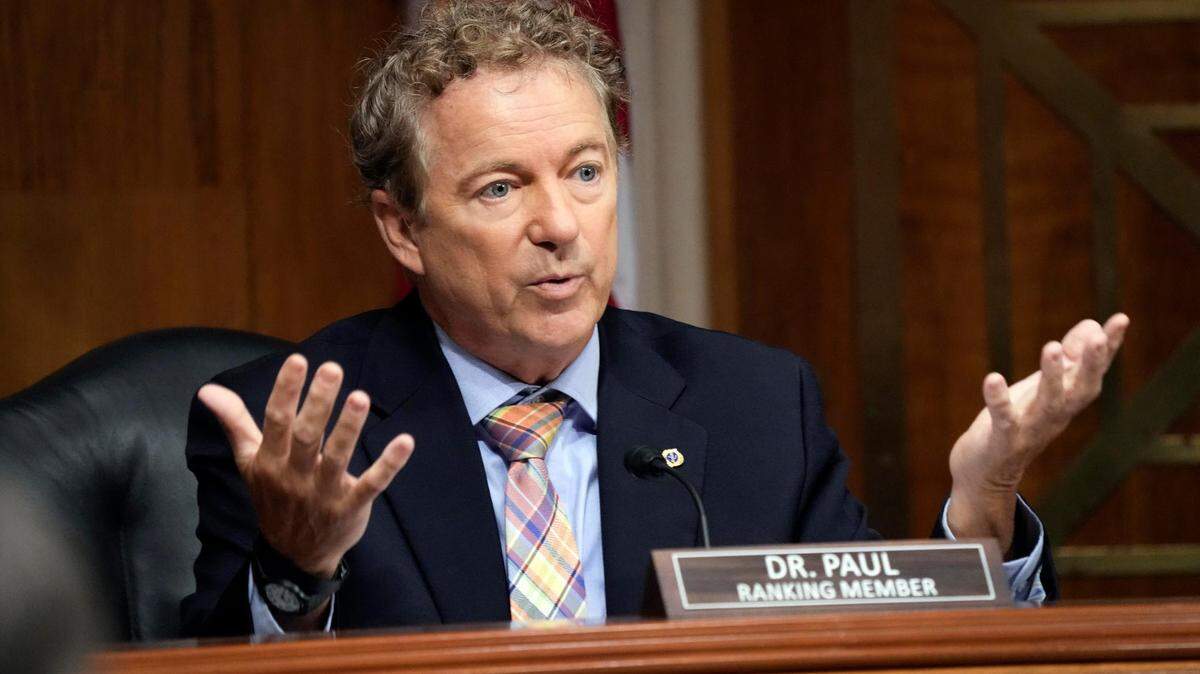
Festivus caught the eye of Sen. Rand Paul, R-KY. A libertarian who favors a very limited role for the federal government, he has numerous grievances to share concerning $900 billion in what he considers wasteful spending.
So, on the eve of Festivus 2023, Paul’s ninth annual Festivus Report was released via the Senate Committee on Homeland Security and Governmental Affairs, where he’s the ranking Republican.
The lavishly illustrated 24-page document details dubious outlays of the taxpayers’ money. Much of the waste was a byproduct of efforts to keep the economy afloat amid shutdowns during the pandemic. As the report notes, “$38 million in COVID payments — an average of $83,000 each — went to people Uncle Sam knew were dead.”
Worse, “By April 30, 2020, the U.S. Treasury’s Inspector General knew $1.4 billion ... was sent out to more than one million Americans who filed taxes in previous years, and then died, yet still received checks intended as COVID stimulus payments.”
Of course, most of the Payroll Protection Act’s $800 billion went to living persons. Alas, among them were swindlers whose photo IDs borrowed pictures of Barbie and other fictional characters.
As Paul notes, “Somehow the Small Business Administration carelessly approved the applicants from Toyland and sent out improper COVID-19 PPP payments.” The SBA also provided more than $200 million to musicians who allegedly were “struggling” because so many performance venues were shut down during the pandemic. “So-called ‘small business owners’ such as Post Malone, Lil Wayne, Chris Brown, and Smashing Pumpkins received up $10 million each…”
Even so, federal payments to dead people, fraudsters and musicians exemplify only a portion of wasteful spending, and the military provides yet another example. By leaving expensive equipment outdoors, the Army ruined engines worth $89 million, transmissions ($12.6 million) and tank treads ($68 million).
Speaking of tanks, the Pentagon spent $8,395 for a lobster tank. As Sen. Paul comments, “I understand military personnel need to eat, but does the DOD really need a lobster tank? I think we can all agree these aren’t the tanks Americans thought their tax dollars were funding.”
Granted, that was a relatively cheap element in a huge federal budget, but the relatively small sums add up. They included funds for research on walking dogs during hot weather, training Department of Homeland Security employees to be “their authentic and best selves” and testing meth’s effect on monkeys.
Beyond the expenditures that might elicit a smile, there’s a serious issue, which the report summarizes: “Who’s to blame for our crushing level of debt? Everybody. This year, members of both parties in Congress voted to raise the debt ceiling, which empowered the government to borrow an unlimited amount of money until 2024.”
Worse, there’s no end in sight. “Our mountain of debt will continue to pile ever higher. The Congressional Budget Office predicts we will add an average of $2 trillion in debt annually for the next decade.
“It doesn’t take a genius to predict the dangers that come with spending money that the government just doesn’t have. … In Fiscal Year 2023, the U.S. Department of the Treasury spent $659 billion just to pay the interest on the national debt. Because we don’t have the funds to pay that, we have to borrow it — a large portion from China.”
So China is bailing us out? As the Festivus Report makes clear, that’s not wise. Indeed, we’d better start paying more attention to our spending addiction lest the airing of grievances escalate into something much more serious.